Last updated November 17, 2026

Free written scope consultation - allowances, timeline, and change-order rules on paper before a single trade is scheduled
Bathroom Remodeling Warning Signs Every Homeowner Should Know
Most bad bathroom remodels don’t announce themselves with a disaster. They start with a small, easy-to-ignore signal: a bid that’s vague on materials, a contractor who suggests you don’t “bother” with the permit, or a request for a big deposit before anyone has picked up a tool. Homeowners in Fairfield dismiss these as minor friction because they’re eager to get the project moving. That’s the moment the risk gets locked in. This guide treats each signal as what it actually is: operational data about how your job will run. You’ll learn to read the bid, the permit conversation, the license record, and the payment schedule before your deposit clears.
Quick Answer
The biggest warning signs of a bad bathroom remodeling contractor are a bid with no line-item fixture and material specs, a suggestion to skip the permit, a license that’s expired or restricted in the CSLB database, a vague or absent written guarantee, and an upfront deposit exceeding 10% or $1,000 (whichever is less) on a California contract. Any one of these is a reason to slow down. Two or more together are a reason to walk away, no matter how good the price looks.
Styles & brands we work with
- Kitchen remodeling
- Bathroom remodeling
- Home additions & ADU
- Roofing
- Windows & doors
- Driveway & pavers
- Fence
Table of Contents
- Why a Bid Without Line-Item Specs Is Structurally Incomplete
- The Permit-Avoidance Conversation: What It Actually Costs You
- How to Verify a California Contractor License in CSLB
- What a Contractor’s Plumber and Tile Setter Say About Your Job
- Payment Schedule Red Flags Under California Law
- The Guarantee That Doesn’t Exist in Writing
- Schedule Signals: No-Shows, Creeping Timelines, and the Bare Site
- What “Squared Away” Looks Like at Job Close
Why a Bid Without Line-Item Specs Is Structurally Incomplete
A bathroom bid that says “remodel, approx. $18,000” is not a price. It’s a placeholder. Without line-item specification, you can’t tell whether the number includes a KraftMaid vanity or a stock cabinet, a Kohler faucet or a builder-grade fixture, porcelain tile or ceramic. That gap is where change orders are born.
Here’s the pattern we’ve watched play out across Fairfield projects. A vague bid wins on price, work starts, and then the “unforeseen” costs arrive: the vanity has to be upgraded to fit the rough-in, the valve trim isn’t included, the tile allowance was based on a discontinued line. Each of those becomes a change order with a number you never agreed to and can’t easily challenge mid-job.
A line-item bid for a standard hall bath in Fairfield should show you these at minimum:
- Fixture specification by brand and model, not just “vanity” and “showerhead.” A Caesarstone or quartz counter is a different line item from laminate.
- Tile quantities and grade for the floor, shower walls, and any accent band, with square footage noted.
- Rough-in scope: whether the plumbing is being relocated, what the drainage changes involve, and the venting assumptions.
- Substrate work: cement board, waterproofing membrane, and how the shower pan is being built. This is the layer under the tile that keeps water out of the wall.
- Labor versus material split, even roughly, so you can see what a change is actually costing.
- Explicit exclusions: what’s not included, in writing, before work starts.
A written price before any work starts isn’t a luxury. It’s how a bathroom project in Fairfield stays on budget instead of drifting once the walls are open. For a full picture of what a properly scoped bathroom remodel looks like end to end, see our Bathroom Remodeling in Fairfield page.
The Permit-Avoidance Conversation: What It Actually Costs You
When a contractor offers to skip the permit to “save you money,” they’re not doing you a favor. They’re transferring the legal and financial liability for unpermitted work directly onto your title. That sentence matters more than almost anything else in this guide, because it’s the signal that’s most often misread as generosity.
Bathroom work in Fairfield sits under California’s own rules, and most of it that moves plumbing, adds a fixture, changes electrical, or reconfigures a wet wall needs a permit. Skipping it has three concrete costs:
- Title and resale exposure. A future buyer’s inspector can flag unpermitted work, and the buyer’s lender can demand it be corrected or permitted before the sale closes. You inherit the problem years later at the worst possible moment.
- Insurance gaps. Many homeowner policies have language around code-compliant, permitted work. A leak from a shower pan that was never inspected can become an expensive dispute about coverage.
- Removal and rework. Local code compliance may require that the unpermitted work be opened up so it can be inspected. That means tearing into the very bathroom you just paid to finish.
A legitimate contractor in Fairfield pulls the permit and passes the inspection as part of the job. In our own work, permits and inspections are written into the scope, because the paper trail is the whole point. If a bid doesn’t mention pulling permits for work that clearly needs them, ask. The answer tells you a lot.
How to Verify a California Contractor License in CSLB
Verifying a contractor’s license in the Contractors State License Board (CSLB) database takes about three minutes and should be non-negotiable before you sign anything. Go to the CSLB website, enter the license number from the bid, and read what comes back. Don’t accept a photographed card; check the live record yourself.
Three pieces of information matter most:
- License status. “Expired,” “suspended,” or “cancelled” means the contractor can’t legally take your job. A restricted license usually means a disciplinary action or a bond condition that limits what they can do, and you want to know why.
- Classification. Bathroom remodeling typically falls under a B (General Building) license, which covers whole-structure work including plumbing and electrical trades coordinated through a general contractor. Specialty work like rough plumbing sits under the C-36 (Plumbing) classification. A contractor whose classification doesn’t cover the work in your bid is a real problem, not a technicality.
- Bond and workers’ comp status. A licensed California contractor carries a bond, and if they employ workers, they need workers’ comp. The CSLB record will tell you what’s on file.
If a Fairfield contractor can’t produce a license number, or the number shows up restricted, that’s your answer. There’s no version of a good bathroom project that starts with an unlicensed operator. Our technicians have up to 22 years of experience, and we’ll show you the license record and written scope before you commit.
What a Contractor’s Plumber and Tile Setter Say About Your Job
“I do it all myself” sounds like dedication. In a bathroom remodel, it’s often a warning. The trades that converge in one small room are genuinely different disciplines: rough plumbing, waterproofing and tile, electrical, and finish carpentry. A single tradesperson who claims to be excellent at every one is either overextending or cutting corners somewhere you can’t see.
What you want to hear instead is a clear answer about who does the plumbing rough-in and who sets the tile:
- Named trade relationships. A reliable contractor has a licensed plumber and an experienced tile setter they work with consistently, and they’ll name the relationships without hesitation.
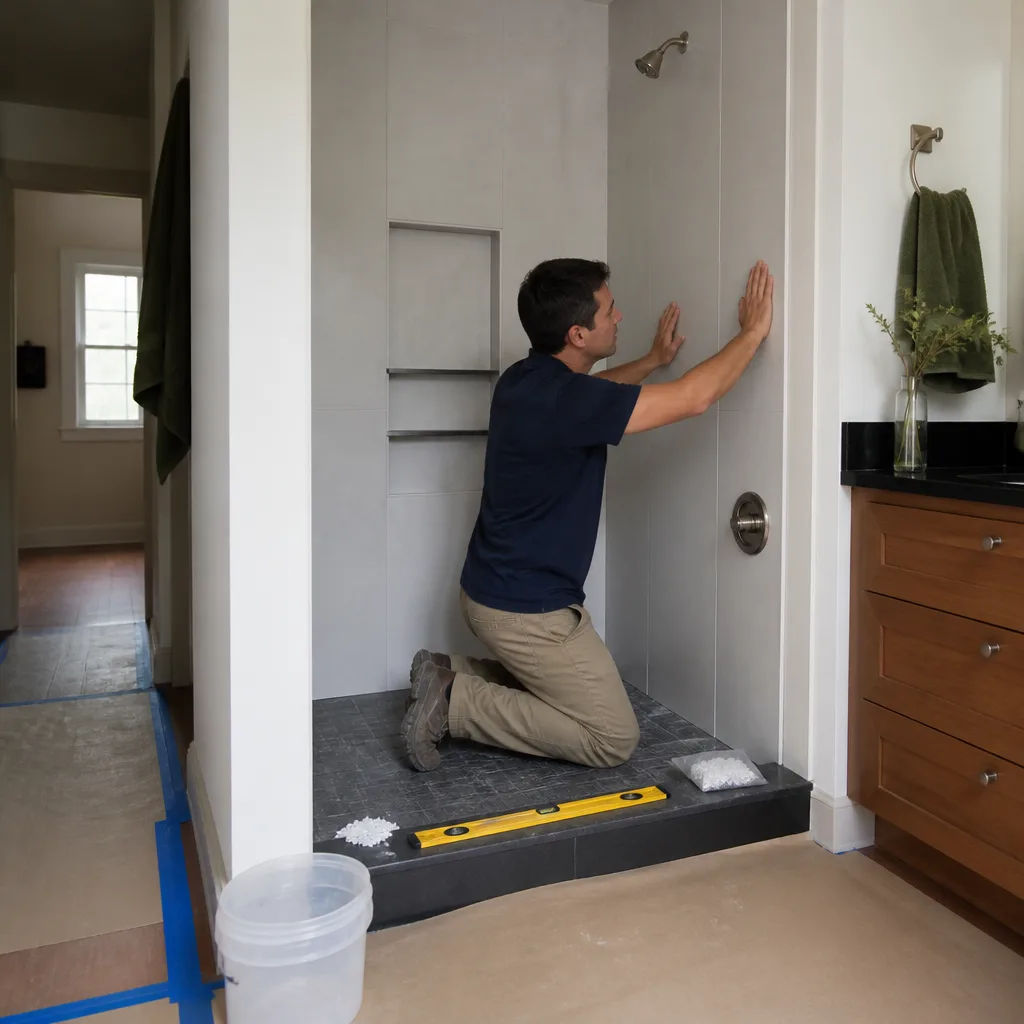
- Tile setting as a specialty. Setting large-format porcelain or a mosaic shower wall without lippage (the uneven edges where tiles meet) takes real skill. Ask how the shower pan is waterproofed and how they handle the transition to the floor tile.
- Clear accountability. When several trades touch the same job, somebody has to own the result. Ask who’s on site at close and who signs off on the finished work.
In our experience, the contractor who’s candid about what gets subbed out and who’s doing it delivers more predictable results than the one who insists they handle everything alone. That’s part of what The Garrison Standard is built around: documented scope, name-brand materials with traceable specifications, and written accountability from the first line of the bid. For a broader look at how whole-home and bath work fit together, our General Contractor in Fairfield page covers the coordination side.
Payment Schedule Red Flags Under California Law
California has a specific rule on upfront deposits, and you should know it before you sign: a contractor cannot require a down payment larger than 10% of the contract price or $1,000, whichever is less, before work begins. That’s a legal ceiling, not a guideline. A contractor asking for 30% or 50% upfront is already out of compliance on day one.
A fair payment schedule for a typical Fairfield bathroom remodel ties payments to completed work, not to points on a calendar:
- Initial deposit: at or below the 10%/$1,000 ceiling, protected by a written contract.
- Progress payments triggered by milestones you can see, like demo complete or rough-in inspected.
- Final payment at substantial completion, after a walkthrough, a sign-off, and the written guarantee in your hand.
Watch for these patterns specifically:
- Cash-only, or a request for the deposit before a signed contract exists.
- A schedule front-loaded so most of the money moves before the tile is even set.
- Any pressure to pay for materials “up front” beyond the contract’s deposit structure.
If a quote asks for a large sum up front, that’s the moment to ask why. The answer should be grounded in a written price and a documented schedule, never in urgency.
The Guarantee That Doesn’t Exist in Writing
“We stand behind our work” is a sentence, not a guarantee. A real one is specific: what’s covered, for how long, and what happens when something fails. Watch for how a contractor describes their warranty. If it’s vague or verbal, it’s not something you can hold them to.
Ask three questions before you sign:
- What’s covered? Material defects, labor failures, water intrusion, tile popping, and fixture leaks are all different. A good guarantee names the scope.
- For how long? A one-year written guarantee after substantial completion is a baseline standard, and it should state the window explicitly.
- What’s the remedy? A guarantee that promises a return visit at no charge if the work fails is worth more than any language about “quality.”
At Bradford Remodeling Co Fairfield, we operate under the 365-Day Done Right Promise: every completed project carries a full-year written guarantee, and if the work fails inside that window, we come back and correct it at no charge. That guarantee is signed and handed to you at close, not left in a brochure. That’s part of what “squared away” means at a Bradford job: clean site, documented scope, and a guarantee in your hand.
Schedule Signals: No-Shows, Creeping Timelines, and the Bare Site
A bathroom remodel is a coordination problem as much as a craftsmanship one. That means the earliest schedule signals tell you what the finish will look like. The crew that shows up late or on the wrong day during demo is not going to nail the last hundred square feet of tile.
Here’s what to watch in the first week:
- Communication reliability. Whether calls get answered, and by whom. If you’re routed into voicemail during an active job, note it.
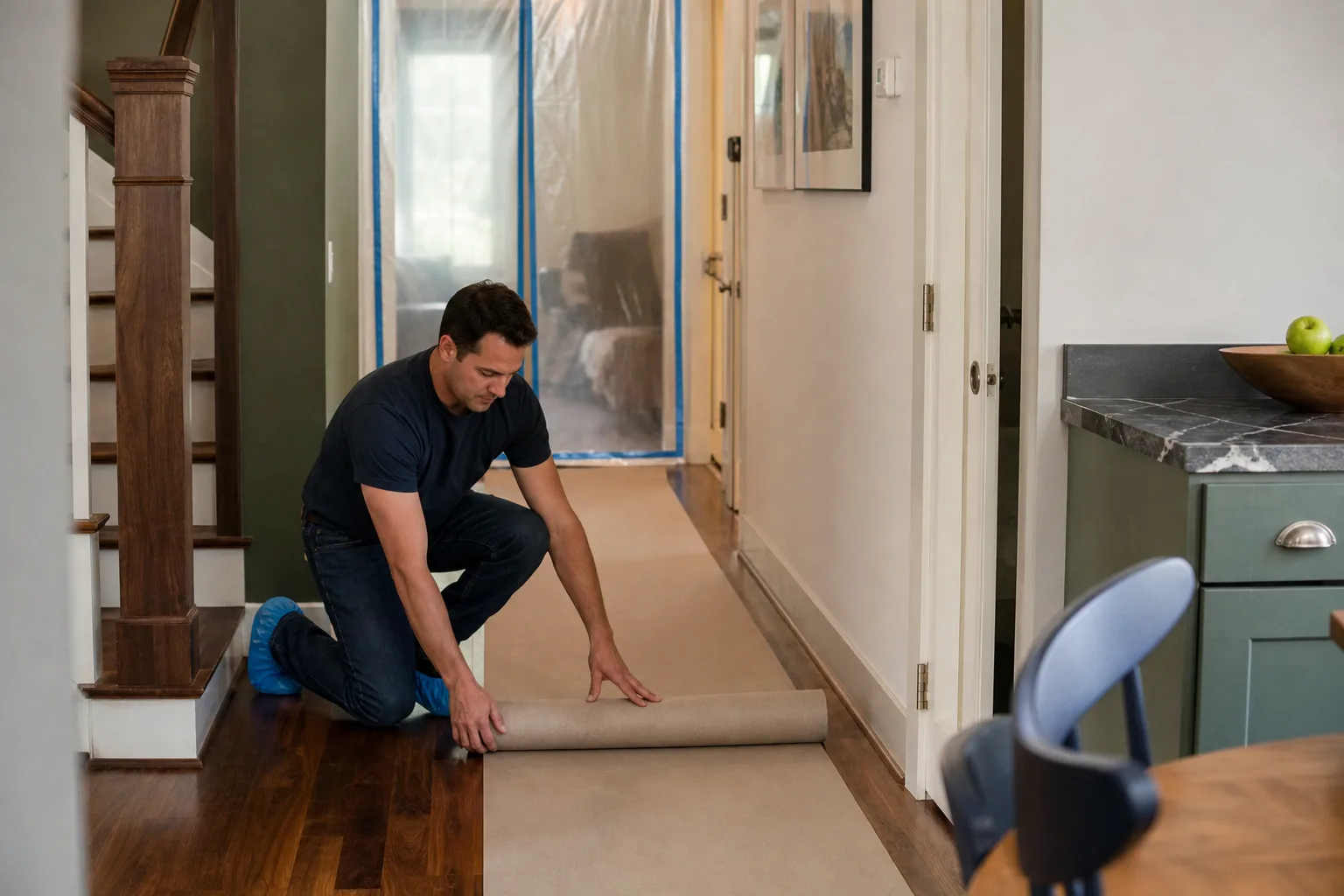
- Site discipline. A crew that leaves debris in the yard, doesn’t cover floors, and doesn’t contain dust is showing you how they’ll treat your home for the next four weeks.
- Timeline drift without explanation. Schedules change. Silence about changes is the problem.
- The bare site. A bathroom where a few materials sit in the corner while weeks pass is a sign of supply or scheduling that wasn’t lined up before the job started.
Fairfield’s climate adds a wrinkle. Bathroom work touches moisture and ventilation, and in this part of Solano County the hot dry summers and the wetter winter months stress the envelope differently. Ventilation and waterproofing decisions made during the schedule matter for how the room behaves a year later. A disciplined crew plans around that from the start.
What “Squared Away” Looks Like at Job Close
You can judge a remodeler’s discipline at the finish line. A well-run close has a predictable shape, and it’s the best evidence you’ll get that the rest of the job was handled the same way. When you walk the finished bathroom, look for these:
- The site is clean. No debris, no leftover materials in your yard, and the rest of your home left as it was found.
- The scope is documented. You have a walkthrough, a punch list, and sign-off on both sides.
- The written guarantee is in your hand. A signed document with the coverage window and remedy spelled out.
- The test runs pass. Faucets, drains, the shower pan, and the ventilation all confirmed working under real use.
- You know who to call. If something fails within the guarantee period, you have a live person to reach, not a form.
The Garrison Code frames it simply: the job isn’t done when the tools leave. It’s done when the homeowner has documentation and a call-back path that actually works. That’s a higher bar than most bids account for, and it’s the bar the signs in this guide are helping you measure.
Common Mistakes to Avoid
- Accepting a bid without line-item material specs. The gap is exactly where change orders come from. Insist on brand, model, and quantity before you sign. A vague bid is a bid that will move.
- Letting a contractor talk you out of a permit. Unpermitted work transfers liability to your title. In Fairfield, permit records follow the house, not the contractor who skipped the inspection.
- Wiring a large deposit before verifying the CSLB license. Check the live record, not a photographed card. An expired or restricted license is a stop sign.
- Confusing “I do it all” with expertise. Plumb, waterproof, and tile the shower thinking they’re interchangeable. Ask who’s licensed for the rough plumbing and who specializes in tile.
- Signing a schedule that front-loads payments. California’s 10% or $1,000 deposit ceiling exists for a reason. Milestone-based payments protect you.
- Accepting a verbal “we back our work.” Ask what’s covered, for how long, and what the remedy is. Get it in writing or treat it as absent.
- Tolerating no-shows and bare sites in week one. Early schedule discipline is a preview. The crew that shows up late for demo won’t hit the finish cleanly.
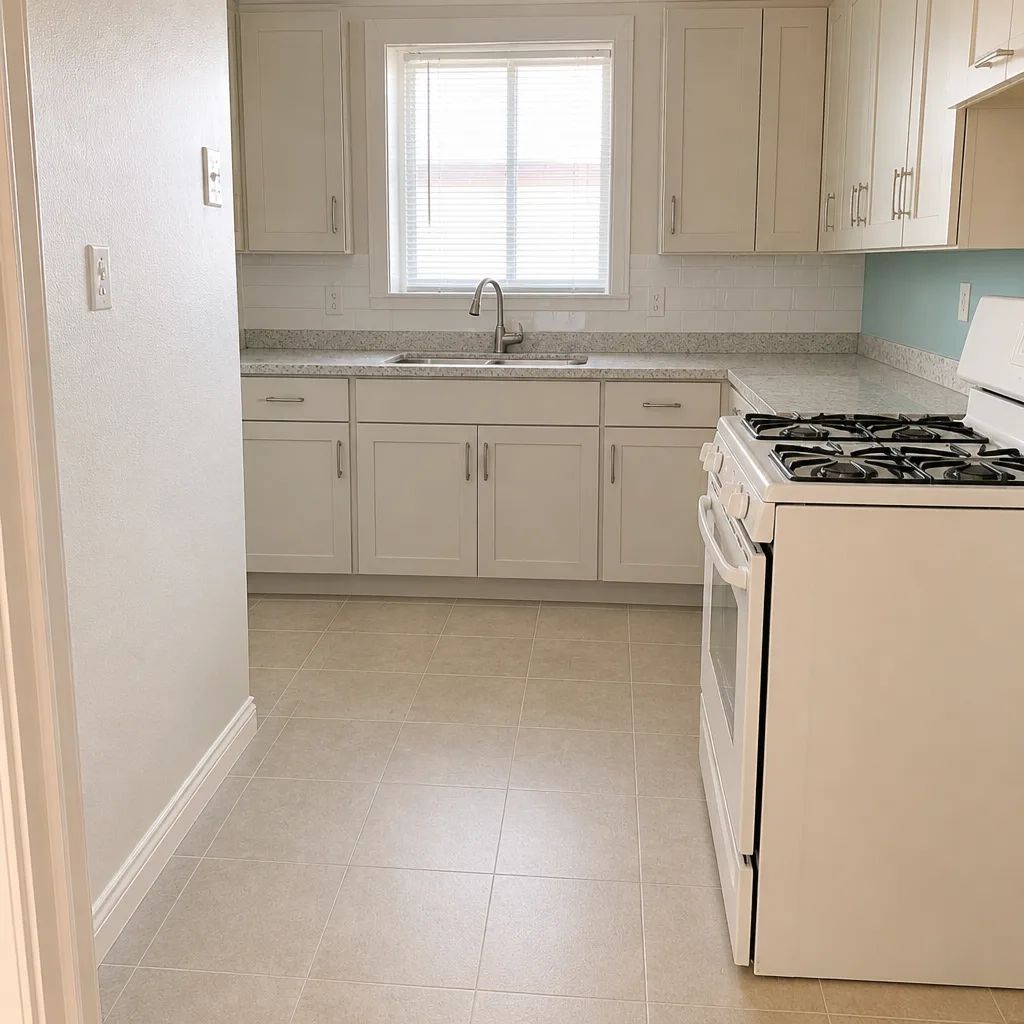
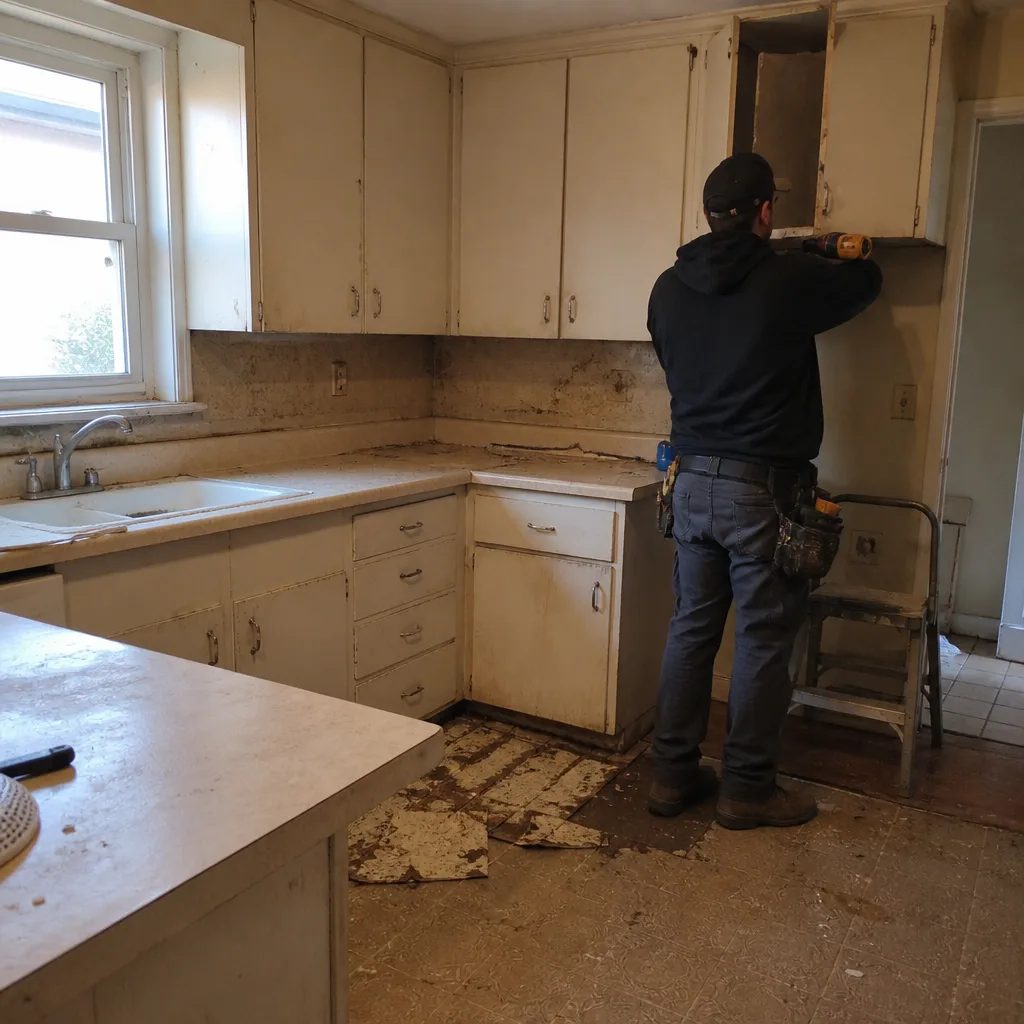
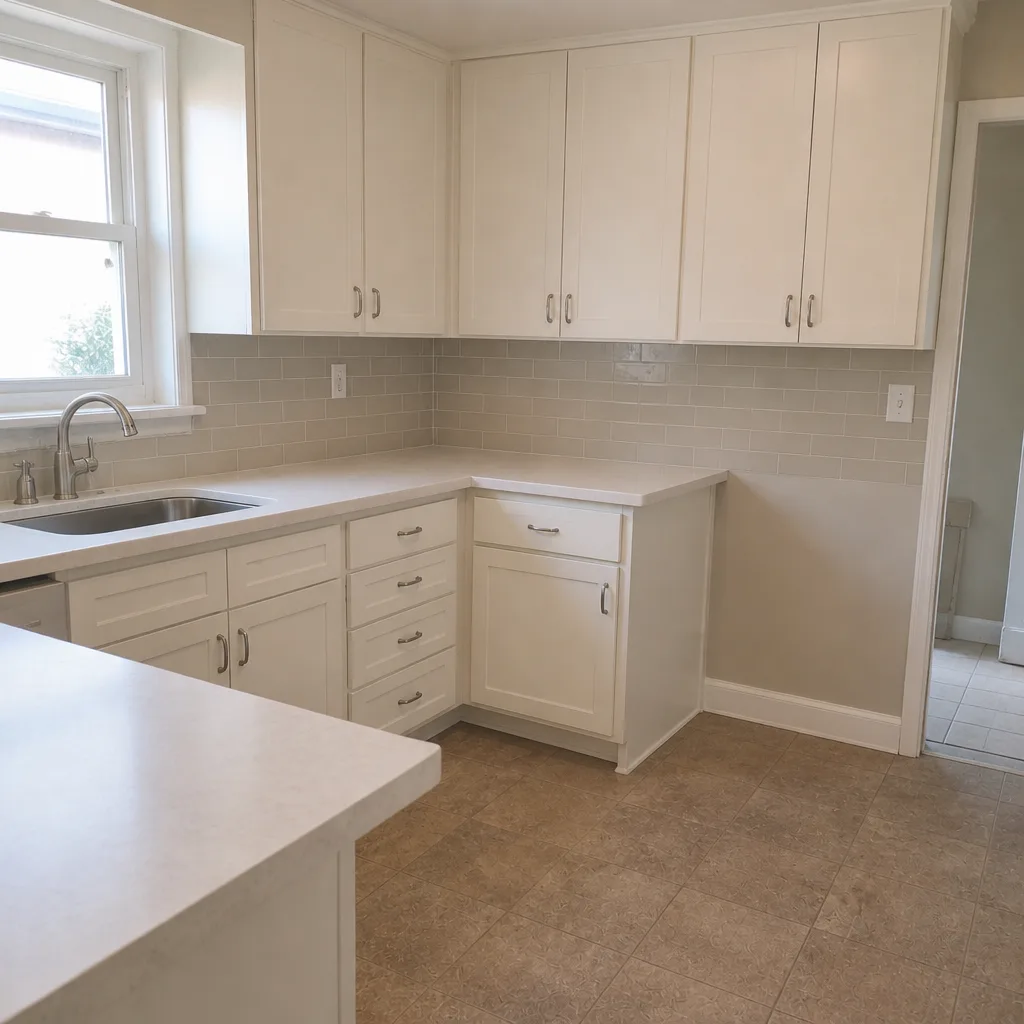
See the difference
 Before
 After
 Before
 After
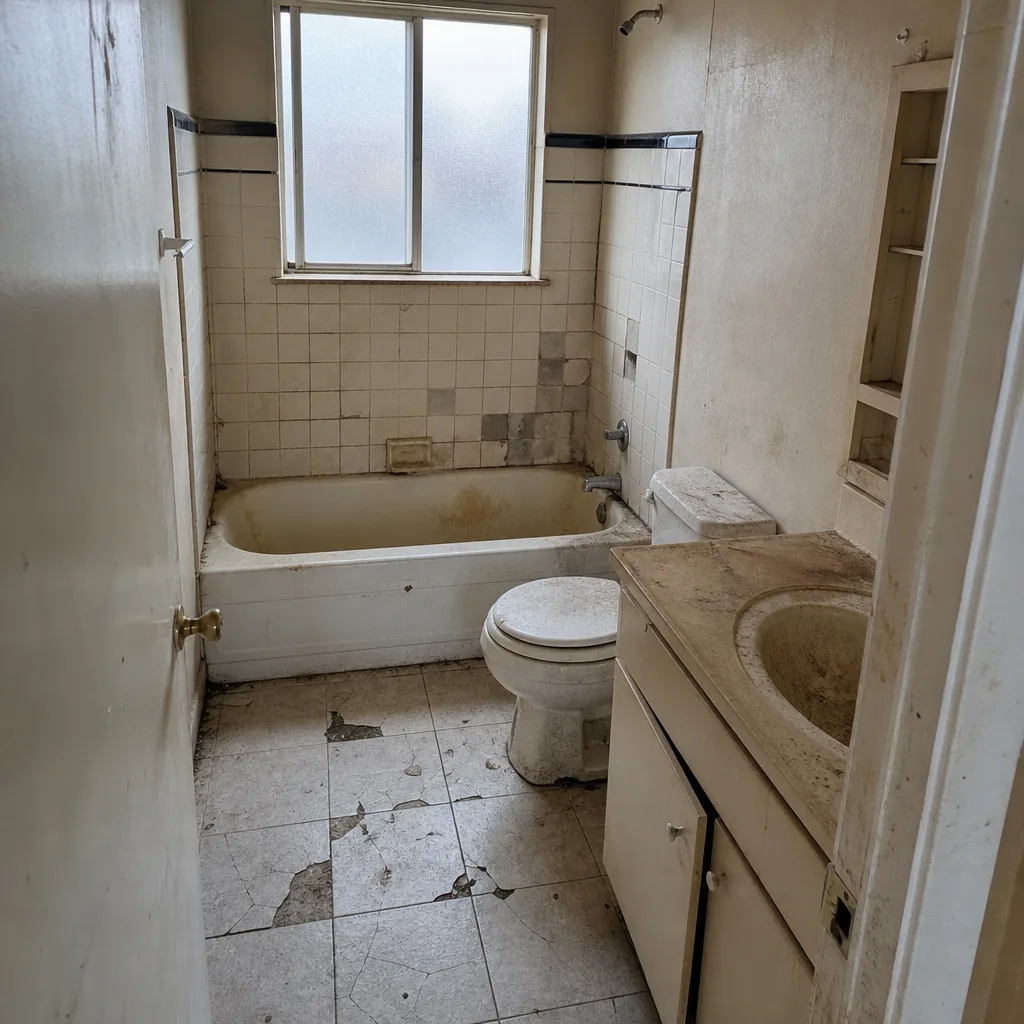 Before
 After
When to Call a Professional
Some bathroom issues shouldn’t be fixed by a homeowner, and some shouldn’t be handled by a generalist either. Bring in a professional whenever a project involves moving or replacing plumbing rough-in, changing a wet wall, adding a fixture that requires drainage or venting changes, handling any electrical inside the bathroom, or opening a shower pan. Waterproofing a shower correctly is one of the highest-stakes steps in the whole remodel; done wrong, it’s a slow leak that shows up two years later as rot behind the tile and a much bigger bill. If your current contractor has refused to pull a permit, can’t produce a license record, wants a large deposit upfront, or has gone quiet on the schedule, that’s the moment to get a second written opinion before more money moves. Bradford Remodeling Co Fairfield offers free estimates in Fairfield and a written price before any work starts: call (833) 998-3242.
Frequently Asked Questions
A bid with no line-item fixture and material specification is the earliest reliable sign. If the quote names a total price but not the vanity brand, the tile grade, or how the shower pan is being waterproofed, the price is a placeholder that will move once work begins. Get a written, line-item bid before you commit.
No legitimate contractor should, and the offer itself is a warning sign. Unpermitted bathroom work in California transfers liability to your title, can complicate insurance coverage, and may need to be opened up later for inspection. A permit and a passed inspection belong in the scope. If your bid is silent on permits, ask directly.
California law limits the upfront deposit to 10% of the contract price or $1,000, whichever is less, before work begins. A contractor asking for 30% or more before starting is out of compliance. Call (833) 998-3242 for a free estimate with a written price and a milestone-based payment schedule.
Check the live license status, the classification, and the bond and workers’ comp record. A “B” classification covers general building work including bathrooms, and a C-36 covers specialty plumbing. An expired, suspended, or restricted license is a reason to stop and ask why. Call (833) 998-3242 for an estimate with a written scope and license information.
Usually not. Bathroom work combines rough plumbing, waterproofing and tile, electrical, and finish carpentry, and those are different disciplines. Ask specifically who handles the plumbing rough-in and who sets the tile. A clear, named answer is a better sign than an insistence that one person does everything.
It should name what’s covered (labor, materials, water intrusion, tile, fixtures), state the window, and describe the remedy. At Bradford Remodeling Co Fairfield, the 365-Day Done Right Promise is a full-year written guarantee: if the work fails inside the window, we return and correct it at no charge. Call (833) 998-3242 for a free estimate.
The Bottom Line
Bad bathroom remodels follow a predictable pattern, and most of it is visible before you sign. A vague bid, a permit-avoidance pitch, a CSLB record that doesn’t hold up, a missing written guarantee, or a front-loaded deposit are all data points. Read them together. One is a reason to ask questions. Two or more are a reason to walk. The contractors who run on discipline put the price, the scope, and the guarantee in writing before any tool comes out, and they don’t ask you to skip steps to save a few dollars. That’s the standard worth holding every Fairfield bid to. When you’re ready to see what it looks like in practice, our Kitchen Remodeling in Fairfield and Bradford Remodeling Co Fairfield home pages show how the same written standard applies across a house. Call (833) 998-3242 to schedule your free estimate with Bradford Remodeling Co Fairfield, and you’ll get a written price, a documented scope, and The Garrison Standard behind the work.
Written by the team at Bradford Remodeling Co Fairfield.