Last updated November 17, 2026







Free written scope consultation - allowances, timeline, and change-order rules on paper before a single trade is scheduled
Construction Emergency Preparedness Guide for Fairfield Homes
After a major wind or rain event in Fairfield, storm-chasing contractors arrive within 24 hours. The ones who knock on doors in the first week are statistically the most likely to take a deposit and disappear. That’s not a scare tactic, it’s the pattern we’ve watched play out across Solano County after every atmospheric river and every hard freeze. The homeowners who come out of a construction emergency whole aren’t the ones who got lucky. They’re the ones who did the boring prep work months earlier: knew their systems, had documentation in hand, and understood what their policy actually covers. This guide is that prep work, written before anything goes wrong.
Quick Answer
Construction emergency preparedness in Fairfield comes down to three things done in advance: a home documentation package (permits, as-builts, contractor records, and a dated photo baseline), a written record of your insurance coverage limits and exclusions, and a short list of verified licensed contractors you can reach before a storm-chaser reaches you. When damage hits, document the sequence of cause with photos before you move anything, mitigate further damage, then call your insurer. Preparation is what separates a covered claim from a disputed one.
Styles & brands we work with
- Kitchen remodeling
- Bathroom remodeling
- Home additions & ADU
- Roofing
- Windows & doors
- Driveway & pavers
- Fence
Table of Contents
- Why Fairfield Homes Face Predictable Emergencies
- What to Document Immediately After Structural Damage
- How to Verify a Licensed Emergency Contractor in Under Two Minutes
- What California’s Emergency Contractor Rules Actually Allow
- The Insurance Disputes We See Most in Fairfield
- Building Your Pre-Emergency Home Documentation Package
- What to Do in the First Two Hours After Damage
- Common Mistakes to Avoid
Why Fairfield Homes Face Predictable Emergencies
Fairfield sits in a bowl between the Vaca Mountains and the Suisun Marsh, and that geography drives the damage patterns. Marine air pushes through the Suisun Bay corridor and hits the ridges hard. When a wind event funnels through Suisun Valley or the narrows near Interstate 80, roofs on the older housing stock in Cordelia and the neighborhoods near Travis Boulevard absorb gusts that pull fascia, lift ridge caps, and drive rain sideways under flashing.
The freeze side is just as predictable. Fairfield gets a handful of nights each winter that drop below freezing, and those nights find every uninsulated pipe in a garage, exterior wall, or crawlspace. Then the thaw. We routinely get calls in the days after a hard freeze about water where it shouldn’t be, and nine times out of ten it traces back to a pipe that split quietly and let go when it warmed up.
And then there’s the ground itself. Fairfield sits in seismically active country, and a good share of the homes built in the 1970s and 1980s have foundations and cripple walls that were never retrofitted. A moderate shaker doesn’t level a house, but it cracks stucco, shifts piers, and opens the kind of hairline cracks that turn into moisture problems over a season.
The takeaway: the emergencies that hit Fairfield homes aren’t random. They cluster around three causes – wind, freeze, and ground movement – and each one has a preparation playbook. Knowing which one your home is exposed to is the first step. If you’re planning ahead and want a professional walk-through of your home’s vulnerabilities, our general contractor in Fairfield team can assess structure, flashing, and foundation concerns before they become a claim.
What to Document Immediately After Structural Damage
The order in which you document damage matters more than most homeowners realize. Insurance adjusters reconstruct the sequence of cause, and if your photos don’t show the physical evidence in the right order, a legitimate claim can look like neglect or pre-existing damage. Here’s the sequence that holds up.
- Wide shots first. Photograph each affected room and exterior wall from the doorway or the yard line before you touch anything. These establish the whole scene and prove you didn’t stage the damage.
- The cause, not the symptom. If water came in through a failed flashing detail, shoot the flashing before you shoot the wet drywall. The failed component is your proof of an external event; the wet drywall is just the result.
- Date-stamp everything. Use your phone’s camera with timestamps enabled. A photo without a date is easy for an adjuster to question.
- Photograph the mitigation before you do it. If you tarp a roof or shut off water, shoot the tarp and the shutoff valve. This proves you took reasonable steps to prevent further damage, which most policies require.
- Save the physical evidence. Keep the split pipe section, the failed flashing, the broken shingle. Don’t throw anything away until the claim closes. Adjusters want to see the failed part, not just a photo of it.
Once the documentation is captured, mitigation is the next step: tarping, boarding, water extraction, shutting off gas or water. That work is time-sensitive, and a licensed contractor should do the structural part of it. What you don’t want is documentation captured after mitigation, because the scene is now altered. Shoot first, mitigate second. Always.
How to Verify a Licensed Emergency Contractor in Under Two Minutes
A contractor knocking on your door after a storm is not evidence of anything except that they’re good at knocking on doors. What matters is whether they hold a valid license in good standing, and the Contractors State License Board (CSLB) lets you check in under two minutes from your phone.
- Ask for the license number. A legitimate contractor produces it without hesitation. If they say “we’re licensed” but won’t give you the number, end the conversation.
- Open the CSLB website (cslb.ca.gov) and use the “Check a License” lookup. Enter the number.
- Confirm four things: the license is active, the classification matches the work (a general building contractor holds a B license; a specialty trade holds the matching C license), the expiration date is current, and there are no disciplinary actions listed.
- Confirm the business name and address on the license match the contractor in front of you. Storm-chasers frequently work under someone else’s number or a name that doesn’t match.
- Ask for a certificate of insurance and verify it separately with the insurer if the job is significant. A license doesn’t guarantee insurance is in force.
Two more flags worth knowing. A contractor who asks for a large cash deposit before any work starts, or who pressures you to sign “today,” is running a playbook. And a contractor who can’t produce a written contract with a scope, price, and schedule is not a contractor you want inside your walls. In our experience across Fairfield, the crews that arrive without a written price and a documented scope are the same crews that disappear after the deposit clears.
What California’s Emergency Contractor Rules Actually Allow
California gives homeowners real legal protection in emergency situations, and knowing what those protections cover means a pressure pitch can’t override them. Two rules matter most.
The emergency exemption on permits. Under California law, certain repair and mitigation work needed to protect life and property from imminent danger can proceed before a permit is pulled. The emergency work is limited to what’s necessary to make the structure safe – shoring, tarping, temporary weatherproofing. It does not cover the permanent repair or the remodel. Once the immediate danger is abated, the permanent work requires a permit and inspection like any other job. So a contractor telling you “no permit needed, it’s an emergency” for anything beyond temporary mitigation is misusing the rule.
The three-day right to cancel. For most home-improvement contracts signed at your home, California’s Home Solicitation Sales Act gives you a three-day right to cancel. A door-to-door contractor may tell you the exemption doesn’t apply to emergency work; in most cases it still does. Get the cancellation notice in writing and keep it.
What the exemption does not do: it doesn’t lower the licensing requirement, it doesn’t eliminate the requirement for a written contract on jobs over the statutory threshold, and it doesn’t shield a contractor from CSLB discipline. A contractor who says “emergencies are different” to skip the license or the written contract is telling you something important about how they’ll handle the rest of the job.
We put every scope and every price in writing before any work starts, emergency or not, and we pull the permits for the permanent repair. That’s just how the job gets squared away. If you’re planning significant repairs to a home that’s taken damage, our team handles the structural side through our Bradford Remodeling Co Fairfield home page.
The Insurance Disputes We See Most in Fairfield
Most construction emergencies get covered. The disputes cluster around three recurring issues, and knowing them in advance is half the battle.
- Earth movement. Standard homeowner policies in California almost universally exclude earth movement – earthquakes, landslides, and settling. Damage that traces to ground shifting usually gets denied on a standard policy. You need a separate earthquake policy or a difference-in-conditions endorsement to have a shot at coverage. Check your policy language before you assume you’re covered; a foundation crack after a tremor is usually your cost, not the insurer’s.
- The slow leak. Policies typically cover sudden and accidental water damage but exclude damage from a leak that “occurred over a period of time.” A pipe that bursts in a freeze is covered; a slow drip under a sink that rotted the subfloor over two years is usually excluded. The difference is documentation of when the damage happened. That’s why a photo baseline and dated maintenance records matter.
- Wind versus flood classification. This is the big one in Fairfield after a storm. Wind-driven rain that enters through a failed roof or broken window is typically covered under the windstorm section. Rising floodwater is not covered under a standard policy; that requires a separate National Flood Insurance Program policy. When a storm causes both, the adjuster has to attribute damage to one cause or the other. Your documentation of the entry point – the failed flashing, the broken window – is what determines which way the claim goes.
The pattern across all three: coverage turns on cause, and cause turns on documentation. A homeowner who can show exactly what failed and exactly when has a far stronger claim than one who can only show the resulting damage.
Building Your Pre-Emergency Home Documentation Package
The single most effective thing a Fairfield homeowner can do before an emergency is assemble a home documentation package. It cuts claim disputes, speeds mitigation, and gives any contractor an honest starting point. Here’s what goes in it, kept in a waterproof folder and a cloud backup.
- Permits and as-builts. Copies of the original building permit and any subsequent permits for additions, remodels, or structural work. If the city has the records, request them now. As-built drawings show the actual foundation, framing, and mechanical layout, not the original plan.
- Contractor records. Invoices, scopes, material lists, and warranty documents from every significant job done on the home. When you claim water damage, the adjuster wants to know when the roof was replaced and with what materials – brand and product line matter, and so does the warranty.
- A dated photo baseline. Walk the exterior and interior once a year and photograph the roof, foundation line, exterior walls, and every mechanical room. Date the photos. This baseline is what proves that the crack wasn’t there last spring and the flashing wasn’t failed before the storm.
- Utility shutoff map. Photograph the main water shutoff, the gas meter shutoff, and the electrical panel. Write a one-page note on how to shut each one off. In a burst-pipe emergency, minutes matter and panic makes people forget which valve is which.
- Insurance summary. A one-page summary of your policy’s dwelling coverage limit, contents limit, deductibles, and every named exclusion. Call your agent and have them walk you through the earth movement and flood exclusion language specifically.
Putting this package together takes a weekend, and it’s the kind of preparation that pays off when you’re standing in a wet living room at 11 p.m. For the homeowners we work with in Fairfield, that documented baseline is often the difference between a claim that sails through and one that drags for months. When major repairs are needed down the road, our kitchen remodeling in Fairfield and bathroom remodeling in Fairfield teams use the same documentation approach on the rebuild side.
What to Do in the First Two Hours After Damage
Safety first, then evidence, then mitigation, then calls. Here’s the order that works.
- Get people out of harm’s way. If there’s structural damage, sagging ceilings, or a gas smell, leave the house and call 911 from outside. Don’t go back in for belongings.
- Shut off what’s feeding the problem. Water main for a burst pipe, gas meter for a leak, the breaker for an electrical issue. Know where these are before you need them.
- Document before you move anything. Wide shots, then cause, then mitigation, per the sequence above.
- Mitigate further damage. Tarp the roof, board the window, extract standing water, move furniture off wet floors. Reasonable mitigation is required by most policies.
- Call your insurer. Report the claim and get a claim number. Ask what documentation they want and in what format.
- Call a licensed contractor for the structural work. A verified contractor can assess scope, advise on mitigation, and put a written price on the permanent repair. Don’t sign with the first person to knock.
One safety note worth repeating: high-wind and storm work on roofs is genuinely dangerous. Ladder work over two stories, roof walking on wet shingles, and any tarping over a steep pitch should be done by a trained professional with the right fall protection. Don’t risk your neck to save a few hundred dollars on mitigation. The professional mitigation cost is usually covered by the claim; a fall injury is not.
Common Mistakes to Avoid
- Signing with the first contractor who knocks. Post-storm door-knockers move fast for a reason. Verify the license on CSLB before you sign anything, and never sign a contract you don’t understand.
- Paying a large cash deposit up front. A legitimate contractor layers payments to the schedule. A deposit tied to no written scope is how people lose money with nothing to show for it.
- Documenting the damage after mitigation. Once you tarp, extract water, or move furniture, the evidence of cause is altered. Shoot the failed component before you touch it, or you’ll be reconstructing the scene from memory for the adjuster.
- Assuming earth movement is covered. In Fairfield, a foundation crack after a tremor is almost always a standard-policy exclusion. Read the exclusion language before you count on the claim.
- Treating a slow leak as if it were a sudden one. If the insurance company can show the leak occurred over months, the claim gets denied. Your baseline photos and maintenance records are what prove it was sudden.
- Letting a contractor “skip the permit” on the permanent repair. The emergency exemption covers temporary mitigation, not the rebuild. Unpermitted structural work creates a disclosure problem when you sell and usually voids the warranty that matters.
- Keeping no written copy of anything. Verbal promises, phone-only scopes, and “we’ll work it out” arrangements leave you with no recourse. Every price, every scope, every guarantee should be in writing before the work starts.
See the difference
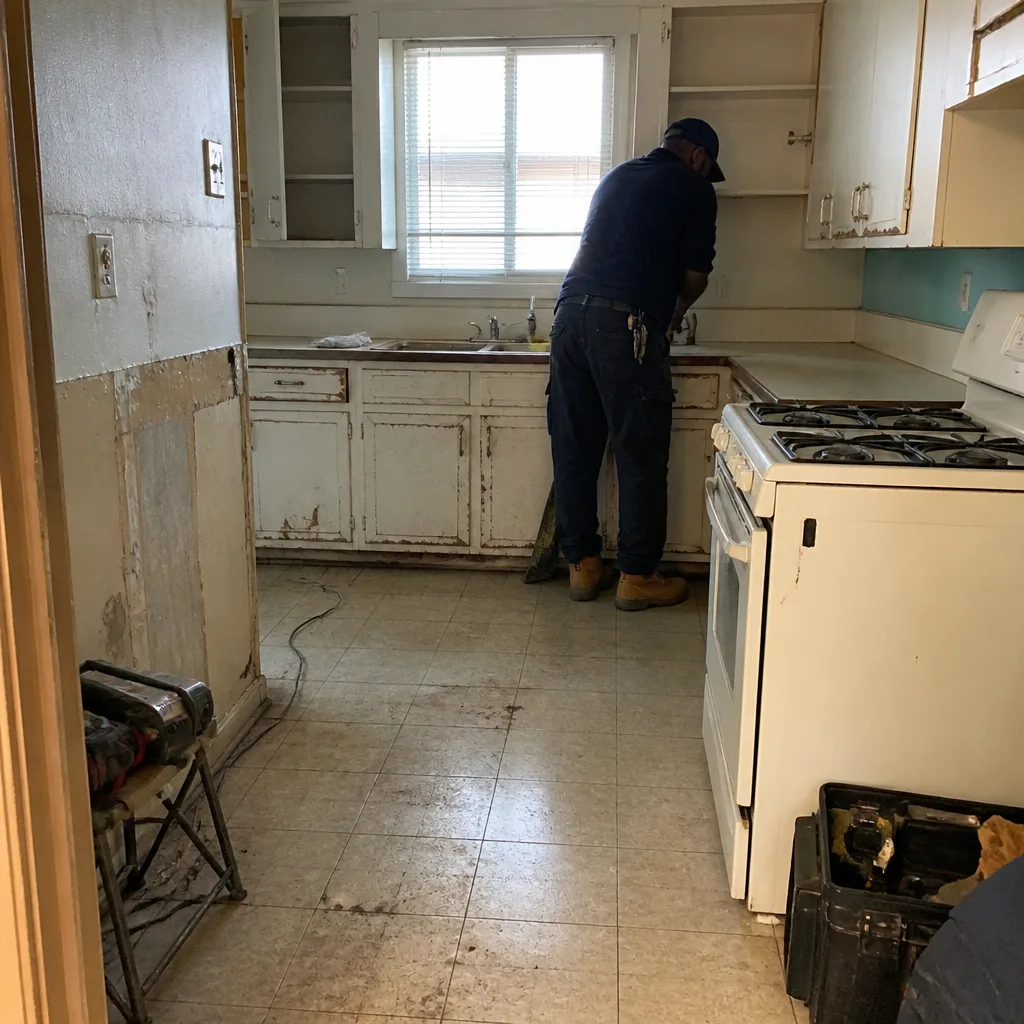 Before
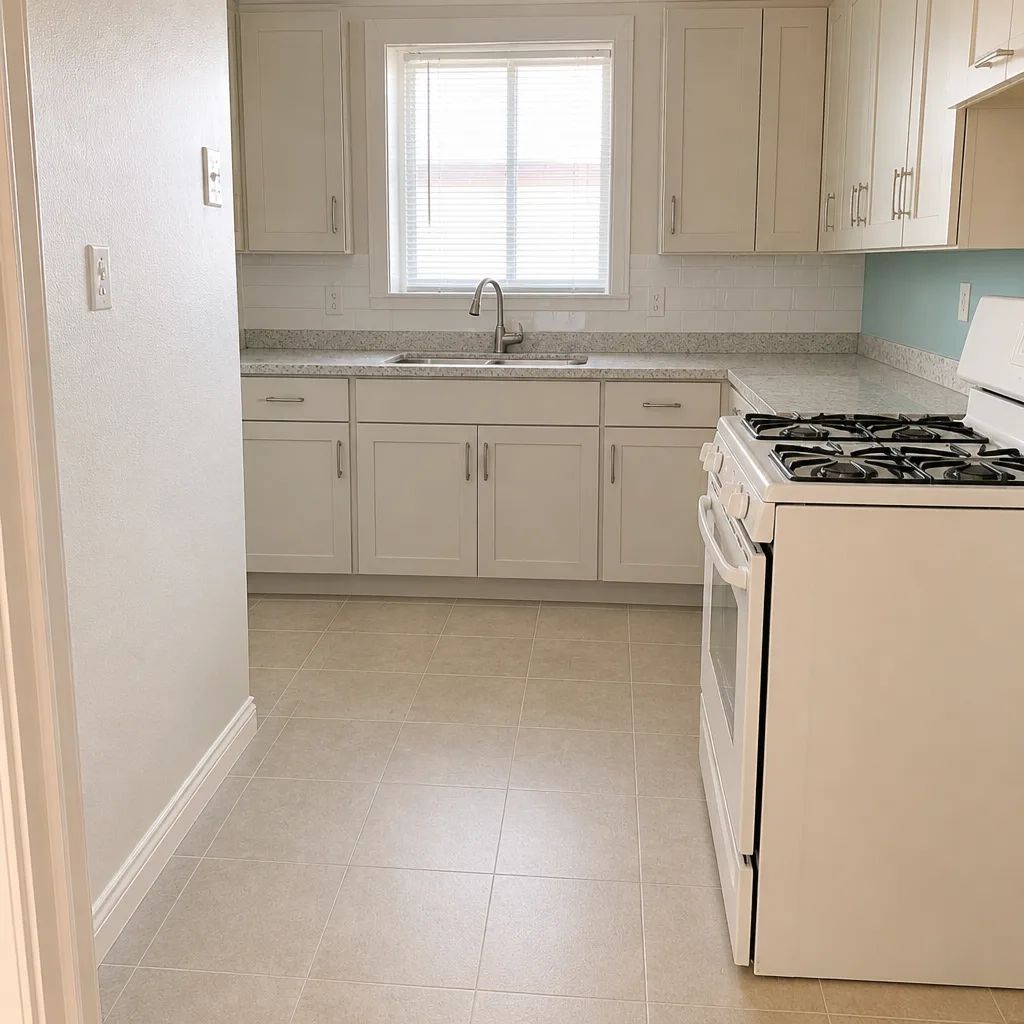 After
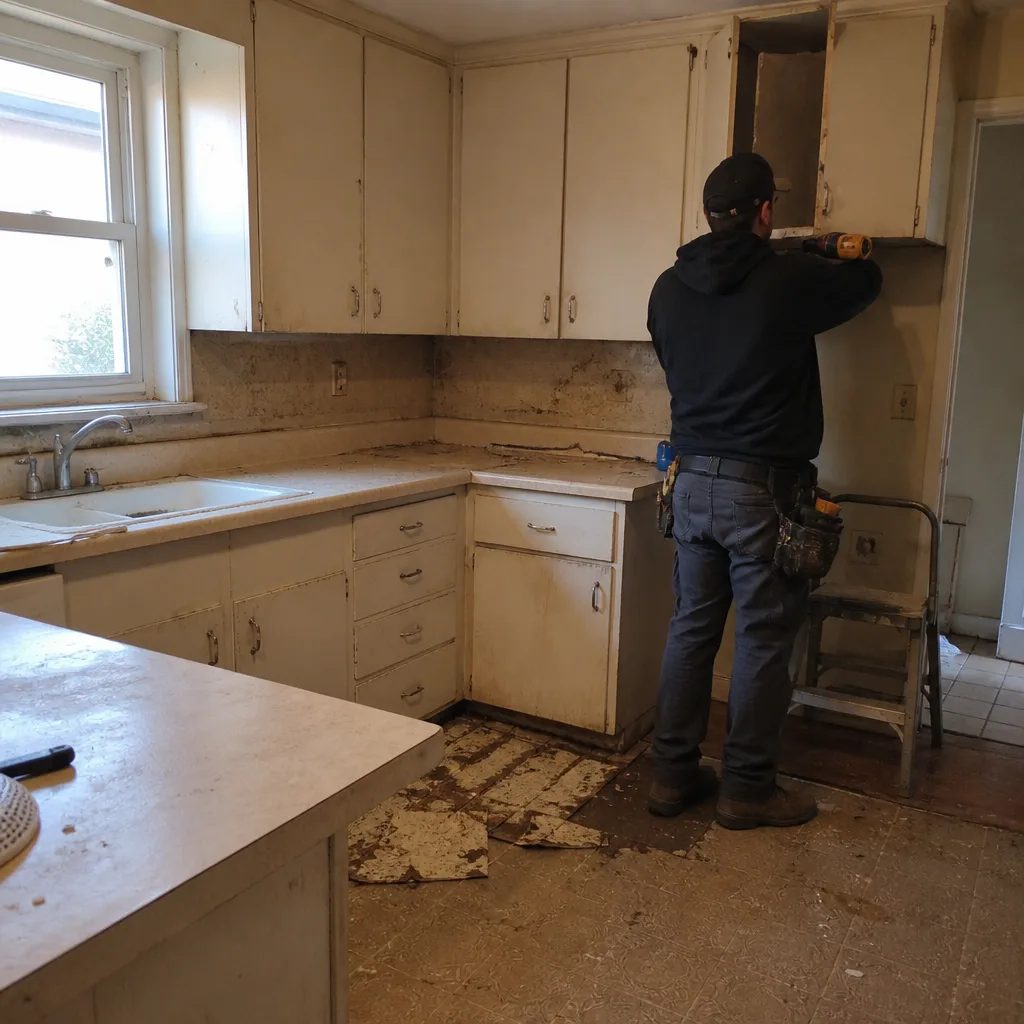 Before
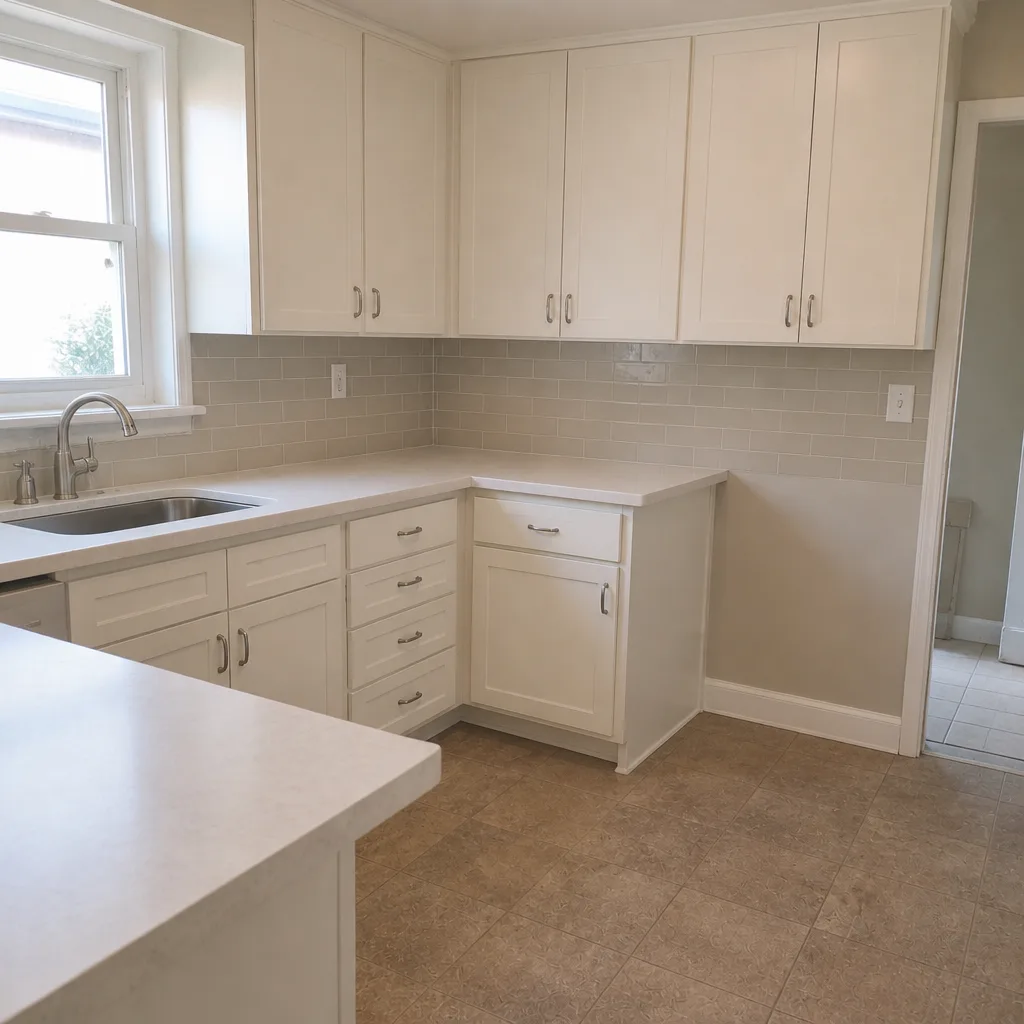 After
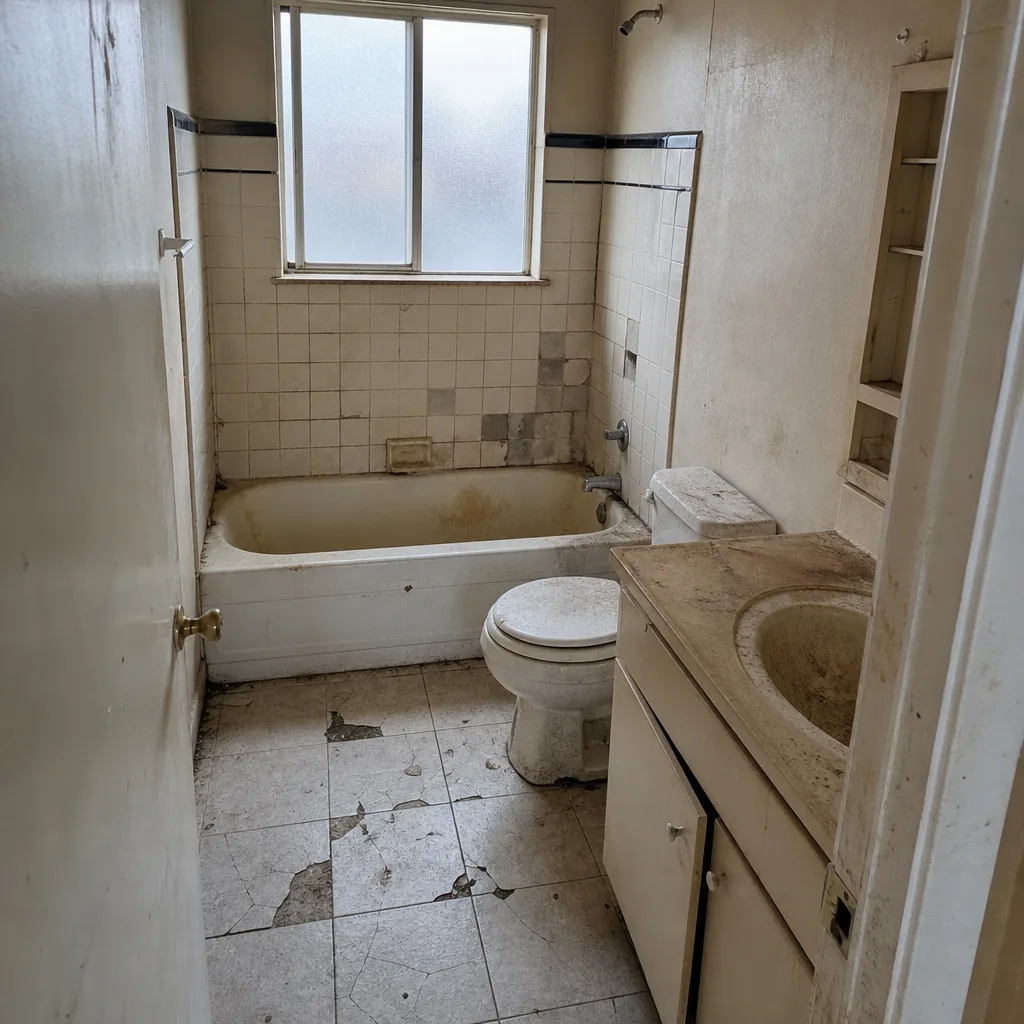 Before
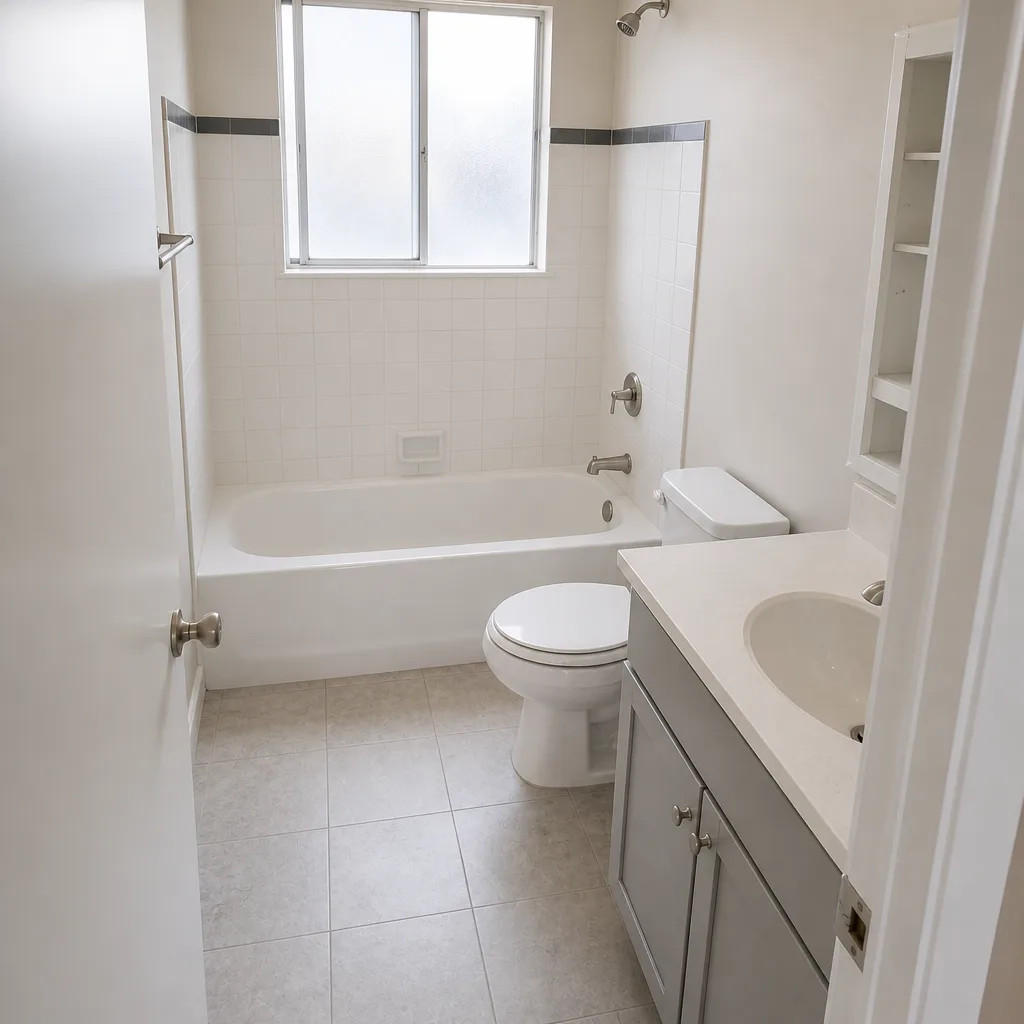 After
When to Call a Professional
Some jobs are homeowner-comfortable: moving furniture, shutting a valve, photographing a wall. Those aren’t what we’re talking about. Call a licensed professional when the work involves structure, water intrusion, electrical, gas, or height. Specifically: a roof that’s lost shingles or flashing and is now letting water in, a foundation crack or pier that’s visibly shifting, a burst pipe that’s soaked into framing or subfloor, a ceiling that’s sagging after water damage, or any storm damage that needs a written scope for the insurance claim. Those are the jobs where a professional assessment and a written price protect both your home and your claim. Bradford Remodeling Co Fairfield offers free estimates in Fairfield – call (833) 998-3242 and a live person will answer, day or night. Every job we take on comes with a written price before any work starts and the 365-Day Done Right Promise behind it.
Frequently Asked Questions
Most emergency mitigation – tarping, board-up, water extraction, temporary shoring – runs a few hundred to a few thousand dollars depending on scope, while permanent structural repair to a roof, foundation, or wall typically runs in the low-to-mid five figures for substantial damage. The exact number depends on what failed and how far the damage spreads, which is why we put a written line-item price in front of you before any work starts. Call (833) 998-3242 for a free estimate; the written price is what you compare against the insurance adjuster’s number.
Yes, wind-driven rain that enters through failed flashing, a broken window, or missing shingles is typically covered under the windstorm section of a standard policy. Rising floodwater is not, and that’s where the disputes start. Document the entry point before mitigation so the adjuster can attribute the damage correctly.
Not at Bradford. The written price you receive is the price you pay; no numbers move at the door, and no change orders unless you approve a scope change in writing. That commitment is part of The Garrison Standard, and it applies to emergency repairs the same as any other job.
Emergency mitigation usually takes hours to a couple of days. Permanent structural repair depends on scope: a roof replacement runs a few days, foundation repair a few weeks, and a full rebuild longer. We put the schedule in writing alongside the price so you know what to expect.
In almost every case, yes. Standard California homeowner policies exclude earth movement, so a foundation crack traced to a tremor is typically not covered. You need a dedicated earthquake policy or a difference-in-conditions endorsement. Confirm the exclusion language with your agent before you need it.
Yes. We’re state-licensed and insured and bonded, and we’ll produce the license number and certificate of insurance on request. When any contractor knocks on your door after a storm, verify their license on the CSLB site before you sign. It takes two minutes and it’s the cheapest insurance you’ll ever buy.
The Bottom Line

The Fairfield homeowners who come out of a construction emergency whole didn’t get lucky. They knew their home’s exposure to wind, freeze, and ground movement. They had a documentation package ready – permits, as-builts, contractor records, a dated photo baseline. They understood exactly what their policy covers and what it excludes. And they knew how to verify a licensed contractor in two minutes with the CSLB lookup before signing anything. None of that requires a contractor. All of it requires a weekend of preparation. Everything we build at Bradford is written down before work starts, backed by the 365-Day Done Right Promise and The Garrison Standard, and priced in writing with no surprise numbers. If you want a professional assessment of your home’s vulnerabilities before the next storm season, call (833) 998-3242 for a free estimate.
Written by the team at Bradford Remodeling Co Fairfield.