Last updated November 17, 2026




Free written scope consultation - allowances, timeline, and change-order rules on paper before a single trade is scheduled
Choosing the Right Construction Brand: A Buyer’s Guide for Fairfield
Five-star reviews measure how a customer felt on the day the crew packed up. They don’t measure whether the job was permitted, whether the warranty was honored eight months later, or whether the invoice at the end matched the number on the bid. Those three things live in documents, not star ratings. In our experience across Fairfield jobs, the difference between a smooth remodel and a nightmare rarely comes down to the brand on the truck – it comes down to what that brand was willing to put in writing before the first shovel moved. This guide walks through the actual criteria: enforceable guarantees, scope-matched bidding, license and bond checks, subcontractor verification, and the three contract clauses that tell you who’s accountable.
Quick Answer
Choosing the right construction brand in Fairfield is a contract decision, not a marketing one. The right contractor is the one who gives you a fixed written price before any work starts, states the coverage period and claim process of the guarantee in writing, and can show you a B-General license, a workers’ comp certificate naming your address, and a signed subcontractor roster. If any of those four items is missing, keep shopping no matter how good the reviews look.
Styles & brands we work with
- Kitchen remodeling
- Bathroom remodeling
- Home additions & ADU
- Roofing
- Windows & doors
- Driveway & pavers
- Fence
Table of Contents
- Why Brand Signals Fail in Fairfield
- What a Written Guarantee Must Actually Specify
- How to Compare Bids Apples-to-Apples
- The Credentials That Matter in Fairfield
- Why the Subcontractor Roster Matters as Much as the Brand
- The Three Contract Clauses That Separate Accountable Contractors
- What “Squared Away” Looks Like at Job Close
- Common Mistakes to Avoid
Why Brand Signals Fail in Fairfield
The typical homeowner in Fairfield spends 20 to 40 hours researching a remodel. Almost all of that time goes into reviews, portfolio photos, and Instagram. Almost none of it goes into reading the contract or the warranty terms. That is a mismatch with how jobs actually go wrong.
Reviews capture satisfaction at close. They don’t capture what happens in month seven when a grout line cracks, a cabinet door sags, or a shower pan leaks because the rough-in wasn’t run correctly. That’s the window where a written guarantee matters, and it’s exactly the window that a rating can’t see into.
We’ve watched the same pattern on repeat: a homeowner picks the brand with the most five-star reviews, the crew is pleasant, the project closes on a Friday, and then the follow-up calls get routed to voicemail. That’s not a bad contractor exactly – it’s a contractor with no accountability structure. Brand had nothing to do with it. The paper did.
Fairfield adds its own spin. The inland climate swings across the year – hot dry summers, wet winters, and a Solano County transition zone that runs from the Suisun marsh edge into the hills above Cordelia and Green Valley. Exterior products take a beating from that cycle, and interior moisture management in bathrooms needs to be right the first time. Hardware and finish failures here tend to show up in the first spring after installation, which is right inside a well-written guarantee window – if the contractor actually wrote one.
What Actually Predicts a Good Outcome
- A fixed written price before any work begins, with line items tied to a scope
- A guarantee that spells out coverage period, claim triggers, response time, and exclusions
- License classification, workers’ comp, and bond sized to the project
- A named subcontractor roster you can verify
- Contract language that dictates how change orders get authorized
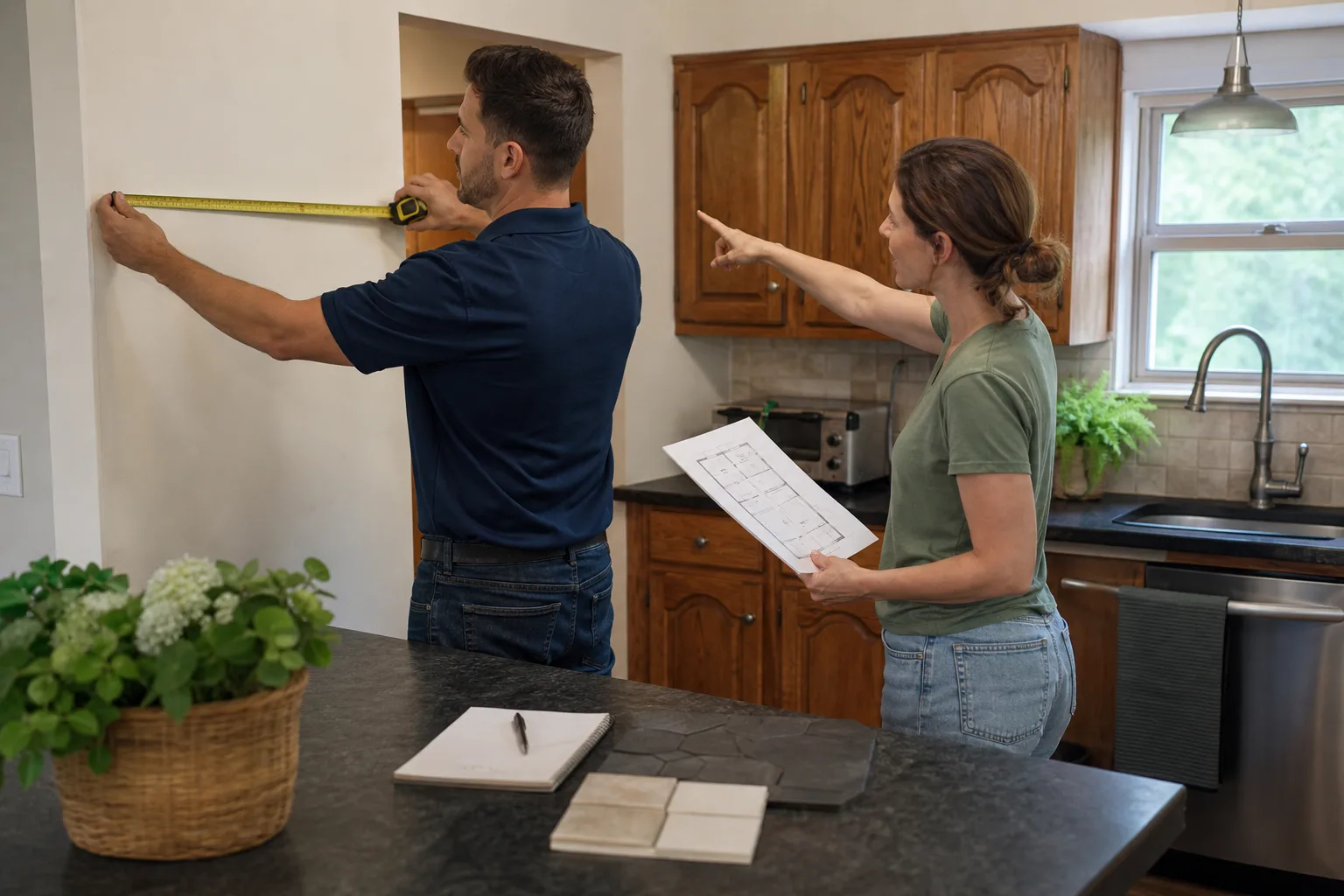
None of those appear in a review. All of them appear on a page of paper you can hold. If you’re starting to think about a project, the free estimate from a Bradford Remodeling Co Fairfield home visit is a good place to see the difference in person.
What a Written Guarantee Must Actually Specify
A written guarantee is only as strong as the four things it names. If any section is missing, the doc is decorative.
- Coverage period. How long does the guarantee last? A 30-day punch list is not a guarantee; it’s a courtesy. A year-long term gives you enough runway to catch the slower failures – grout, caulk, paint adhesion, cabinet alignment, door swing, exterior flashing that only fails after a wet season.
- What triggers a claim. A claim should be triggered by workmanship failure, not by the homeowner’s discovery of a manufacturer defect. The line between the two needs to be drawn in the document. Common good language: “if the work fails within the guarantee period, we correct it at no charge.”
- Response time. Does the guarantee say the contractor will be back in 48 hours? Five business days? Ninety days? Any guarantee without a response commitment is really just an expression of intent.
- Exclusions. What’s not covered? Normal wear, homeowner modifications, damage from other trades, acts of nature. A good guarantee names the exclusions plainly. A short guarantee usually hides them.
Most warranty language you’ll read on a contractor’s website names the coverage period but none of the other three. That’s the tell. A warranty that says “one-year warranty on all work” and stops there leaves every trigger, every response window, and every exclusion undefined – which means the contractor decides all of that when a problem comes up. You want a guarantee that decides it in advance.
Our 365-Day Done Right Promise is written that way on purpose. Every completed project carries a full-year written guarantee. If the work fails inside that window, we come back and correct it at no charge. That’s not a talking point we use in sales – it’s a term we sign on close, and it’s the same term across every location in the Garrison Partners family.
What Good Guarantee Language Looks Like
- Names the coverage period in days or months, in writing
- States the claim trigger in plain English
- Commits to a response window
- Lists exclusions by category, not in a wall of blocks
- Sits in the same packet as the scope and the price
If a contractor hands you a warranty that ticks all five, that alone puts them in a small group. If your estimate packet includes a signed written guarantee in advance so you know what you’re getting on close, that’s the standard. It’s also what General Contractor in Fairfield should mean when a homeowner hears the phrase “worth the call.”
How to Compare Bids Apples-to-Apples
Comparing contractor bids in Fairfield is where most homeowners go wrong, and for the same reason every time: they compare the totals, and the totals were never measuring the same scope. Two bids that differ by $18,000 may reflect totally different inclusions – one includes tile, one doesn’t; one includes the permit, one asks you to pull it; one specifies KraftMaid cabinetry, one leaves the cabinet line blank.
Scope verification means going line by line on each bid and confirming six categories are covered. If a bid has a blank next to any category, you don’t know what you’re comparing, and the difference in price is really just noise.
The Scope Verification Checklist
- Permits. Who pulls them, and are the permit fees listed as a line item or rolled into the job total?
- Demo and disposal. Named explicitly? Hauling is a real cost and a common item to leave ambiguous.
- Materials and brands. Named specifically, with model numbers or lines. If the bid says “premium cabinetry” without a brand, ask for a brand.
- Labor description. Which trades are in-house and which are subbed? Who’s actually swinging the hammer?
- Substrate and rough-in. For kitchens and baths, what’s the substrate repair allowance? What’s the rough-in scope? These are the items that get squeezed when a contractor is over budget.
- Cleanup, punch list, and close-out. Who handles the debris bin, the walkthrough, and the final punch? Is a written guarantee included in the closing packet?
The industry term for a bid that names brands, models, and allowances concretely is a “spec bid.” A bid that says “allowance” without a ceiling is not a bid – it’s a placeholder. A Kitchen Remodeling in Fairfield project should always show a spec bid, because the kitchen is where allowances turn into six-figure surprises fastest.
Documented brand rosters matter here. When a contractor names “KraftMaid, Wellborn, Cambria, Caesarstone, Kohler, Moen, GAF, James Hardie, Therma-Tru” in their materials standard, the bid can be verified against those manufacturers’ spec sheets. That’s the difference between a claim and a traceable specification. Our roster runs through exactly those brands – plus Belgard for hardscaping and Sakrete or Quikrete for concrete flatwork – because the point is that none of the materials are a guess.
The Credentials That Matter in Fairfield
Every residential remodeler in California operates within a license framework set by the Contractors State License Board. For general remodeling and additions in Fairfield, the classification to check for is B-General Building Contractor. That classification covers the full scope of residential construction and is the right one for a whole-home or multi-trade project. An A-General Engineering license is for fixed works like roads, bridges, and large excavations; an A license on a kitchen remodel is a red flag. A C-license (C-33 painting, C-54 tile, etc.) covers a single trade and should only appear on that trade’s scope of work.
Workers’ compensation is the second credential, and it has a specific practical form. You don’t want to see “yes, we’re covered” in an email. You want a certificate of insurance with your property address listed as the certificate holder, so that any claim tied to your job runs against the right policy. Ask for the certificate by name. If the contractor is shopping for insurance mid-job, that’s a real problem on the day a worker is hurt at your house.
The third is the bond. California residential contractors carry a Contractor’s Bond, and the bond amount is fixed by statute, not scaled to project size. That’s the mistake most homeowners make: they think a large remodel means a large bond. It doesn’t. What scales to your project is general liability coverage, and that’s what you want to see specified to roughly your project size. A $600,000 liability policy on a $300,000 whole-home remodel is thin.
The Credentials You Should Ask For
- Current B-General license number, verified on the CSLB website
- Workers’ compensation certificate naming your property address
- General liability certificate at a limit appropriate for the project
- Active Contractor’s Bond (fixed by statute, not project-scaled)
- Subcontractor licenses on file for every trade sub slated for your job
Good contractors hand all five over on request without a pause. Contractors who stall or send a fragmentary email usually have a gap somewhere. It’s not rude to ask – it’s the whole point of hiring a licensed professional. When you request a free estimate through Bathroom Remodeling in Fairfield, ask up front. It saves both sides a Tuesday.
Why the Subcontractor Roster Matters as Much as the Brand
In Fairfield and every other market, the brand on the contract often isn’t the crew that does the work. Plumbing, electrical, drywall, tile, and HVAC are routinely subbed to independent tradespeople. That’s normal and healthy in the trades – a specialist is better at their specialty than a generalist is. What matters is whether the subs are vetted to the same standard as the brand that put its name on the job.
If your kitchen remodel is going to be subbed to a tile crew and an electrician, you want both of those people named and both of those licenses verified before work starts. The roster is not a formality. It’s the actual list of people who will be inside your house.
- Ask for the roster in writing. Any contractor who won’t name the trades before work starts is protecting something you should know.
- Check each subcontractor’s license on the CSLB site. The classification should match the trade – C-10 Electrician for electrical, C-36 Plumbing for plumbing, C-54 Tile for tile, and so on.
- Confirm the subcontractors are covered by the same workers’ comp and liability programs as the primary contractor, or that they carry their own certificates with your address named.
- Ask whether background checks apply to subs the same way they apply to the primary crew.
Background checks are not a standard across the trades. In our case, every technician is background-checked and uniformed on every job, and the standards are set at the Garrison Partners level, not left to individual crews. That answers a question the roster alone doesn’t: not just who’s licensed, but who’s arriving at the door. Homeowners should be able to know both before the first truck shows up.
The Three Contract Clauses That Separate Accountable Contractors
You don’t need a law degree to spot an accountable contract. You need to read three specific sections and confirm all three exist. If any one is missing, you’re looking at a contractor who will improvise under pressure. Improvisation on a remodel is expensive.
1. Fixed-Price Language
The good version says the price is fixed and won’t move absent a written change order signed by the homeowner. The bad version says “estimate” everywhere and “subject to change” in the footer. A written price before any work starts is a real, enforceable term – and it’s the single biggest difference between a contractor who puts a number on paper and one who gives you a range and adjusts on the day. We give the firm number, always. It’s non-negotiable for us, and it’s the reason our customers don’t get surprise invoices at close.
2. Change Order Authorization Requirements
No job is perfect, and change orders happen – the wall isn’t where the drawing said it was, the substrate under the old tile is compromised, the homeowner wants a different sink. The question isn’t whether there will be a change order; it’s whether it can be authorized by anyone other than the homeowner, in writing, with a price attached. Good language: change orders require the homeowner’s written approval before the work proceeds, and the change order names the additional cost first. Bad language: “the contractor may perform additional work as necessary and bill accordingly.” That second sentence is how a $6,000 job becomes a $11,000 job.
3. Dispute Resolution Terms
Every contract in California should name how disputes get resolved. Mediation first, arbitration or court second, venue specified, and any lien rights waived or preserved clearly. You’re not hiring a lawyer by reading the dispute clause – you’re confirming the contractor has a process other than “we’ll figure it out if it happens.”
Contracts that contain all three – fixed price, written change order approval, and dispute resolution – are in the top tier of what’s written in Fairfield. Most aren’t. If yours is, you’re already past the hard part.
What “Squared Away” Looks Like at Job Close
Close-out is where the paper you were promised either shows up or doesn’t. A well-run job ends with four things in the homeowner’s hands, not a wave from the driveway.
- A clean site. Debris removed, floors swept, bins off the property, dumpster pulled. No “we’ll get the last bit tomorrow.”
- A documented scope. A final packet showing what was installed, with model numbers and manufacturer documentation.
- A signed written guarantee. The same guarantee promised at contract, signed and clearly stating what’s covered, for how long, and how to file a claim.
- A live voice on the phone for any follow-up. Not a ticket system, not a web form, not a voicemail tree. A person who can answer within a call. In Fairfield, after a job closes, the phone lines shouldn’t change character.
We keep a live person on the phone 24 hours a day, seven days a week, because the fastest way for a homeowner to lose trust in a contractor is to hear voicemail on a follow-up. That’s a small promise. It’s also the one that gets broken most often by the industry at large.
Common Mistakes to Avoid
- Comparing bids on total price alone. Two bids are only comparable when permits, materials, labor, cleanup, and the final guarantee are all named in the same categories on both.
- Trusting “warranty” without reading the terms. A warranty that names a period but no claim trigger, no response window, and no exclusions is decoration. Ask for the actual document.
- Skipping the subcontractor roster. In Fairfield’s busy seasons the crew on your job may be subbed, and those names should be in writing before they show up.
- Assuming the bond scales to project size. It doesn’t – it’s fixed by statute. General liability is the coverage that scales to your project, and it’s the number to ask about.
- Letting “subject to change” stay in the pricing section. If the number isn’t fixed in writing before work starts, it isn’t a price, it’s a forecast.
- Accepting verbal change order approval. Any change without the homeowner’s written sign-off is a door into six-figure surprise territory.
- Missing the Solano County permit timeline. Fairfield permits move on their own schedule. A contractor who starts punch-list-heavy finish work before inspection passes is building in a redo. Ask for the inspection schedule up front.
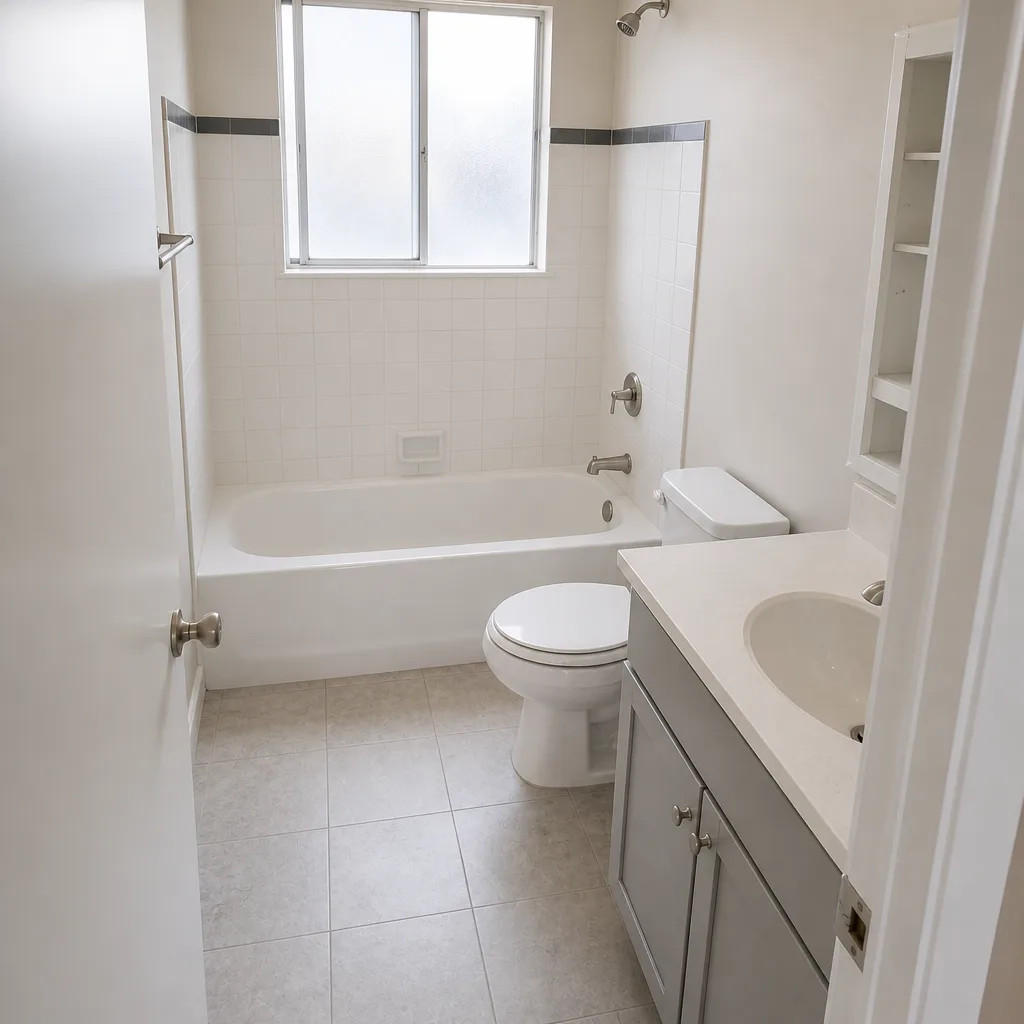
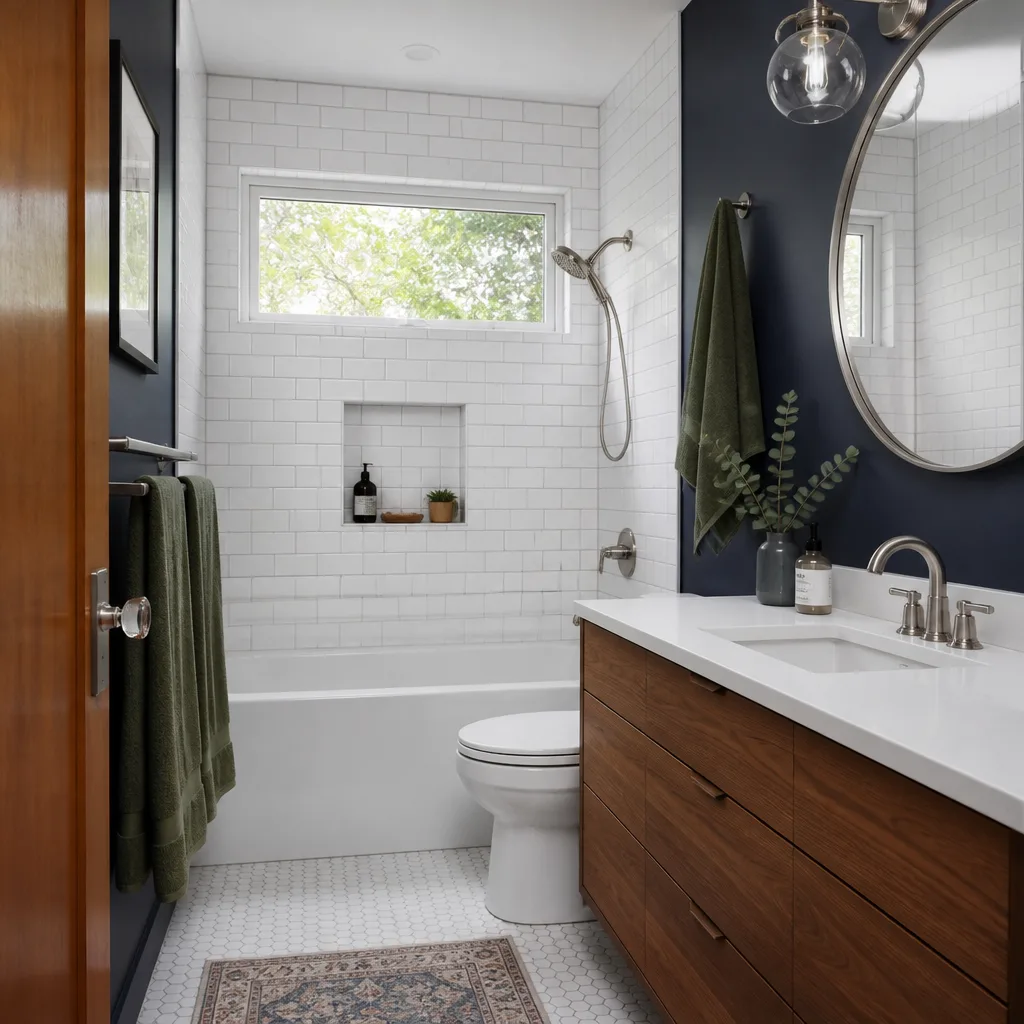
See the difference
 Before
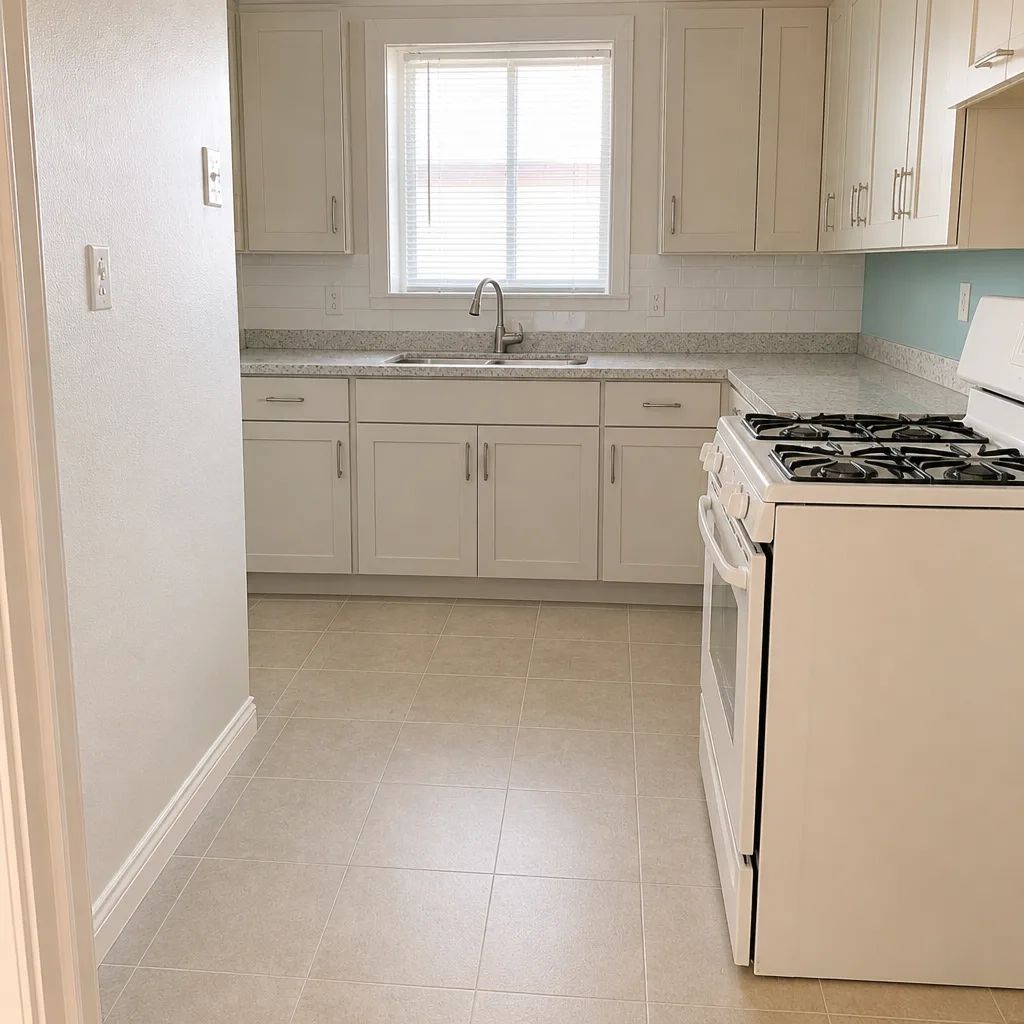 After
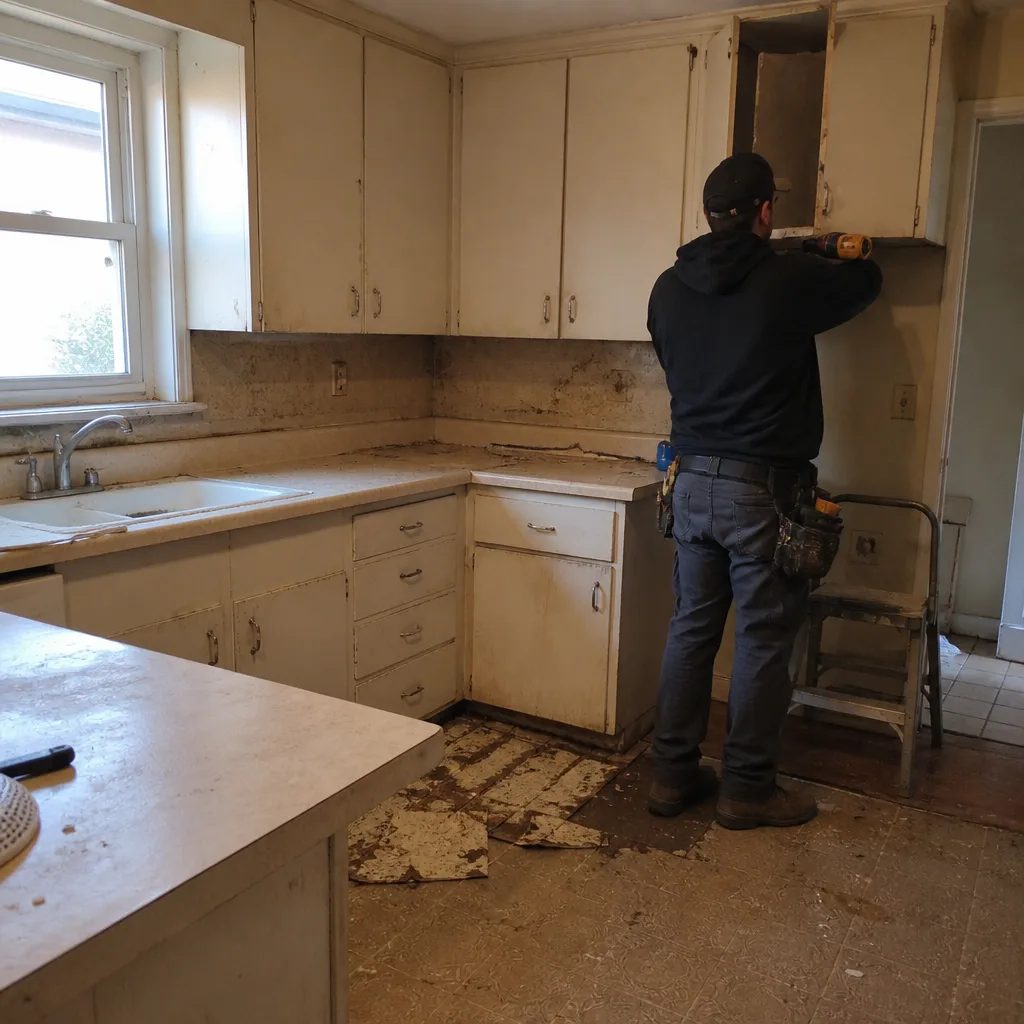 Before
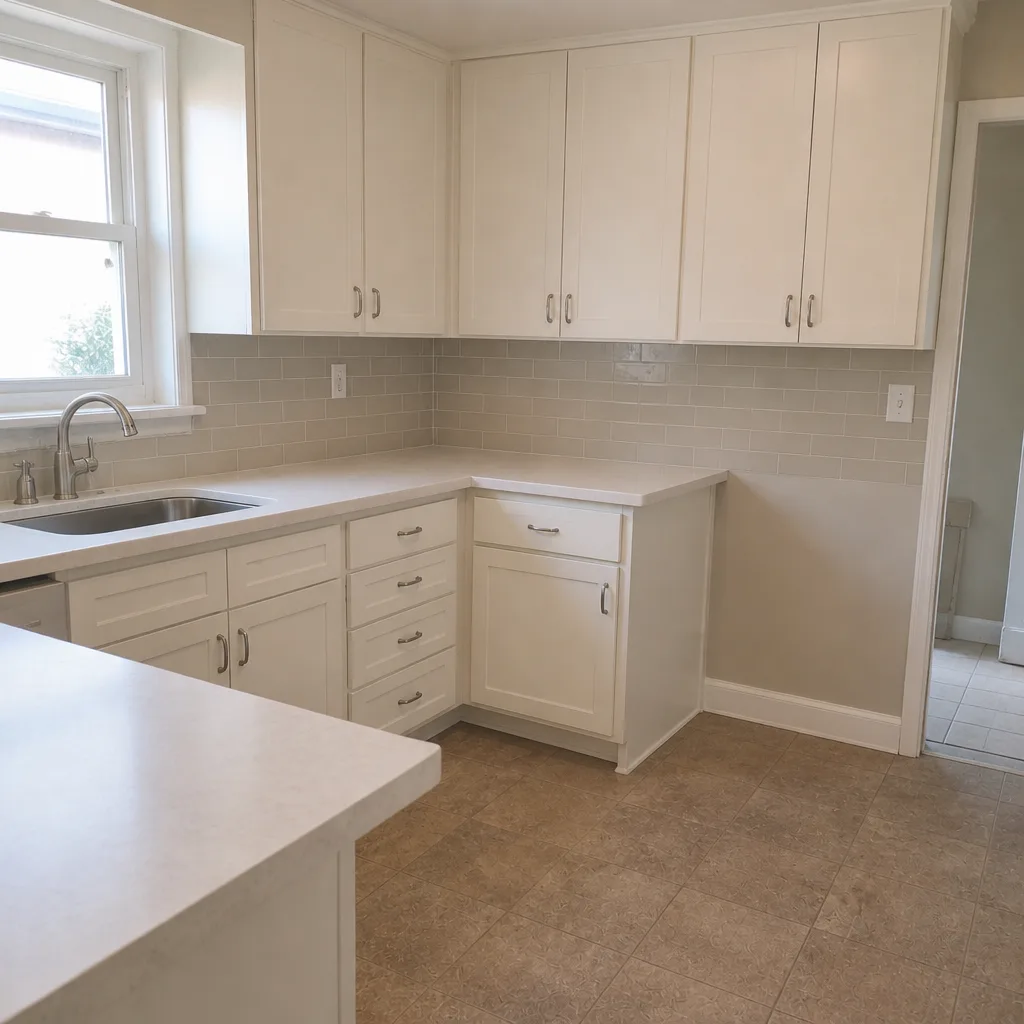 After
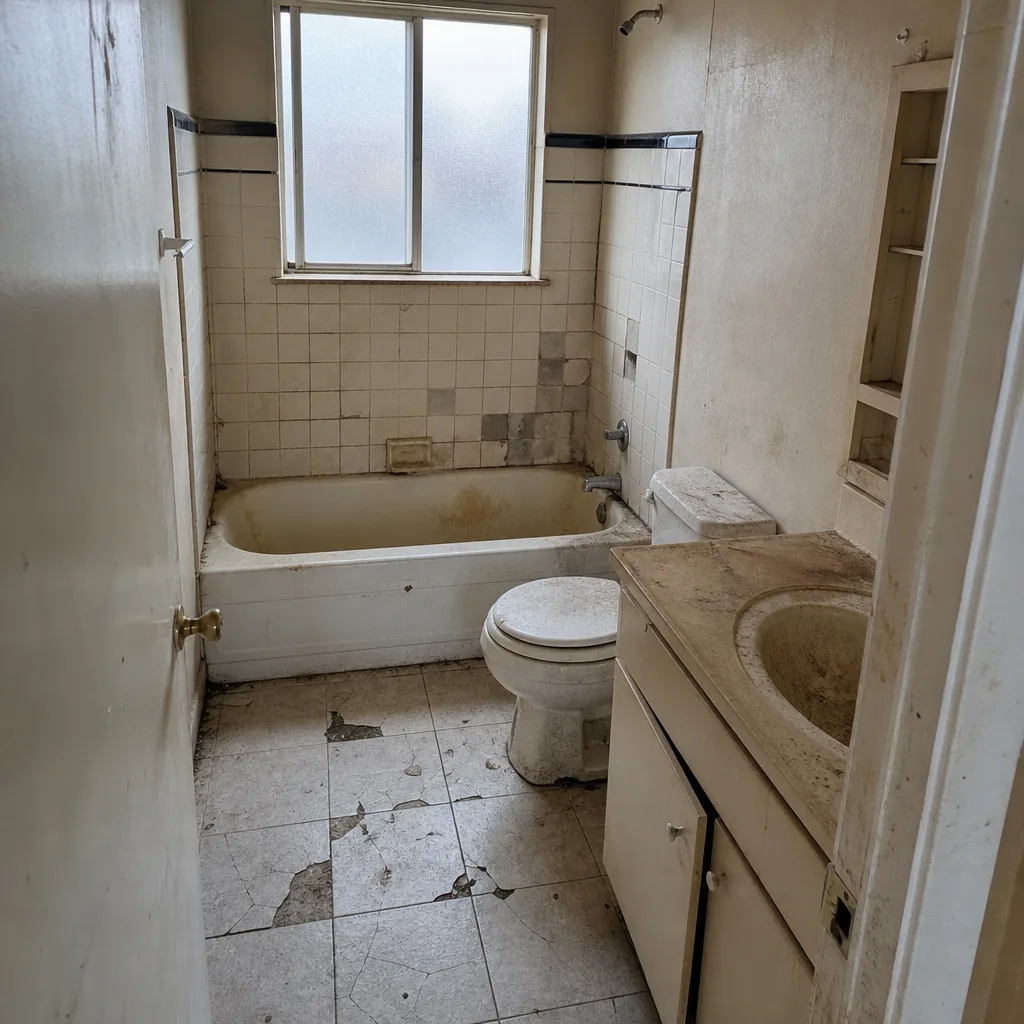 Before
 After
When to Call a Professional

Some projects don’t want a homeowner improvising a solution on a weekend. Bringing a licensed contractor in is the right call when the job is going to require permits (kitchens and baths almost always do), when the scope crosses more than one trade, when you can’t produce a written scope and price you’re comfortable signing, or when a prior contractor’s work has failed within the window their guarantee should have covered. Structural changes, additions, and anything that touches electrical, gas, or plumbing behind the wall call for a licensed B-General firm and a written guarantee on the back end.
Bradford Remodeling Co Fairfield offers free estimates in Fairfield. We put the price in writing before anything starts, give you a full year of guarantee on completion, and answer the phone with a real person around the clock. Call (833) 998-3242 to set a time.
Frequently Asked Questions
The written guarantee. Ask for it during the estimate, not after the contract is signed, and confirm it names a coverage period, a claim trigger, a response time, and exclusions. If the contractor can’t produce it up front, the accountability structure you were promised doesn’t exist.
Pull both bids into the six-category scope verification checklist (permits, demo, materials, labor, substrate/rough-in, cleanup and guarantee). Any category blank on one bid is invisible money. Once both bids name the same categories, the price difference reflects real inclusions, not assumption gaps. Call (833) 998-3242 for a line-item written bid you can actually compare against another.
B-General Building Contractor for residential remodels, additions, and multi-trade projects. Single-trade work like electrical, plumbing, or tile should be handled by the matching C-classification subcontractor. You can verify both on the CSLB website in about two minutes. Ask for the license number on the estimate.
Yes. Get the subcontractor roster in writing before work starts, check each trade’s license on the CSLB, and confirm workers’ comp applies to those subs the same way it applies to the primary crew. In Fairfield’s busy remodel season, subcontracting is common – verification is the homeowner’s job to ask for and the contractor’s job to hand over.
Only if there’s a signed written change order you approved first. That’s the standard our projects run on: fixed price before work, change orders authorized in writing with the added cost named up front, no adjustments on the day. If your bid is missing fixed-price language, ask for it before signing.
A bathroom typically runs three to five weeks; a kitchen six to ten, depending on lead times for cabinetry and surfaces and on how fast Fairfield permits and inspections move. Your bid should give you the schedule in writing, with milestones for rough-in inspection, cabinet install, and final inspection. Call (833) 998-3242 for a scheduling conversation with a line-item bid attached.
The Bottom Line
Choosing a construction brand in Fairfield is a contract decision. Reviews measure how the close felt on Friday; the paper measure how the job holds up in month seven. Compare bids against a scope verification checklist so price reflects equal work. Verify the license classification, the workers’ comp certificate naming your address, and the general liability limit against your project size – the bond stays fixed, the liability has to scale. Get the subcontractor roster in writing. Read the guarantee for coverage period, claim trigger, response time, and exclusions, not just the number. And read the three clauses: fixed price, written change order approval, dispute resolution. If all of that’s in the packet, the brand is real. If it’s not, keep shopping.
Bradford Remodeling Co Fairfield puts every one of those commitments in writing through The Garrison Standard, backs every completed project with the 365-Day Done Right Promise, and keeps a live person on the phone 24/7. If you’re ready to talk through a kitchen, a bath, or a whole-home project, call (833) 998-3242 for a free estimate. The number, like the price, is one we’ll put in writing.
Written by the team at Bradford Remodeling Co Fairfield.