Last updated November 17, 2026




Free written scope consultation - allowances, timeline, and change-order rules on paper before a single trade is scheduled
General Contractor Warning Signs Every Homeowner Should Know
The most dangerous bid you’ll get is the one that comes in 20% under everyone else and includes a quiet line about “pricing subject to change based on conditions found during work.” That phrase isn’t boilerplate – it’s the legal mechanism behind most surprise invoices. Bad contractors don’t announce themselves. They use specific patterns of language, specific paperwork gaps, and specific pressure tactics that experienced homeowners learn to recognize before the deposit clears. This guide names those patterns: the five contract clauses that signal a contractor plans to renegotiate mid-project, how to verify a CSLB license in under two minutes, the behavioral red flags that show up before signing, and what a legitimate change order looks like versus the verbal “while we’re in there” upsell that becomes a line item. We’re writing this from Fairfield, where we’ve watched homeowners recover from bad remodels, and the patterns repeat.
Quick Answer
The top warning signs of a bad contractor are a price that undercuts every other bid, a contract with open-ended allowance or “unforeseen conditions” language, pressure to start before permits are pulled, a cash-only deposit, and reluctance to put the scope in writing. Verify the contractor’s CSLB license number, bond status, and complaint history at cslb.ca.gov before you sign anything. A legitimate contractor will hand you a written scope, a written price, and a permit application without being asked.
Styles & brands we work with
- Kitchen remodeling
- Bathroom remodeling
- Home additions & ADU
- Roofing
- Windows & doors
- Driveway & pavers
- Fence
Table of Contents
- The Contract Language That Signals Trouble
- Five Clauses That Let a Contractor Reprice Mid-Project
- How to Verify a CSLB License in Under Two Minutes
- Behavioral Red Flags Before You Sign
- What a Legitimate Change Order Looks Like
- Why Permits Matter More in Fairfield Than Most Homeowners Realize
- Why The Garrison Standard Exists
- Common Mistakes to Avoid
The Contract Language That Signals Trouble
Contract language is where bad contractors tip their hand. A contract is a legal document that decides who pays when things go sideways, and certain phrases are placed there deliberately to move risk from the contractor onto you. Reading the contract before signing sounds obvious. In practice, most homeowners skim it because the price looks right and the schedule feels urgent.
Here’s what to read closely. First, the scope of work. A real scope lists rooms, dimensions, materials by brand and model, and what’s excluded. If the scope is a paragraph you could read in 20 seconds for a $60,000 kitchen remodel, that’s a red flag, not a timesaver. Second, the payment schedule. A contractor asking for a deposit larger than the CSLB’s legal cap of $1,000 or 10% of the contract price (whichever is less) is out of compliance before work even starts. Third, the change order clause. It should require a written, signed change order with a stated price before any additional work happens. If the clause says changes will be “billed at prevailing rates” or “agreed upon as work progresses,” you’ve just agreed to renegotiate.
In Fairfield, we’ve reviewed contracts where the scope described the kitchen generically but the materials list named no brands – which meant the contractor could install the cheapest cabinets available and still be in compliance. That’s the kind of gap a written, documented brand roster closes. When a contract names KraftMaid or Wellborn cabinetry, Cambria or Caesarstone surfaces, Kohler or Moen fixtures, the specification is traceable. When it says “premium cabinetry,” you’ve agreed to nothing specific.
Five Clauses That Let a Contractor Reprice Mid-Project
These five clauses show up again and again in contracts that produce surprise invoices. None of them is inherently dishonest – each has a legitimate use – but in the hands of a contractor planning to renegotiate, they’re the lever.
- Allowances. An allowance is a placeholder dollar amount for a material the contractor hasn’t priced yet – “lighting allowance: $1,500.” The scope is real, but the number isn’t final. A low allowance guarantees a change order the moment you pick fixtures. A $1,500 lighting allowance for a 300-square-foot kitchen is going to be exceeded by 2-3x once you stand in a showroom. Ask for the allowance amounts before signing, and ask what happens when you exceed them.
- “Unforeseen conditions.” The sentence usually reads: “Contractor reserves the right to adjust pricing based on unforeseen conditions discovered during work.” Legitimate uses exist – rotted framing behind drywall, out-of-code wiring in a 1960s Fairfield ranch house. Abusive uses are everywhere: the contractor calls every complication “unforeseen” and reprices everything. The fix is a written process: any unforeseen condition must be documented in writing, with photos and a priced change order, before that portion of work continues.
- Time and materials (T&M) billing. T&M means you pay for hours plus materials plus a markup instead of a fixed price. It can work for genuinely uncertain work, but as a primary billing method on a defined remodel it removes the contractor’s incentive to be efficient. On a kitchen, bathroom, or whole-home remodel, you want a fixed price with a fixed scope, not an open meter.
- “Subject to prevailing rates” or “pricing may adjust.” Language that lets the price drift without a defined trigger – material cost increases, scheduling, “market conditions” – gives the contractor an open door. A legitimate price-increase clause is specific: it names the triggering condition (e.g., a documented manufacturer price increase) and requires written notice before the increase applies.
- Arbitration clauses that limit your remedies. These aren’t about price, but they matter. An arbitration clause that caps damages, waives your right to a lien or complaint, or requires you to pay the contractor’s legal fees if you lose is a clause that shifts the risk. Read it. If it’s aggressive, get it removed or walk.
The pattern to watch for: clauses that sound protective (“we want to be fair if conditions change”) but in practice let the contractor raise the price without your written consent. In our experience across Fairfield, the contract that reads plainest – fixed price, fixed scope, written change orders only – is the one that almost never produces a surprise invoice.
How to Verify a CSLB License in Under Two Minutes
California has one of the best contractor-verification systems in the country, and most homeowners never use it. The Contractors State License Board (CSLB) at cslb.ca.gov lets you check any contractor in about 90 seconds. Here’s the process:
- Get the license number from the contractor’s written bid, business card, or the CSLB website search by business name. Every legitimate California contractor has a license number and is required to put it on written contracts and advertisements.
- Search the CSLB license lookup. Enter the number. The result page shows license status (active, expired, suspended, revoked), classification (A for general engineering, B for general building, C-39 for roofing, etc.), and expiration date.
- Check the bond amount. California requires a contractor’s bond of at least $25,000 to be in good standing. If the bond is listed as “not required” for the classification, that’s a flag – most residential work requires a bond.
- Check workers’ compensation. If the contractor has employees, they’re required to carry workers’ comp. If the CSLB lists “exempt” and the contractor actually has employees, you’re exposed if a worker is injured on your property.
- Check complaint history and disciplinary actions. The page lists formal complaints and any discipline the CSLB has taken. A clean page isn’t a guarantee of quality; a page with multiple complaints is a hard stop.
The classification matters too. A B (general building) license covers most residential remodeling. An A (general engineering) license covers infrastructure. A C-39 (roofing) contractor shouldn’t be framing your kitchen. Working outside their licensed classification is one of the most common issues we see when we’re called in to fix someone else’s job in Fairfield. If a contractor is doing three trades on the same day, check the classification carefully.
Behavioral Red Flags Before You Sign
Before paperwork, behavior. A contractor’s conduct during the estimate process is a preview of how they’ll run the job. In our experience, these are the patterns that repeat:
- Pressure to start before permits are pulled. “We can start Monday, we’ll pull the permit next week” is a scheduling convenience that puts you on the hook if the work fails inspection or the permit is denied. In Fairfield, where the city inspections process is specific to certain structural upgrades and additions, starting before permit is a serious flag.
- Cash-only deposit requests. No written contract, no receipt, cash in an envelope. This is the highest-risk pattern in the industry. Cash deposits leave no paper trail, no clear scope, and no basis for a claim if the work goes wrong.
- Reluctance to provide a written scope. “We’ll figure it out as we go” sounds flexible. It means you have nothing to compare bids against, nothing to hold the contractor to, and no record of what you agreed to. The written scope is the foundation of every legitimate contract.
- No physical address, no insurance certificate, no license number on the bid. A legitimate California contractor puts all three on the written proposal. Missing any of them is a reason to slow down.
- A price verbally quoted that drops 15-20% when you say you’re getting other bids. A price that moves that fast isn’t a price – it’s a fishing expedition. Fixed pricing should be fixed before the conversation starts.
- Reluctance to meet at the job site or a business location. A contractor who only meets in parking lots and won’t show you a business address or a previous project is missing the infrastructure of a real operation.
One more: the no-show pattern. If a contractor misses your first estimate appointment and doesn’t call, that’s the pattern they’ll repeat when your project is in progress. In Fairfield, we’ve seen homeowners wait days for a callback on a job that’s already paid for. That’s not a service failure – it’s a business model.
What a Legitimate Change Order Looks Like
A change order is a written amendment to the contract that changes the scope, the price, or the schedule. It is not a phone call. It is not a text. It is not a handshake in the hallway. If the change isn’t written and signed before the additional work begins, the contractor can claim it was included and bill you for it later.
A proper change order has all of these:
- A description of the additional work, specific enough to price: “Add electrical outlet on the north kitchen wall with GFCI” rather than “add outlet.”
- A stated dollar amount for the additional work – a number, not a range.
- A stated time impact – does the change affect the completion date, and by how many days?
- Both signatures – the contractor’s and yours – dated before work begins.
- An updated contract price and updated payment schedule, so the total picture stays accurate.
The verbal change order – “while we’re in there, we should probably replace the subfloor, it’s about $800 more” – is the most common surprise invoice in residential remodeling. Sometimes the subfloor genuinely needs replacing. The problem is the timing and the documentation: the request comes mid-job, when you have no leverage, no other bid, and no written record. A legitimate contractor, when discovering additional conditions, stops work on that portion, documents the issue with photos, prices the change in writing, and waits for your signature before proceeding. If the contractor wants to keep working and settle up later, that’s a decision that costs you money.
Why Permits Matter More in Fairfield Than Most Homeowners Realize
A permit is not a bureaucratic nuisance – it’s a legal record that the work was inspected and deemed code-compliant. In Fairfield, that record matters for three reasons specific to the local market.
First, resale. Fairfield’s housing stock includes a lot of homes built between the 1950s and 1990s, and buyers and their agents increasingly pull permit records during inspection. Unpermitted work – a kitchen remodel done without permits, an addition framed without inspection – shows up in a title search and can kill a sale or force a price reduction. We’ve seen transactions in Fairfield stall for weeks over a missing permit from a renovation done years earlier.
Second, insurance. When an insurer investigates a claim – water damage from a failed shower pan, for example – an unpermitted remodel can void coverage or reduce the payout. The permit record is evidence the work met code.
Third, code specifics. Fairfield’s code and the applicable California Building Code have specifics for seismic bracing, energy compliance (Title 24), and water-heater anchoring that a contractor working by memory rather than by permit will miss. On structural work, that’s not a paperwork problem; it’s a safety problem.
Ask every contractor you interview: “Will you pull the permit, and will I be named as the permit holder?” A legitimate contractor will say yes to both. If the answer is “we usually don’t permit small jobs” or “the permit will be in our name, don’t worry about it,” ask why. The permit should name you, because it’s your house and your inspection record. This is the standard we run on, and it’s why our written scope includes the permit line item before work begins.
Why The Garrison Standard Exists
Bradford Remodeling runs on The Garrison Standard – a written framework for how every project is priced, documented, and guaranteed. The Garrison Code exists because of the patterns in this guide. Each rule inside it was built to close a specific loophole we’ve seen cause trouble for Fairfield homeowners.
The written-price rule closes the “allowances and adjustment” gap: no work starts until you have a fixed, written price for a fixed, written scope. The 365-Day Done Right Promise closes the “we’re done, call us if you have a problem” gap: every completed project carries a full-year written guarantee, and if the work fails inside that window, we come back and correct it at no charge – the guarantee is a document you hold, not a verbal promise at job close. Background-checked, uniformed technicians close the “who’s in my house” gap: you know who’s showing up before they arrive. Live-person phone coverage – a real person answers 24/7, not a voicemail – closes the “I can’t reach anyone” gap that turns a small issue into a large one.
The documented brand roster closes the “premium materials” gap. When a contract names KraftMaid, Wellborn, Cambria, Caesarstone, Kohler, Moen, GAF, James Hardie, and Therma-Tru, the specification is traceable and the manufacturer’s own warranty has something to stand behind. When it names “quality brands,” nothing is guaranteed. We don’t list every brand in every contract – the scope names the specific ones relevant to your project – but each one is real, documented, and spec-matched. As part of the Garrison Partners family since 2004, every Bradford location is independently owned and operated and held to the same standard. That’s the framework: prices in writing before work begins, guarantees in writing at job close, and a phone that gets answered.
Common Mistakes to Avoid
- Choosing the lowest bid without reading the scope. The lowest bid is often the least defined scope. A bid 20% below the others with a generic scope isn’t a better deal; it’s a bid that will be repriced during the job.
- Signing a contract that doesn’t name brands and model numbers. “Premium cabinetry,” “high-end fixtures,” and “quality materials” are not specifications. If the contract doesn’t name what you’re getting, the contractor gets to choose at installation – and they’ll choose the cheapest option that meets the description.
- Skipping the CSLB check. Two minutes on cslb.ca.gov would prevent most contractor problems in Fairfield. Check the license, the bond, the workers’ comp, and the complaint history before you sign.
- Paying a deposit above the legal cap. California caps deposits at $1,000 or 10% of the contract price, whichever is less. A contractor asking for 30% upfront is out of compliance from the first check.
- Accepting verbal change orders. Mid-job “while we’re in there, it’ll be about $800 more” requests are how surprise invoices happen. Insist on a written, signed change order before any additional work proceeds.
- Letting work start before the permit is pulled. In Fairfield, that decision can affect your resale inspection, your insurance claim, and your code compliance. Get the permit first, every time.
- Not documenting the job site condition at start and close. A clean site at close, a signed written guarantee in your hand, and photos of the completed work are what “squared away” looks like. If those are missing at job close, ask why before you write the final check.
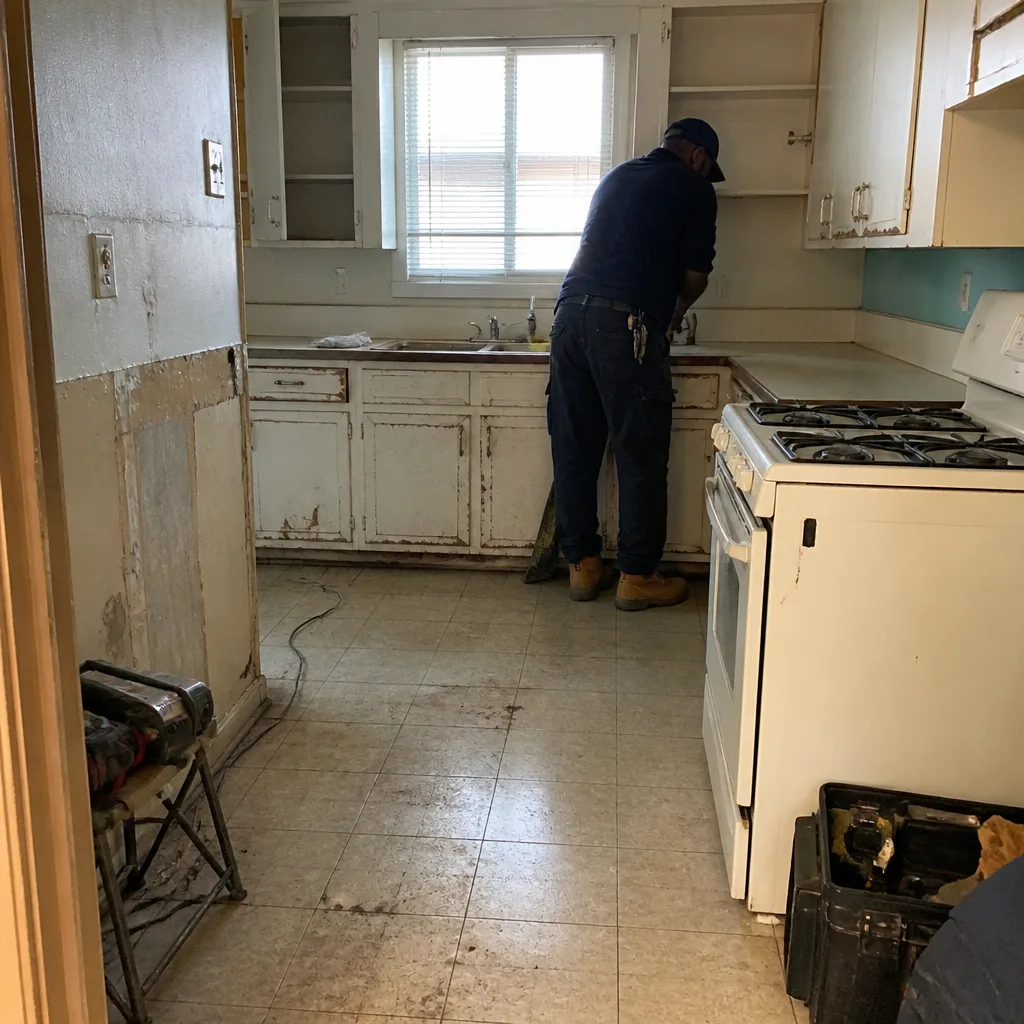
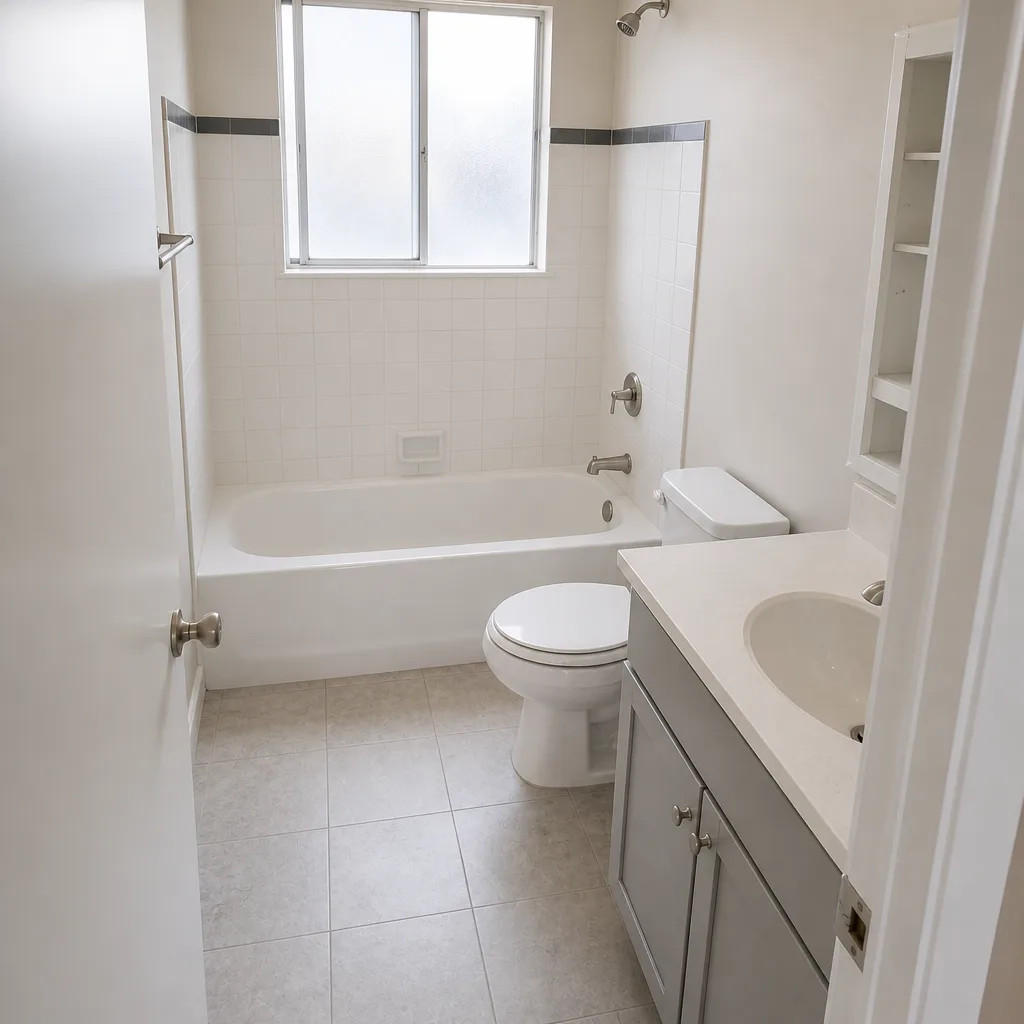
See the difference
 Before
 After
 Before
 After
 Before
 After
When to Call a Professional
Some of this you can check yourself – the CSLB lookup, the contract clauses, the permit record. But when a job is already underway and the pattern is showing up, or when you’re trying to price a kitchen or bathroom remodel and every bid you get has open-ended language, a professional review is worth the call. We offer free written estimates in Fairfield, and that estimate includes a written scope and a fixed price before any work starts. We also run into situations where a previous contractor’s work needs a second look – unpermitted additions, unfinished kitchens, failed waterproofing – and we can walk you through what a repair actually requires. If you’re comparing bids, we’ll put ours in writing so you can compare it line for line against any other contractor. Bradford Remodeling Co Fairfield offers free estimates in Fairfield – call (833) 998-3242. For more on who we are and how we run projects, see our Bradford Remodeling Co Fairfield home page, or go straight to our general contractor services in Fairfield.
Frequently Asked Questions
A price that undercuts every other bid, paired with a contract that includes “pricing subject to change” or open-ended allowance language. That combination is a planned renegotiation, not a bargain. Call (833) 998-3242 for a written price you can compare against – estimates are free.
Go to cslb.ca.gov and search by license number or business name. The result shows active status, classification, bond amount, workers’ comp status, and complaint history. It takes under two minutes. If the license isn’t active or the classification doesn’t match the work, stop there.
Yes. California law caps a deposit at $1,000 or 10% of the contract price, whichever is lower, and requires a written contract for jobs over $500. A cash-only deposit typically comes with no written contract, no receipt, and no clear scope – all three remove your ability to claim against the contractor if the work goes wrong.
A description of the additional work, a stated dollar amount, the effect on the schedule, both signatures, and an updated contract price – all before the additional work begins. If the contractor says “we’ll settle up at the end,” that’s not a change order; that’s a verbal upsell.
No. Starting before the permit is pulled puts you on the hook for code violations, insurance claims, and resale inspections in Fairfield. The permit should be pulled in your name, and the inspection record is your legal proof the work met code.
A straight-scope kitchen remodel typically runs six to ten weeks; a bathroom, three to five. The specific schedule depends on permit timing, material lead times (some cabinetry orders run several weeks), and inspection scheduling. Any contractor who quotes a timeline without pricing and scheduling the permit phase is skipping a step that will add weeks later. Call (833) 998-3242 for a scope-specific timeline and a written price on the same page – estimates are free.
If you’re still comparing contractors, our kitchen remodeling in Fairfield page walks through what a written kitchen scope looks like line by line, and our bathroom remodeling in Fairfield page covers the waterproofing and permit details that fail most often in this climate.
The Bottom Line
Bad contractors use predictable patterns. The price undercuts every other bid. The contract has open-ended language. The permit is always “next week.” The change order is verbal. The callback doesn’t come. Each of these has a counter – a written scope, a fixed price, a CSLB check, a written change order, a permit pulled in your name – and the counter is what The Garrison Standard is built on. Prices in writing before work begins. A 365-Day Done Right Promise on every project. A real person on the phone, 24/7. Fairfield homeowners have better options than the lowest bid, and the difference shows in a fully documented scope, a fixed price, and a signed guarantee in your hand at job close.
Written by the team at Bradford Remodeling Co Fairfield.