
Last updated November 17, 2026








Free written scope consultation - allowances, timeline, and change-order rules on paper before a single trade is scheduled
Bathroom Remodeling Maintenance Schedule: What to Do and When
Silicone caulk at the tub and shower transitions has a functional lifespan of three to five years, regardless of brand. Most homeowners don’t touch it until water is already behind the wall, which is why the repair that should have cost a tube of caulk becomes a substrate replacement. A remodeled bathroom has a maintenance calendar whether you follow it or not. Grout, caulk, exhaust systems, and supply lines all run on predictable failure windows. This guide gives you the actual intervals, the correct materials for each joint, and the Fairfield climate factors that shorten or stretch those windows.
Quick Answer
A remodeled bathroom needs caulk inspection every six months and replacement every three to five years, grout sealing every 12 to 18 months in wet zones, exhaust fan cleaning every six months, and proactive replacement of braided stainless supply lines at the 8 to 10 year mark. Supply valves should be exercised quarterly so they don’t seize. In Fairfield, the dry summers and mild winters mean less freeze stress on supply lines than you’d see in the Sierra foothills, but the interior humidity from long showers still drives caulk and grout failure on the same clock.
Styles & brands we work with
- Kitchen remodeling
- Bathroom remodeling
- Home additions & ADU
- Roofing
- Windows & doors
- Driveway & pavers
- Fence
Table of Contents
- The Year-by-Year Maintenance Calendar
- Caulk Joints: Which Specification Goes Where
- Grout Sealing and What It Actually Protects
- Exhaust Fan Cleaning and the Tissue Test
- Supply Valves and Supply Lines: Inspection and Replacement Windows
- Showerhead Flow Maintenance
- Which Neglected Tasks Void Your Workmanship Warranty
The Year-by-Year Maintenance Calendar
Here’s the schedule we hand homeowners when we close out a Bathroom Remodeling in Fairfield project. It’s built around failure windows, not arbitrary seasons, though the seasonal anchors help you remember.
- Every 3 months: Exercise both supply valves (hot and cold) under the sink and at the toilet. Open them fully, close them fully, open them again. A valve that never moves seizes within a few years, and a seized valve turns a simple repair into a shutoff-at-the-main situation.
- Every 6 months: Inspect every caulk joint with a fingernail. Press into the caulk line at the tub deck, the shower base, and the wall-to-floor transition. Any softness, separation, or discoloration means it’s already compromised.
- Every 6 months: Clean the exhaust fan. Pull the grille, vacuum the blades, and check that the damper flap swings freely.
- Every 12 to 18 months: Seal grout in the shower, tub surround, and bathroom floor. Cementitious grout is porous even after the factory seal wears off.
- Every 2 to 3 years: Descale the showerhead by soaking it in white vinegar. In Fairfield, water hardness runs moderate, so you’ll likely be on the longer end of that range.
- Every 3 to 5 years: Replace silicone caulk at all wet transitions, even if it looks intact. It’s failing from behind.
- Every 8 to 10 years: Replace braided stainless supply lines proactively, before they fail. More on that below.
Write these dates on the inside of the vanity door with a paint marker. A schedule you can’t see is a schedule you won’t follow.
Caulk Joints: Which Specification Goes Where
The single most common maintenance failure we see in Fairfield bathrooms is the wrong caulk in the wrong joint. There are two families you need to know: 100% silicone and siliconized latex (also called siliconized acrylic). They are not interchangeable, and using the wrong one can cut the joint’s life in half.
- 100% silicone: Use at tub-to-wall, shower base-to-wall, shower pan-to-tile, and any joint that stays wet. Silicone adheres to non-porous surfaces like porcelain, fiberglass, and glazed tile, and it stays flexible through thermal movement. It cannot be painted and it does not clean up with water.
- Siliconized latex: Use at wall-to-wall interior corners, backsplash-to-wall, and joints where paint will cover the line. It’s paintable and toolable with water, but it does not hold up to standing water and will mildew faster in a wet zone.
- Never use: 100% latex or painter’s caulk in any wet joint. It will fail within a year, and pulling it out is more work than doing it right the first time.
Before you caulk anything, the joint must be bone dry. In Fairfield’s dry summer months, a shower joint dries within a day. In the winter, when indoor humidity sits higher, give it two full days with the exhaust fan running after each shower. Caulk applied over moisture traps that moisture, and trapped moisture is what rots the substrate behind the tile.
This is also the joint most likely to void your workmanship warranty if you ignore it. Our Bradford Remodeling Co Fairfield home page lays out what the guarantee covers, and caulk neglect is one of the few exclusions.
Grout Sealing and What It Actually Protects
Grout sealing does not make grout waterproof. It slows the rate at which water absorbs into the cementitious grout and the thin-set behind it. That distinction matters because it tells you what the seal is actually buying you: time. A properly sealed shower gives water a chance to evaporate off the surface before it soaks in. An unsealed shower wicks moisture into the wall cavity every time someone steps out.
Most factory-applied grout sealers are good for 12 to 18 months in a shower that sees daily use. Two people showering twice a day will burn through that faster. Here’s how to seal correctly:
- Clean the grout lines with a pH-neutral tile cleaner, not an acid cleaner. Acid etches cementitious grout and opens pores.
- Let the surface dry at least 24 hours. Grout must be fully cured and dry before sealing.
- Apply a penetrating sealer with a small foam brush, working it into the lines, not just across the surface.
- Wipe away excess with a dry cloth within 10 minutes. Don’t let it pool on the tile face.
- Leave it 24 hours without water contact.
Epoxy grout, which is increasingly common in new Fairfield builds, does not need sealing. If you’re not sure what you have, test a small area: epoxy grout feels harder and doesn’t darken when wet the way cement grout does.
Exhaust Fan Cleaning and the Tissue Test
An exhaust fan that no longer moves the right volume of air is worse than no fan at all, because it gives you false confidence while moisture builds. The building code standard is 50 CFM for a standard bathroom or 80 CFM for a bathroom with a tub and shower. Here’s the two-part test.
Tissue test: Hold a single square of toilet paper against the fan grille while the fan runs. If it sticks and holds without help, the fan is pulling air. If it falls, the fan isn’t moving enough air to clear the room.
CFM check: If you want to go further, measure the bathroom’s cubic footage (length x width x height) and divide by 7.5 to get the minimum CFM for 8 air changes per hour. A 5×8 bathroom with 8-foot ceilings is 320 cubic feet, so 43 CFM. A 10×10 bathroom is 800 cubic feet, so about 107 CFM.
Cleaning the fan is a 10-minute job: kill the power at the breaker, pull the grille, vacuum the blades, and check the damper flap. Dust buildup on the blades is the most common cause of a fan that runs but doesn’t pull.
If the fan fails the tissue test after cleaning, it needs replacement. Fit a fan rated for the CFM your room needs and duct it to the exterior, not into the attic. Venting into the attic is a moisture problem that shows up years later as mold on the roof sheathing.
Supply Valves and Supply Lines: Inspection and Replacement Windows
This is the maintenance section most homeowners skip and most insurance claims come from. Braided stainless supply lines have a rubber inner tube that degrades from the inside out. You won’t see the failure coming. The outer braid looks perfect right up until it bursts.
What a supply line inspection actually involves:
- Turn the water off at the valve and look at both ends where the braid meets the fitting. Any fraying, corrosion, or discoloration means replace now.
- Feel along the length of the braid for bulges or soft spots. A bulging line is a line about to fail.
- Check the date on the fitting if it’s stamped. If it’s not, check your remodel paperwork. Braided stainless lines should be replaced at 8 to 10 years.
- Look at the shutoff valve itself. A quarter-turn ball valve should move smoothly. A gate valve that’s stiff needs to be exercised or replaced before it seizes closed.
On the General Contractor in Fairfield side of our work, we see supply failures follow the same pattern: the lines that fail first are the ones inside a vanity cabinet where nobody looks. Out of sight, out of mind. The schedule fixes that.
Showerhead Flow Maintenance
Mineral scale builds up inside the showerhead and reduces flow over time. You’ll notice it first as a shower that used to feel strong and now feels weak. Fairfield’s water runs moderate hardness, so expect to descale every two to three years.
The fix is simple: unscrew the showerhead, soak it in white vinegar for a few hours, scrub the face with an old toothbrush, and run hot water through it in reverse. Flow usually comes back to near-new.
If a fixed showerhead has a flow restrictor, don’t remove it to chase more pressure. Cleaning the screen behind the restrictor is what restores flow. If pressure never returns, the problem is upstream and the showerhead is telling you so. Call a plumber rather than trying to fix it at the fixture.
Which Neglected Tasks Void Your Workmanship Warranty
Every Bradford project carries the 365-Day Done Right Promise: if the work fails within a year, we come back and correct it at no charge. That’s a written guarantee in your hand at close. It does not, however, cover failures caused by maintenance the homeowner neglected.
The tasks that most often trigger a warranty dispute:
- Failed caulk left in place. If water gets behind the wall through a failed joint that sat for months, the water damage is on the homeowner, not the warranty.
- Exhaust fan left clogged. Moisture that builds because the fan stopped pulling is a maintenance failure, not a workmanship failure.
- Unsealed grout in the shower. Grout that absorbs water because the seal was never refreshed can cause tile debonding outside the guarantee window.
- Seized supply valve ignored after a drip. A slow leak from a valve the homeowner never exercised turns into a cabinet floor replacement.
Track your maintenance in writing. A simple log taped inside the vanity door, with dates and what you did, is enough. When you call us about a failure, that log is the difference between a warranty repair and an out-of-pocket one. Our Kitchen Remodeling in Fairfield customers get the same advice for the same reason: the schedule is the warranty’s partner.
Common Mistakes to Avoid
- Using siliconized latex where silicone belongs. It’s the wrong material at the tub and shower transitions and it will mold and fail within a couple of years. Match the caulk to the joint type, not to whatever’s already on the shelf.
- Caulking over wet substrate. In Fairfield’s winter humidity, a shower joint needs two full days to dry before caulking. Skip that and you trap moisture that rots the wall.
- Venting the exhaust fan into the attic. It’s a common shortcut we routinely correct. The moisture ends up on the roof sheathing, and by the time you see it, the repair is expensive.
- Ignoring the supply lines until they fail. Braided stainless lines are not a lifetime part. The 8 to 10 year replacement window is real, and the failures happen inside the cabinet where nobody looks.
- Treating grout sealer as a one-time job. It wears off in 12 to 18 months under daily shower use. A shower that sees five showers a day needs it even sooner.
- Confusing the tissue test with the CFM test. The tissue test only tells you the fan pulls something. It doesn’t tell you whether the fan is pulling enough for your room’s cubic footage.
- Not writing the schedule down. Maintenance that lives only in your head never happens. Put the dates on the vanity door and check them off.
See the difference
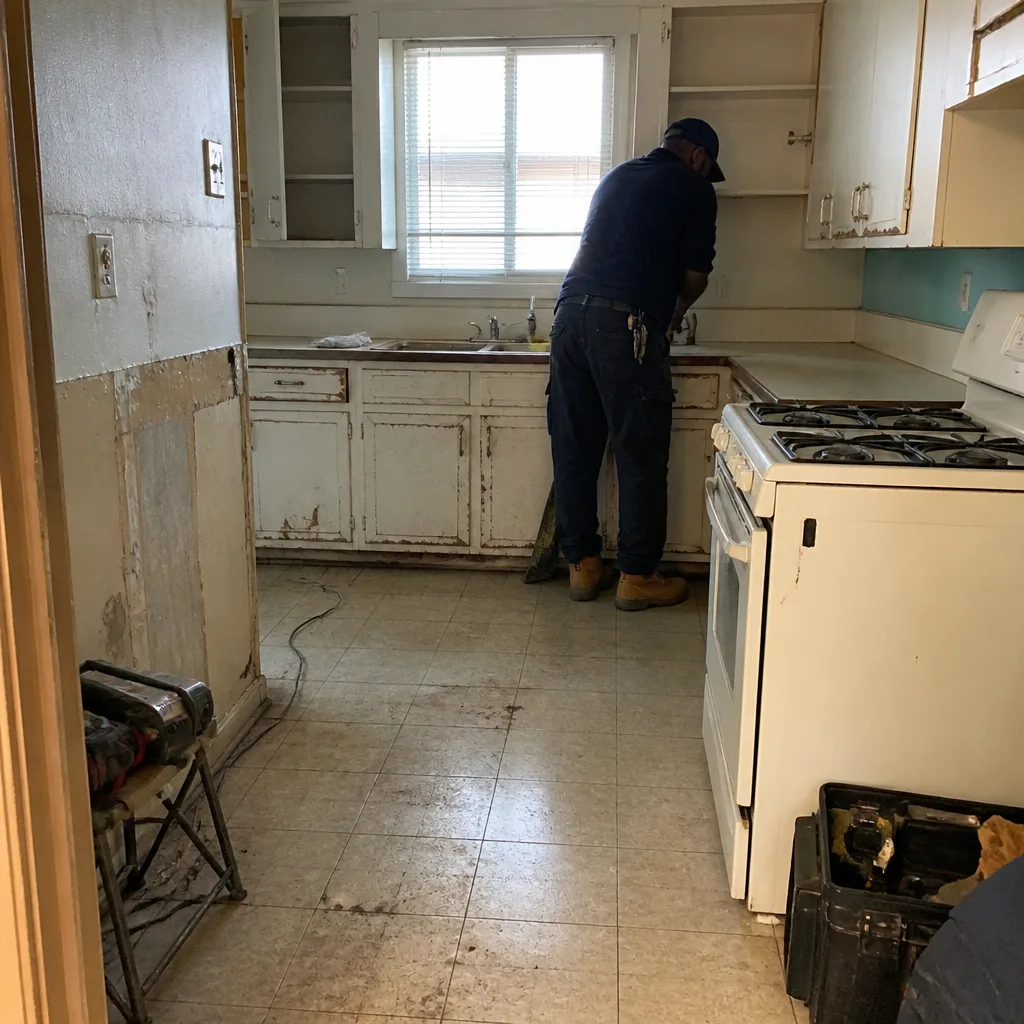 Before
 After
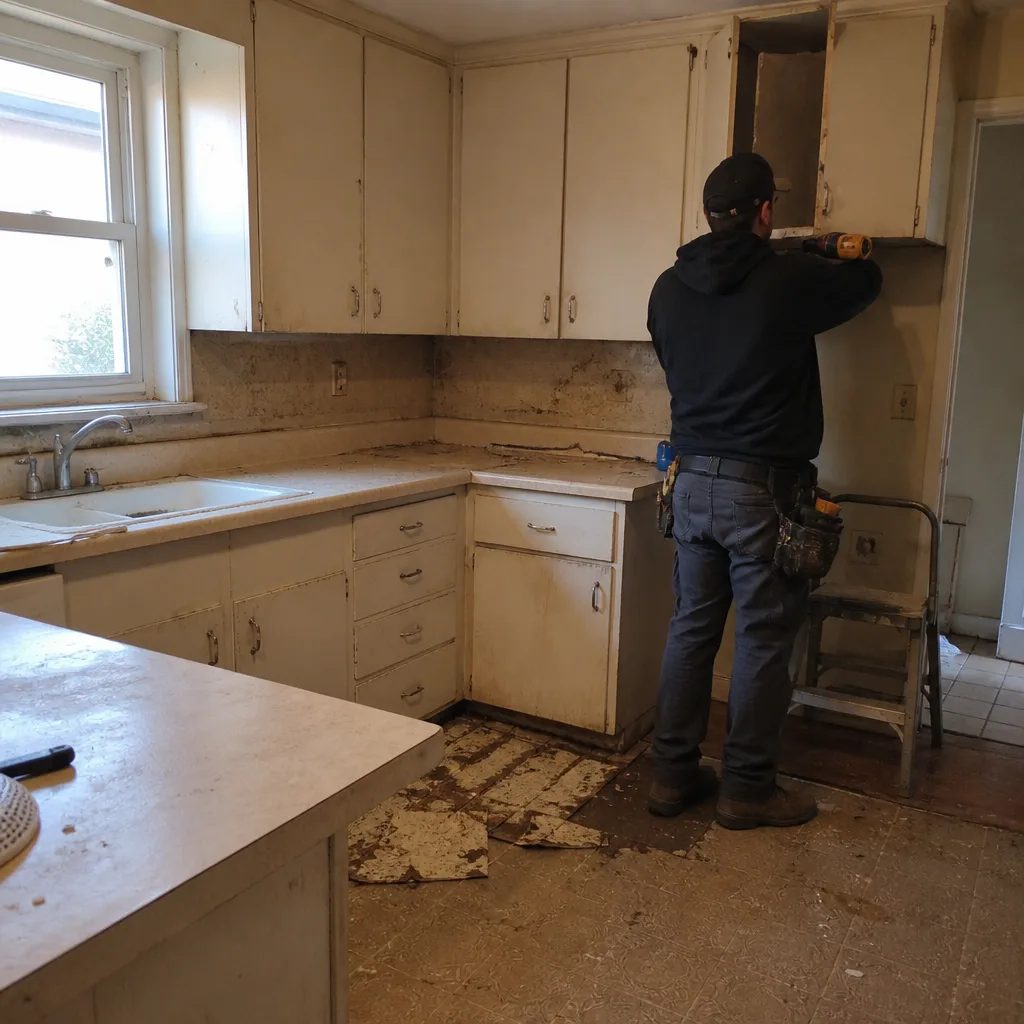 Before
 After
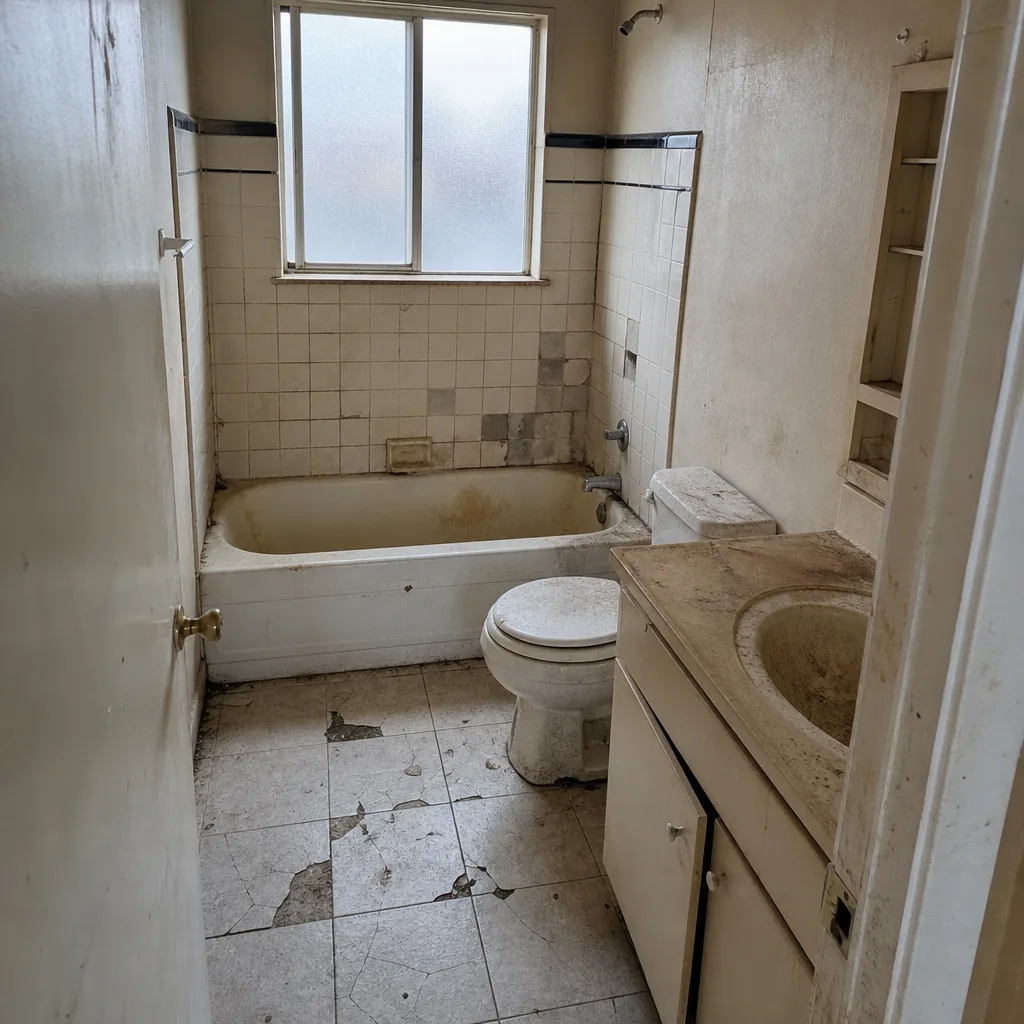 Before
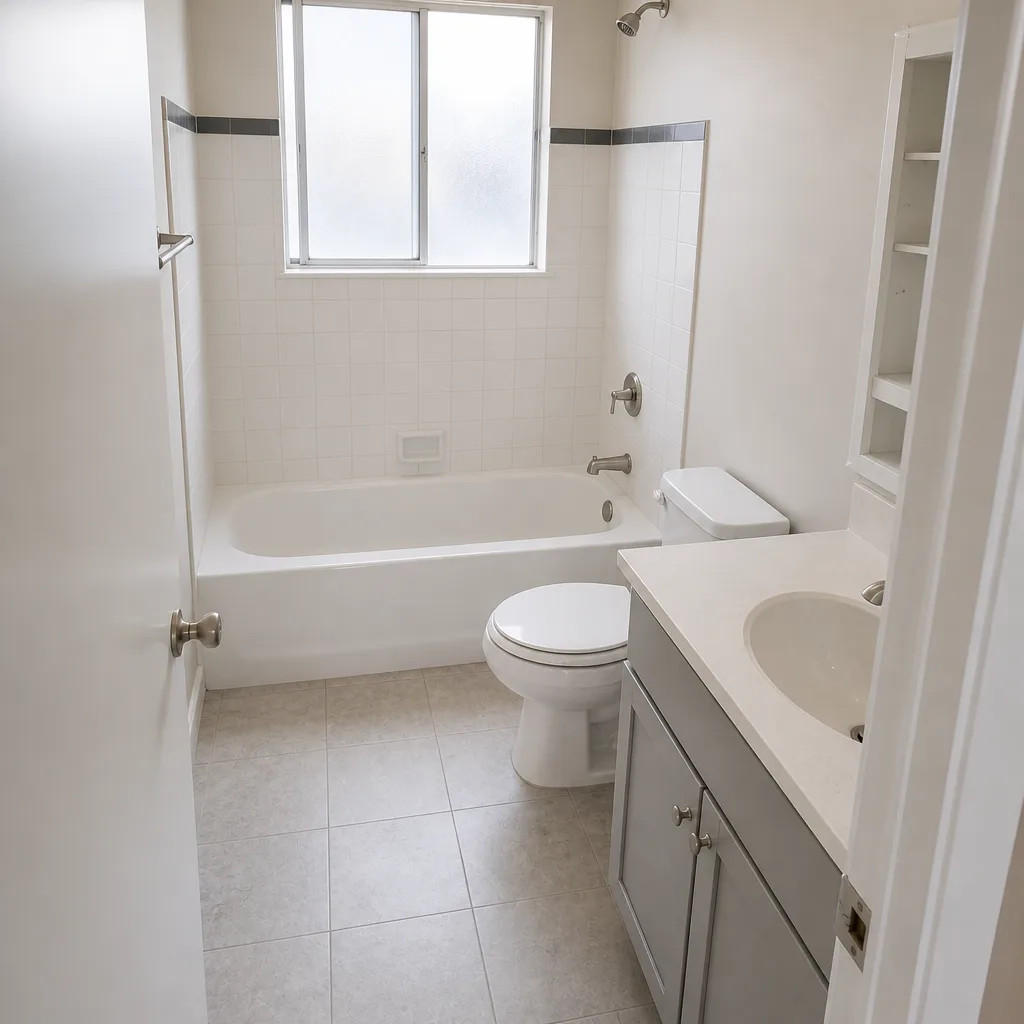 After
When to Call a Professional
Some of these tasks are homeowner work: the tissue test, the descale, the grout sealer. Others are not. Call us when you see caulk that’s pulled away from a wet joint and the substrate behind it feels soft, when a supply line inside the wall or under the floor is leaking, when an exhaust fan still won’t pull after cleaning (the fan or the duct needs replacement), or when grout is cracking along lines that were fine a year ago. Those crack patterns usually mean movement in the substrate, and no amount of sealer fixes movement.
Bradford Remodeling Co Fairfield offers free estimates in Fairfield, with a written price before any work starts. Call (833) 998-3242.
Frequently Asked Questions
Every three to five years at wet transitions like the tub-to-wall and shower base-to-wall joints, regardless of brand. Inspect every six months with a fingernail and replace as soon as you feel softness or separation. Waiting for visible mold is waiting too long, because the failure happens behind the bead before it shows on the surface.
100% silicone is a fully flexible, water-resistant caulk for joints that stay wet. Siliconized latex is an acrylic caulk with a small amount of silicone added for flexibility; it’s paintable and cleanable with water, but it does not hold up to standing water. Use silicone at tub and shower transitions, siliconized latex at interior corners and backsplash joints.
Hold a single square of toilet paper against the grille while the fan runs. If it sticks and holds, the fan is pulling air. If it falls, the fan isn’t moving enough for the room. For a real CFM check, multiply the room’s length by width by height, then divide by 7.5 to get the minimum CFM for 8 air changes per hour.
At 8 to 10 years from installation, proactively. The inner rubber tube fails from the inside out, so the outer braid looks perfect right up until the line bursts. Replace on schedule rather than on failure, and replace immediately if you see any fraying, corrosion, or bulging where the braid meets the fitting.
Mildly. Fairfield’s dry summers mean shower joints dry faster, so caulk work is easiest in July and August. Winter indoor humidity runs higher, so give caulk 48 hours to dry before applying. Water hardness is moderate, so showerhead descaling every two to three years is sufficient; harder water markets need it more often.
Yes, if a failure traces back to neglected maintenance. The 365-Day Done Right Promise covers failures in the work itself; it does not cover water damage from caulk that was left to fail, or moisture that built because the exhaust fan was never cleaned. Keep a written maintenance log inside the vanity door so the record is there if you ever need to call us.
The Bottom Line
A remodeled bathroom runs on a maintenance calendar whether you keep it or not. Caulk at wet joints has a three to five year lifespan. Grout sealing lasts 12 to 18 months in a daily-use shower. Braided stainless supply lines should be replaced at 8 to 10 years, before they fail inside the cabinet. The tissue test tells you in 30 seconds whether the exhaust fan is still doing its job. Write the dates on the vanity door, use the right caulk in the right joint, and the assembly outlasts the schedule every time. Our technicians have up to 22 years of experience, and every Bradford project is backed by the 365-Day Done Right Promise with the guarantee in writing at close. Call (833) 998-3242 for a free estimate on any bathroom work in Fairfield.
Written by the team at Bradford Remodeling Co Fairfield.