Last updated November 17, 2026


Free written scope consultation - allowances, timeline, and change-order rules on paper before a single trade is scheduled
Kitchen Remodeling Troubleshooting: Common Problems and How to Fix Them
The most common callback in kitchen remodeling isn’t a leaking drain. It’s cabinet doors that won’t close square. In our experience, that single complaint accounts for more return visits than every plumbing and electrical issue combined, and it’s almost always a symptom of unlevel installation that the finish work covered up before anyone checked. Kitchen remodel problems and solutions tend to cluster around four failure points: rough-in that wasn’t inspected, cabinets installed before the floor was level, countertop templates pulled before walls were plumb, and appliance hookups done without permits. This guide shows you how to identify which failure point you’re dealing with, who’s responsible, and what the fix actually costs in Fairfield.
Quick Answer
Most kitchen remodel problems trace back to four failure points: uninspected rough-in, cabinets set on an unlevel floor, countertop templates pulled before walls were plumb, and appliance hookups done without permits. Each failure point has a different responsible party and a different repair cost. The fastest way to sort a problem is to check your written scope and warranty document first, then diagnose the specific failure point before you call anyone.
Styles & brands we work with
- Kitchen remodeling
- Bathroom remodeling
- Home additions & ADU
- Roofing
- Windows & doors
- Driveway & pavers
- Fence
Table of Contents
- The Four Failure Points That Cause Most Kitchen Problems
- Cabinet Doors That Won’t Close Square: Diagnosing the Real Cause
- Countertop Seam and Fit Failures: Why Templates Get Pulled Too Early
- Plumbing Leaks at Supply and Drain Connections
- Range Hood Ventilation Problems: When the Duct Run Is the Issue
- Permits and Inspections: What Fairfield Requires
- Using Your Written Scope and Warranty to Assign Responsibility
- What These Fixes Cost
The Four Failure Points That Cause Most Kitchen Problems
Every kitchen problem we troubleshoot in Fairfield lands in one of four buckets. Knowing the bucket tells you who’s responsible and roughly what the repair runs.
- Rough-in that wasn’t inspected. Electrical, plumbing, and gas lines run behind the wall and closed up without an inspection. Problems surface months later as code compliance issues, not warranty items.
- Cabinets installed before the floor was level. The cabinet boxes get shimmed unevenly, the finish work hides the gap, and doors stop closing square within a year as the shims settle.
- Countertop templates pulled before walls were plumb. The template is taken from a wall that’s out of plumb, the slab is cut to that template, and the counter arrives with gaps or seams that don’t line up.
- Appliance hookups done without permits. A gas range or dishwasher installed without a permit means no inspection, no record, and a repair that becomes your problem when you sell.
In Fairfield, we see a fifth pattern tied to the climate: kitchen exhaust fans that vent into the attic instead of outside. The summer heat in the Fairfield-Suisun area turns that trapped moisture and grease into a real problem by August. It’s a duct run issue disguised as a ventilation issue, and we’ll get to it below.
Cabinet Doors That Won’t Close Square: Diagnosing the Real Cause
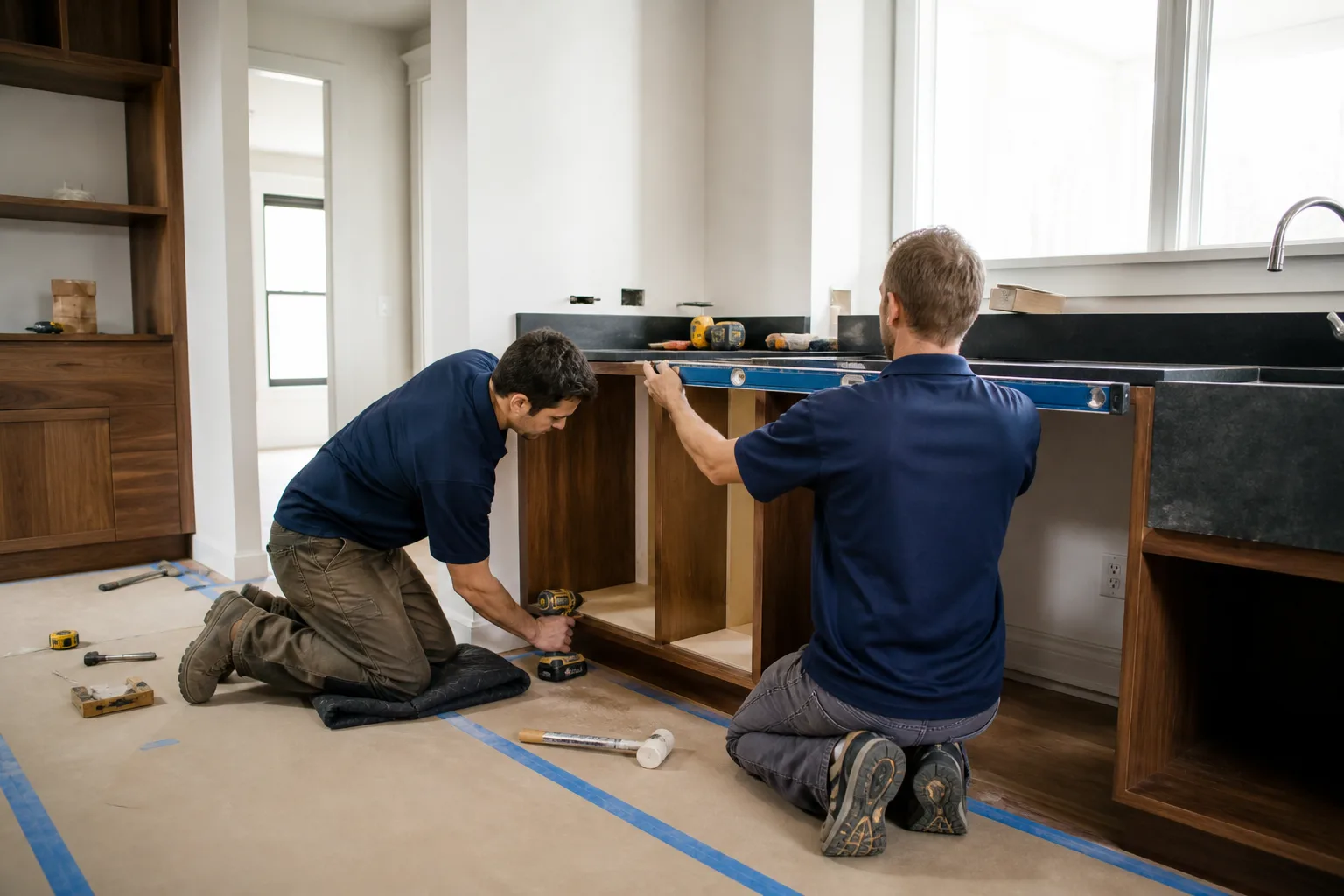
When a cabinet door won’t close square, the issue is one of four things: the box, the face frame, the hinge, or the floor. Each has a different fix and a different price. Before anyone touches a screwdriver, run this diagnostic:
- Check the box first. Open the door and look at the cabinet box itself. If the box is racked (twisted), the whole unit needs to be re-set or replaced. Racked boxes can’t be fixed by adjusting hinges.
- Check the face frame. Lay a straightedge across the front of the face frame. A gap means the frame is out of flat, which usually points back to an unlevel floor under the cabinet.
- Check the hinge. If the box and frame are square, the hinge is the problem. European-style concealed hinges have adjustment screws that shift the door up, down, in, and out. Most hinge problems are a five-minute fix.
- Check the floor. With the door off, run a level across the cabinet base. If the base is out of level, the shims under it have settled or were never right. This is the failure point that gets covered up and comes back.
If the diagnosis lands on the floor, you’re not dealing with a hinge problem. You’re dealing with an installation problem. In Fairfield homes built before 1980, we regularly find subfloor that wasn’t leveled before cabinets went in, because the original flooring hid it. The fix means pulling the cabinet, re-leveling, and re-setting it, which is a warranty conversation, not a hinge adjustment.
Countertop Seam and Fit Failures: Why Templates Get Pulled Too Early
Countertop seam failures almost always trace back to one scheduling error: the template was pulled before the walls were plumb and the cabinets were fully set. A template is taken from the actual cabinet and wall conditions. If those conditions change after the template is pulled, the slab won’t fit.
Here’s what the correct sequence looks like, and what happens when it gets compressed:
- Correct sequence: Cabinets installed and inspected for level and plumb → template pulled → slab cut → slab installed → seam epoxy cured.
- Compressed sequence: Template pulled early to save a week on the schedule → cabinets settle or walls shift → slab arrives out of fit → seam gaps appear.
Remediation depends on the gap. A hairline gap at the seam can sometimes be re-epoxied and sanded. A gap wider than a credit card means the slab has to be re-cut or, in the worst case, re-templated and re-cut. That’s a $400 to $1,200 remediation on a single seam in Fairfield market pricing, and it’s why we hold the template until the cabinets are inspected and signed off, every time.
If you’re pricing out the full scope of a kitchen upgrade, our Kitchen Remodeling in Fairfield page walks through the sequence and what gets inspected at each stage.
Plumbing Leaks at Supply and Drain Connections
A leak under a kitchen sink is one of three things, and misdiagnosing it wastes a plumber’s visit. Figure out which one you have before you call.
- Compression fitting failure. The leak is at the supply line where it meets the shutoff valve or the faucet tail. You’ll see water on the fitting itself. This is usually a loose nut or a worn ferrule. It’s a small repair, under $150.
- P-trap slope problem. The leak is at the P-trap or slow drainage with a smell. The trap is either installed backwards, at the wrong angle, or the wrong size. The fix means re-piping the trap, which runs $150 to $350.
- Drain rough-in that was never at code. The leak is inside the wall, behind the cabinet. This one is serious. It means the drain line was never inspected or was installed out of code. The fix is opening the wall, re-piping to code, and getting an inspection, which adds real scope to the repair.
Fairfield’s water is moderately hard, and we see more compression fitting failures here than in softer-water markets because mineral buildup stresses the ferrule. If your kitchen is more than 15 years old and the shutoff valves were never replaced, plan on replacing them during any sink work.
Range Hood Ventilation Problems: When the Duct Run Is the Issue
A range hood that passes the appliance test (fan spins, light works) but leaves the kitchen smelling like grease after cooking does not have a hood problem. It has a duct run problem. Most performance failures are in the duct, not the appliance.
What to check, in order:
- Is the duct actually connected? In Fairfield attics, we’ve found hoods ducted into the attic space with no exterior termination. The hood works; the air goes nowhere but the attic.
- Is the duct the right size? A 6-inch hood on a 3-inch duct chokes the fan. Most hoods need a 6-inch or 7-inch duct for full-rated CFM.
- Is the duct run too long? Every 90-degree elbow cuts airflow. A long run with two elbows will lose half the fan’s rated performance.
- Is the exterior damper working? A stuck or missing damper lets outside air and pests back in.
The fix for a disconnected or undersized duct run in a Fairfield kitchen typically runs $350 to $900 depending on attic access and run length. The hood itself is usually fine. Replacing the hood without fixing the duct is money thrown away.
Permits and Inspections: What Fairfield Requires
Not every kitchen repair needs a permit, and the line matters for who’s responsible when something goes wrong. In Fairfield, the general rule of thumb:
- Needs a permit: moving or adding electrical circuits, relocating plumbing supply or drain lines, gas line changes or new gas appliance hookups, structural changes (removing a wall, new header), and new or relocated range hood ducting through the exterior.
- Doesn’t need a permit: swapping a cabinet door, replacing a faucet with the same footprint, repainting, refinishing.
When a kitchen problem shows up and the original installation wasn’t permitted, you’re looking at a code compliance issue, not a warranty item. The permit record protects you at resale and, more importantly, it means someone inspected the rough-in before the wall closed up. In Fairfield, a property sale will surface unpermitted work during the disclosure review, and the buyer’s inspector will flag it. That’s the conversation none of our homeowners want to have.
If you’re early in planning and want to understand how permits fit the timeline, the General Contractor in Fairfield page covers the scope and inspection sequence.
Using Your Written Scope and Warranty to Assign Responsibility
Here’s where a written scope and a written warranty earn their keep. When a kitchen problem shows up, you have three possible outcomes: a warranty call, a change order conversation, or a code compliance issue. The written document tells you which.
- Warranty call: The problem falls inside the written scope and inside the warranty period. You call, the contractor returns, and it’s corrected at no charge. At Bradford, this is the 365-Day Done Right Promise: every completed project carries a full-year written guarantee, and if the work fails inside that window, we come back and correct it at no charge.
- Change order conversation: The problem is outside the original scope, or it’s a consequence of a decision made during the project that wasn’t in writing. This is where the conversation turns into a written change order with a price before work starts.
- Code compliance issue: The problem was never permitted or inspected, or it was done out of code. This one goes to the building department, not the warranty.
If your original paperwork is vague, that’s the problem to fix first. Read your scope document and find out exactly what’s warranted and for how long before you call anyone. If you don’t have one, that tells you a lot about the crew that did the work. The Garrison Standard exists for exactly this reason: every price and every guarantee in writing before a tool comes out. If you’re comparing approaches, our Bradford Remodeling Co Fairfield home page walks through how the written guarantee works.
What These Fixes Cost
Fairfield kitchen repair pricing varies by failure point, but here are real ranges from our recent projects. These are repair costs, not full remodel costs.
- Cabinet hinge adjustment (hinge is the problem): $75 to $150
- Cabinet re-set for unlevel floor (pull, re-level, re-set): $400 to $900 per run
- Countertop seam re-epoxy and re-sand (hairline gap): $200 to $400
- Countertop re-cut for out-of-fit seam: $400 to $1,200
- Compression fitting replacement (supply line): $100 to $150
- P-trap re-pipe to correct slope: $150 to $350
- Drain rough-in re-pipe to code (wall open): $800 to $2,400
- Range hood duct re-run (attic access): $350 to $900
- Range hood duct re-run (no attic access, exterior wall): $900 to $1,600
If your fix turns out to be larger than a repair, our Bathroom Remodeling in Fairfield page is worth a look for scope and pricing context if you’re considering a broader upgrade while the kitchen is opened up. And if you’re deciding between repairing and remodeling, our guide to planning a full kitchen remodel in Fairfield covers that decision.
Common Mistakes to Avoid
- Skipping the rough-in inspection to save a week. The wall closes up, the problem hides, and you find out at resale. In Fairfield, disclosure review will find it.
- Letting cabinets go in before the floor is level. The finish work hides it every time, and it comes back as doors that won’t close square.
- Pulling countertop templates before walls are plumb and cabinets are set. This one causes the seam failures we see in Fairfield more than any other single scheduling error.
- Hooking up a gas range without a permit. No inspection, no record, and a repair that becomes your problem when you sell.
- Replacing a noisy or ineffective range hood without checking the duct run. The duct is the problem, not the hood. You’ll spend hundreds on a new appliance that still won’t vent.
- Reading the warranty only after something fails. Read the scope and the warranty before the project starts, so you know what’s covered and for how long.
- Hiring a crew that won’t put the price in writing. A verbal price at the door is a number that moves. Insist on written pricing before work begins.
See the difference
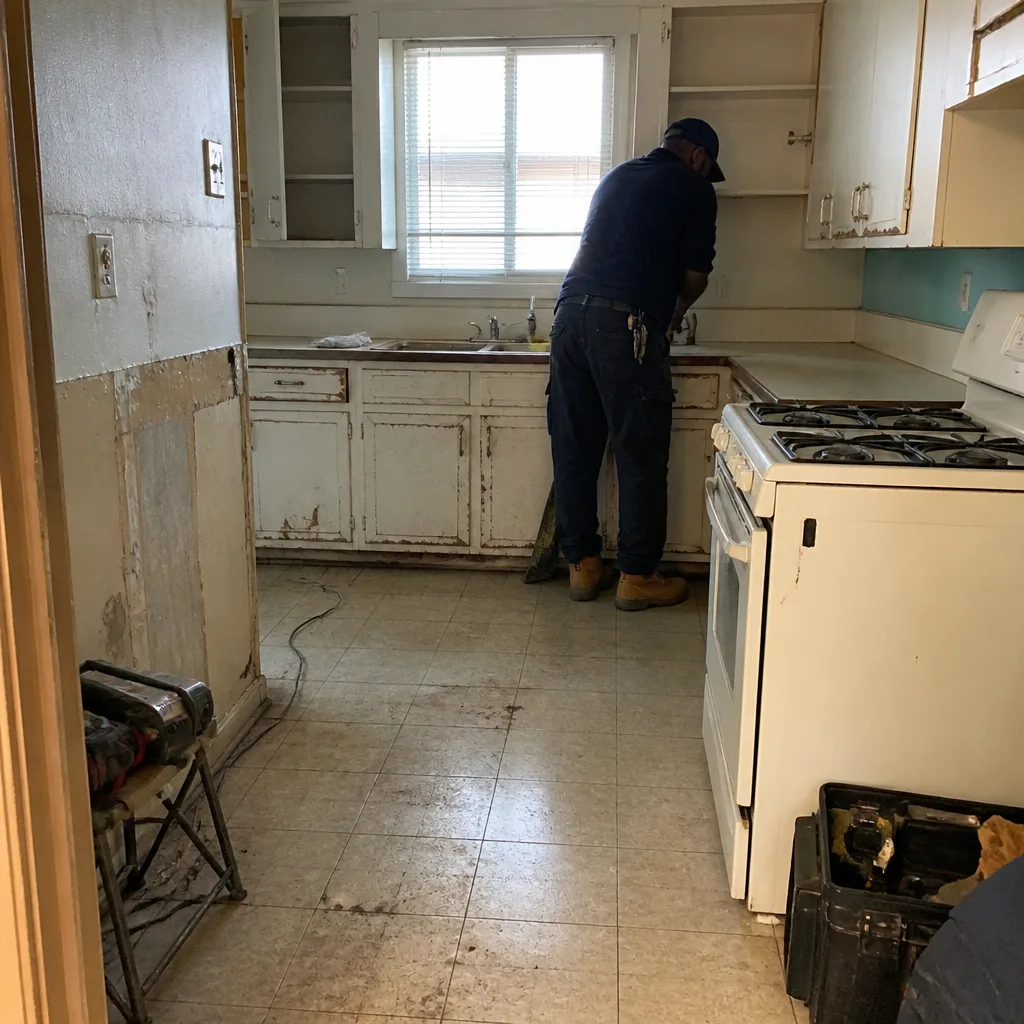 Before
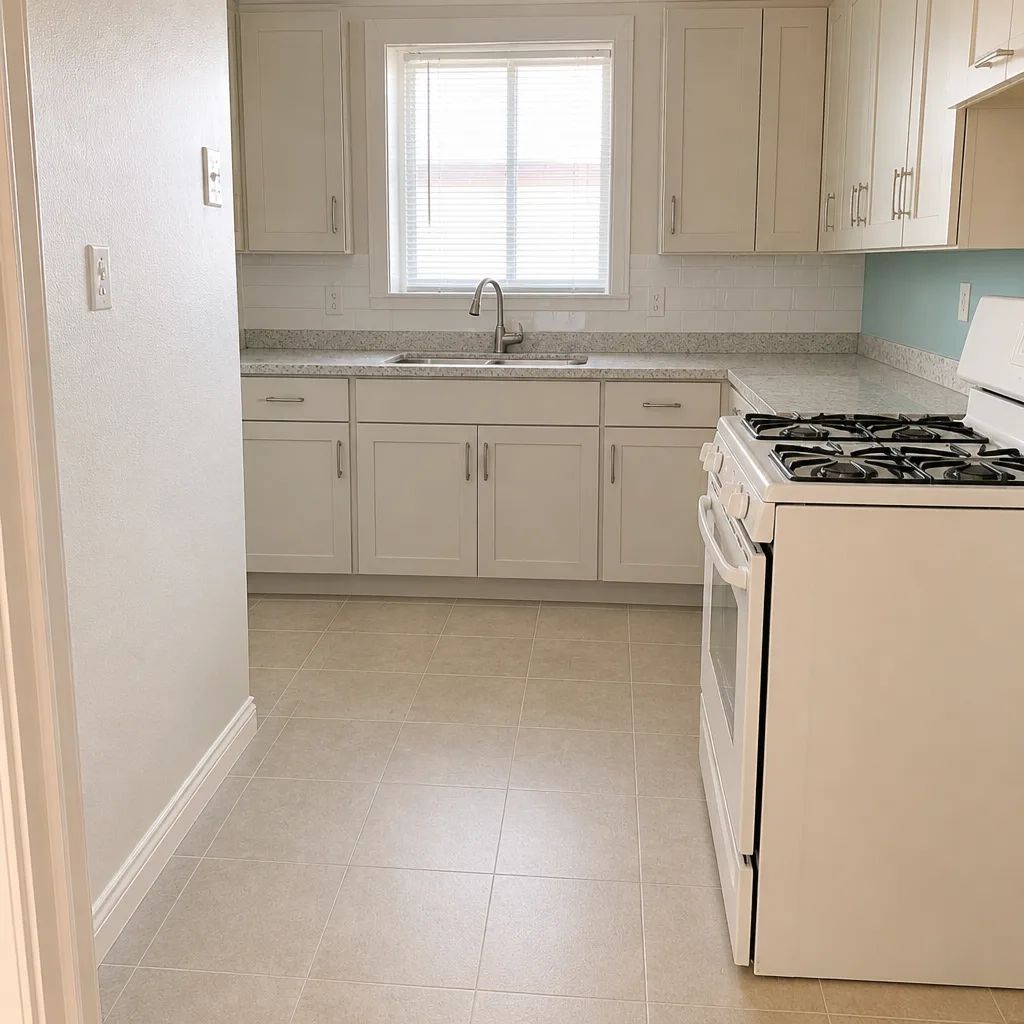 After
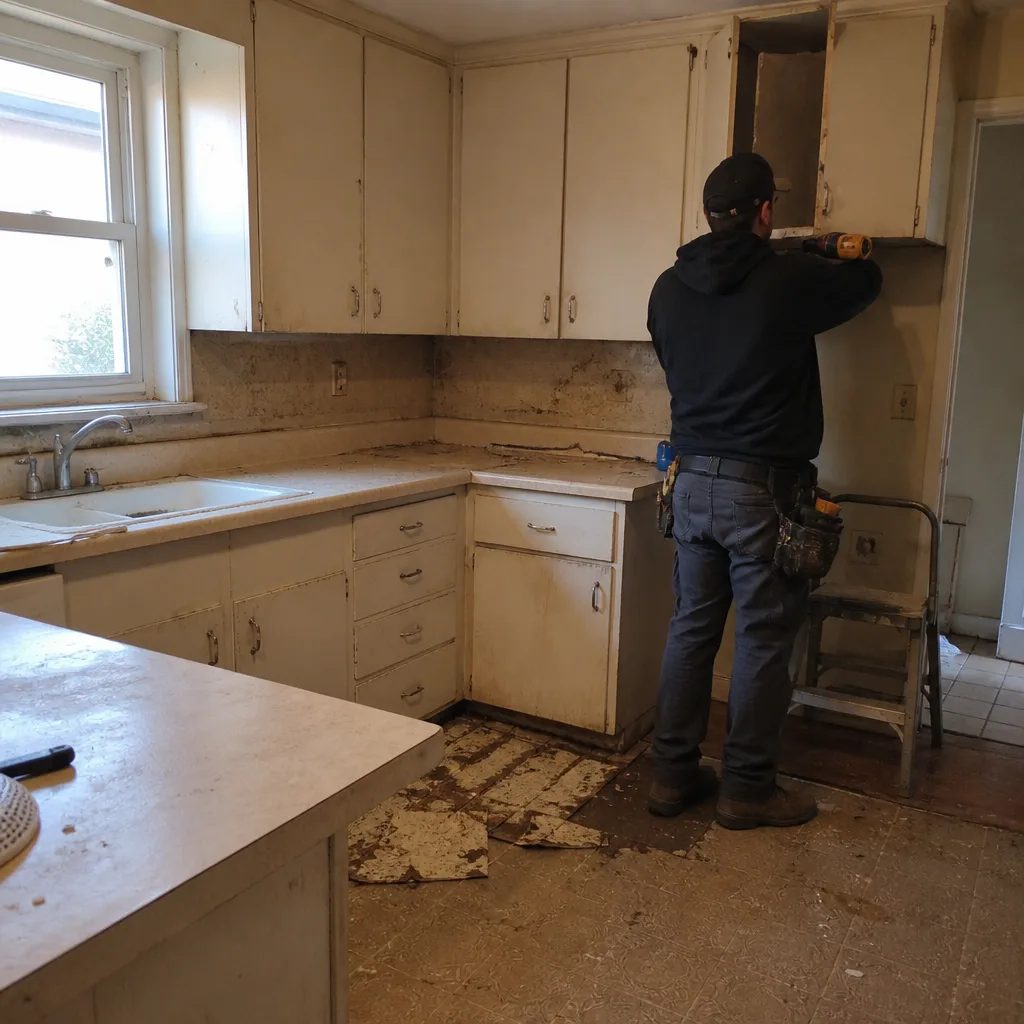 Before
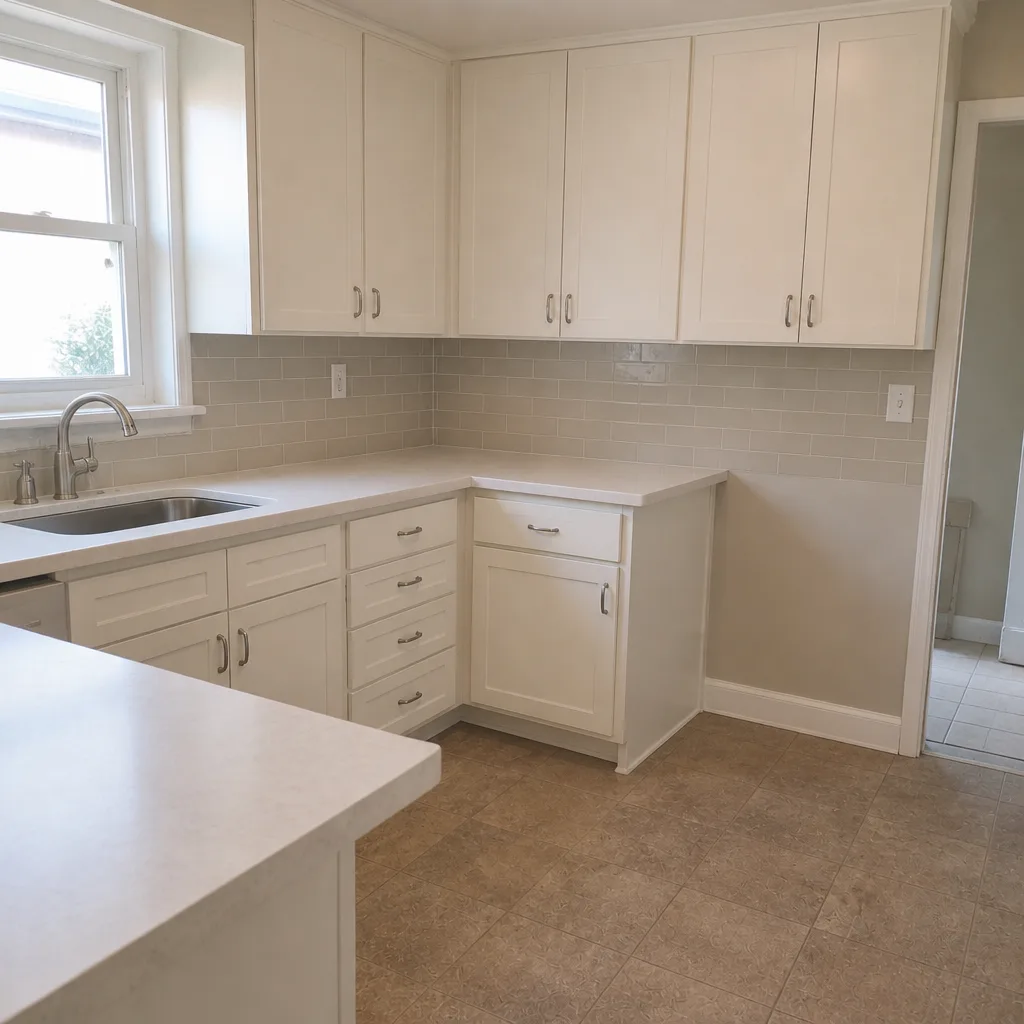 After
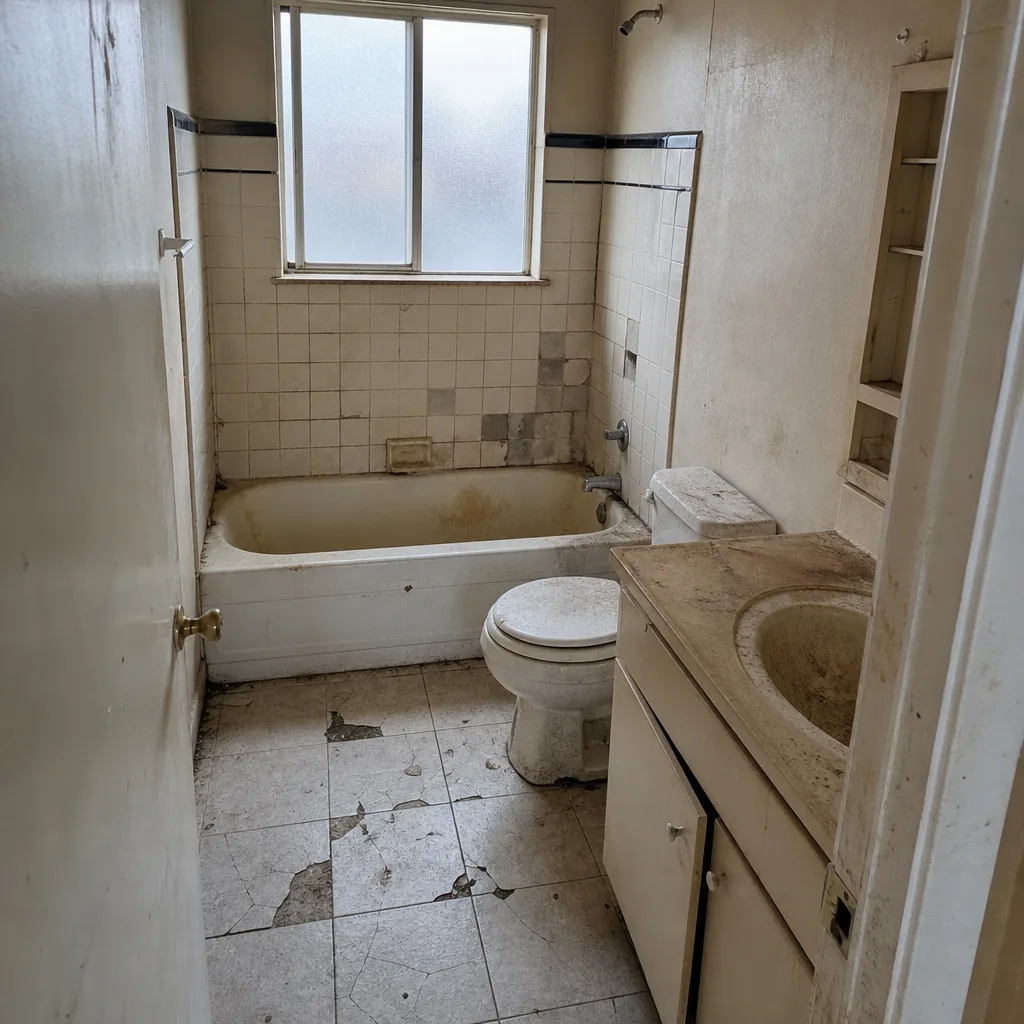 Before
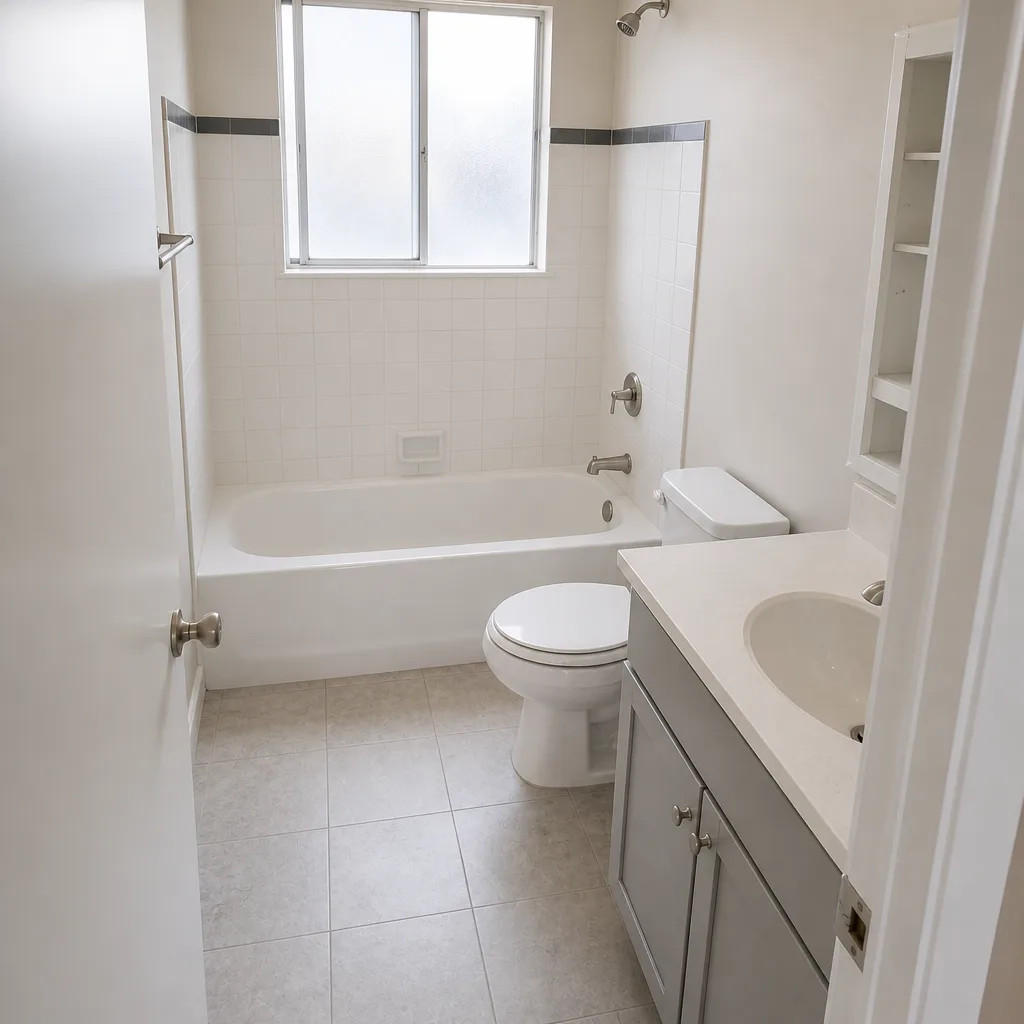 After
When to Call a Professional
Some kitchen problems are a hinge screw and a ten-minute fix. Others put your home’s plumbing, gas, and electrical systems at risk, and those are call-a-professional situations without exception. Call a professional if you see water inside a cabinet or behind a wall, if you smell gas anywhere near the range or water heater, if the range hood isn’t venting outside, if a cabinet box is racked or the floor underneath is out of level, or if the original installation was unpermitted and you’re facing a resale. Gas lines and electrical panels are genuinely dangerous; do not open them up to check on your own. Bradford Remodeling Co Fairfield offers free estimates in Fairfield with a written price before any work begins. Call (833) 998-3242 to schedule yours.
Frequently Asked Questions
Cabinet doors that won’t close square are almost always a symptom of unlevel installation that the finish work covered up. The quick way to tell: if the cabinet box is square and the face frame is flat, it’s a hinge adjustment and cheap to fix. If the box is racked or the base is out of level, it’s an installation problem and the cabinet needs to be re-set. Call (833) 998-3242 for an exact quote in Fairfield; estimates are free.
A hairline countertop seam gap in Fairfield runs $200 to $400 to re-epoxy and re-sand. A gap wide enough to need a re-cut or re-template runs $400 to $1,200. The cost depends entirely on whether the slab needs to come off the cabinets. Call (833) 998-3242 for a written price before any work starts.
A range hood that leaves a grease smell is almost always a duct run problem, not a hood problem. The most common causes are a duct that was never connected to the exterior, a duct that’s undersized, or a run with too many elbows. Replacing the hood without fixing the duct won’t solve it. Duct re-runs in Fairfield typically run $350 to $900. Call (833) 998-3242 for an exact quote.
Yes, if you’re relocating supply or drain lines, or making gas line changes. Swapping a faucet in the same footprint typically doesn’t need a permit. The line matters because unpermitted work becomes a code compliance issue at resale, and Fairfield’s disclosure review will find it. If you’re uncertain, call the Fairfield building department before the work starts, or call us at (833) 998-3242 and we’ll walk you through it.
Not if the price is in writing before work starts. At Bradford, every project gets a written price before a tool comes out, and the number doesn’t move at the door. If the diagnosis changes the scope once the wall is open, that’s a written change order conversation before any work continues. Fairfield estimates are free. Call (833) 998-3242.
Every completed Bradford project carries the 365-Day Done Right Promise: a full-year written guarantee. If the work fails inside that window, we come back and correct it at no charge. A failed compression fitting, a cabinet that settled, a seam that opened: those fall inside the guarantee. Call (833) 998-3242 and we’ll pull up your project and schedule the return visit.
The Bottom Line
Most kitchen problems in Fairfield trace back to four failure points: uninspected rough-in, cabinets set before the floor was level, countertop templates pulled before walls were plumb, and unpermitted appliance hookups. Identify the failure point first, then check your written scope and warranty to determine whether you’re dealing with a warranty call, a change order, or a code compliance issue. The document that protects you in all three cases is the same one: a written price before work starts and a written guarantee after it’s done. That’s the whole point of The Garrison Standard: every price and every guarantee in writing, every time.
Bradford Remodeling Co Fairfield is a member of the Garrison Partners family, established in 2004, and operates as an independently owned and operated business held to The Garrison Standard. Every project receives a written price before work begins, and all completed work is covered by the 365-Day Done Right Promise. We work with a documented roster of brands, including KraftMaid and Wellborn cabinetry, Cambria and Caesarstone surfaces, Kohler and Moen fixtures, and Therma-Tru doors, so specifications are traceable and quality isn’t left to guesswork. Our technicians have up to 22 years of experience. A live person answers the phone every time. Call (833) 998-3242 to schedule your free estimate in Fairfield.
Written by the team at Bradford Remodeling Co Fairfield.