Last updated November 17, 2026



Free written scope consultation - allowances, timeline, and change-order rules on paper before a single trade is scheduled
Kitchen Remodeling Warning Signs Every Homeowner Should Know
A verbal price that comes in 20% under the next bid isn’t a bargain. It’s often the opening move in a change-order strategy that adds roughly a third to the final invoice before the cabinets are even hung. The costliest kitchen mistakes in Fairfield aren’t made during construction. They’re made in the first conversation, before a single document is signed, when a homeowner mistakes confidence for competence. This guide translates the contractor behaviors that feel normal into the structural red flags they actually are, so you can read a bid, a handshake, and a follow-up call for what they really tell you.
Quick Answer
The biggest warning signs of a bad kitchen remodeling contractor are a quote given without a site measurement, vague “allowances” that hide real costs, refusal to show license and insurance documents, no lien waiver process, and a price that only exists verbally. Any one of these is a reason to slow down; two or more together usually mean the project will cost more and take longer than promised. A disciplined contractor puts the scope, the price, and the guarantee in writing before work starts.
Styles & brands we work with
- Kitchen remodeling
- Bathroom remodeling
- Home additions & ADU
- Roofing
- Windows & doors
- Driveway & pavers
- Fence
Table of Contents
- Why a Quote Without a Site Measurement Is a Hard Stop
- What “Allowances” Really Mean in a Kitchen Bid
- The California License and Insurance Documents to Request
- How to Read a Lien Waiver as a Discipline Signal
- Cabinet and Countertop Subcontracting Red Flags
- The Verbal Price Trap and Change-Order Math
- What the Site Itself Tells You Before Demo Day
- Common Mistakes to Avoid
Why a Quote Without a Site Measurement Is a Hard Stop
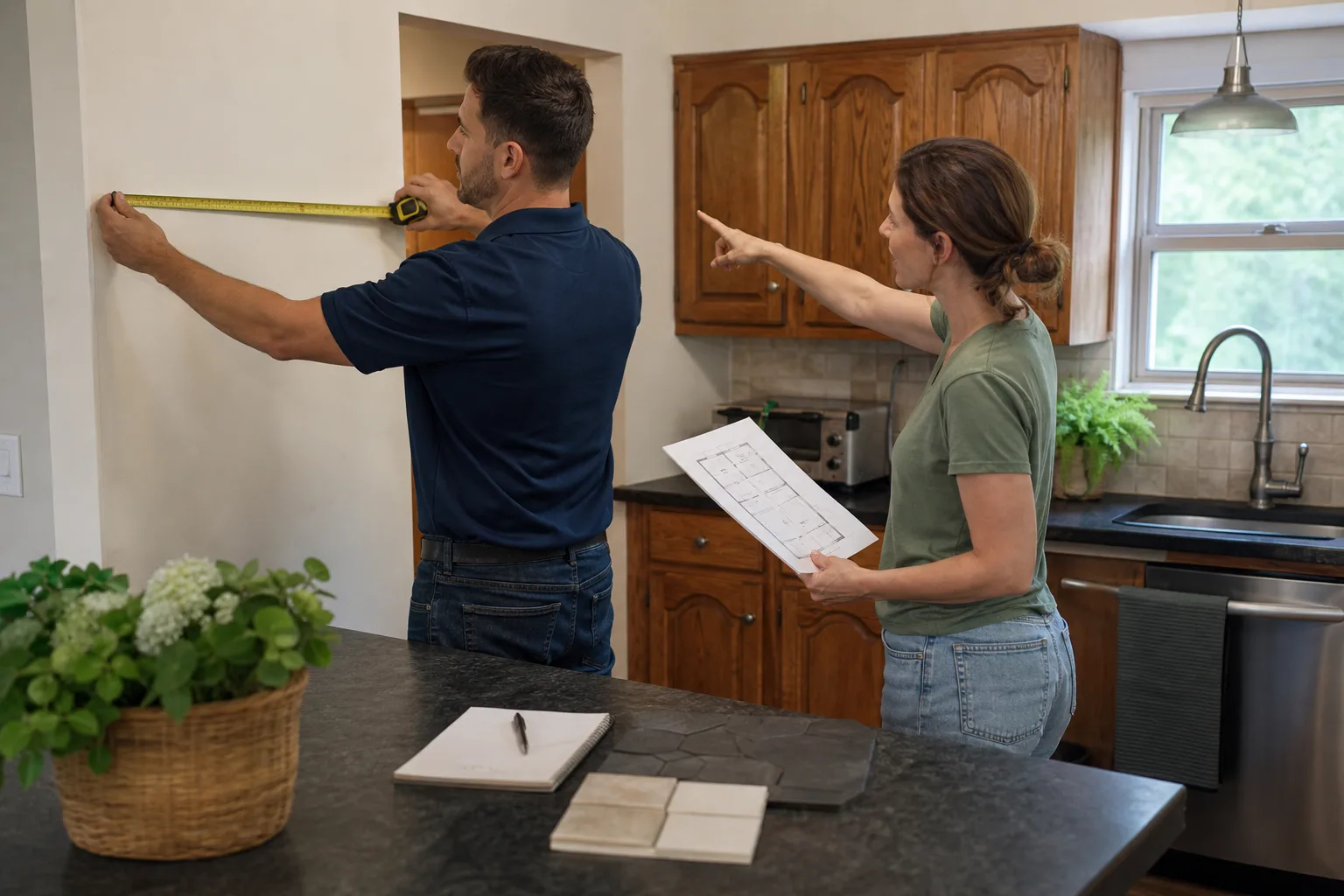
If a contractor hands you a kitchen price without ever measuring your actual kitchen, that number is invented. It might be well-intentioned, but it isn’t grounded in anything you can hold them to. Cabinet runs in Fairfield homes vary wildly: a 1950s ranch near downtown has different wall geometry, soffit depth, and window placement than a newer build out toward Cordelia. A number quoted from a photo or a rough sketch ignores all of it.
A proper measurement visit tells you what the bid is actually built on. During that visit, a real contractor checks:
- Wall and floor squareness – older walls drift, and out-of-square corners change cabinet sizing.
- Soffit height and depth – determines whether upper cabinets go to the ceiling or stop short.
- Electrical and plumbing rough-in locations – moving a sink or range means relocating supply and drain lines, which is real money.
- Window and door trim – reveals how much filler and panel you’ll need around the box.
- Subfloor condition – the layer under your finished flooring; soft spots or uneven joists have to be corrected before anything sits on top.
In our experience, the “quick quote” contractor is usually the one who later says, “Well, we didn’t know the wall was out of square.” That sentence is the start of a change order. When you work with a kitchen remodeling team in Fairfield that measures first, the price you get is built on the room you actually have. That’s the difference between a bid and a guess.
What “Allowances” Really Mean in a Kitchen Bid
An allowance is a placeholder dollar amount in a bid for something the contractor hasn’t picked yet, most often tile, lighting, or countertops. On paper it looks clean. In practice, a low allowance is one of the most common ways a proposal gets made to look cheaper than it is. The number in the total is only real if it covers what you actually want to buy.
Here’s how to read them. Suppose a bid lists a $2,500 countertop allowance. If you fall in love with a Cambria or Caesarstone surface that runs $4,000 installed, that $1,500 difference doesn’t vanish. It becomes a change order, and change orders are where final invoices climb. Multiply that across tile, fixtures, and lighting and the gap adds up fast.
Ask for these three things before you sign:
- A named allowance with a real product and a real price. Not “tile allowance: $1,200,” but the actual tile line, the square footage, and the installed cost.
- A written note on how overages get handled. If you go over an allowance, is it billed at cost with a receipt, or marked up? Get it in writing.
- A short list of what is not in the bid. Permits, haul-away, appliance install, drywall repair after electrical work. Gaps here are how a “complete” kitchen turns partial.
A written price before any work starts, with allowances spelled out line by line, is the only version of a bid you can actually compare against another. If two bids aren’t itemized the same way, you’re not comparing price. You’re comparing presentations.
The California License and Insurance Documents to Request
In California, a contractor performing kitchen remodeling should hold a valid license from the Contractors State License Board (CSLB) and carry both general liability insurance and workers’ compensation coverage. These aren’t optional courtesies. They’re the paper trail that protects your home and your wallet if something goes wrong.
Ask for these specific documents, and read them rather than glance at them:
- CSLB license number – verify it yourself on the CSLB website. Check that the license is active and that the classification matches the work (a General Building contractor holds a B classification).
- Certificate of general liability insurance – confirm the coverage is current and the dates haven’t lapsed.
- Workers’ compensation certificate – if a worker is injured in your home and the contractor isn’t covered, that exposure can land on you.
- A written contract – California requires specific contract terms for home improvement work, including a three-day right to cancel and a payment schedule tied to work completed rather than a big deposit up front.
Now the important part: what to do if the contractor deflects. “I’ll get that to you later,” “my insurance guy handles that,” or “the license is under my partner’s name” are answers, and the answer is no. A legitimate contractor keeps these documents handy because they get asked for them constantly. If the paperwork shows up only after you push three times, that hesitation is the red flag, not the paperwork itself. A crew that runs on discipline has the documents ready before you ask.
How to Read a Lien Waiver as a Discipline Signal
A lien waiver is a signed statement from a contractor or supplier confirming they’ve been paid and giving up the right to place a mechanic’s lien on your property. In plain terms, a lien is a legal claim against your home for unpaid work. If a subcontractor or material supplier doesn’t get paid by your contractor, they can sometimes come after your property even though you paid in full.
On your own, the contractor should be collecting conditional lien waivers from every sub and supplier as payments go out, then holding unconditional waivers once funds actually clear. The presence of that process tells you the contractor is organized, solvent, and thinking a step ahead. The absence tells you something else.
Read the signals this way:
- Contractor offers lien waivers without being asked – strong sign of financial discipline and clean bookkeeping.
- Contractor has never heard of them or waves the question off – a structural gap. It means nobody is tracking who’s been paid.
- Demands a large deposit up front with no waivers – the contractor may be using your deposit to fund the previous job. That’s how projects stall mid-remodel.
- Pays subs in cash with no paper – no waiver trail, no recourse, and your home carries the risk.
Before you make the final payment on a kitchen, ask for a final unconditional lien waiver from the general contractor. It’s a single page that closes the financial loop on your project. A contractor who’s squared away will hand it to you without a second thought.
Cabinet and Countertop Subcontracting Red Flags
Cabinets and countertops are the two biggest line items in most Fairfield kitchen budgets, and both are usually installed by specialists the general contractor brings in. That’s normal. What matters is whether the contractor actually manages those subs or just passes your name along.
Watch for these:
- No named cabinet brand. “Premium cabinets” means nothing. A documented line like KraftMaid or Wellborn comes with manufacturer specifications and warranties you can trace. Ask for the exact product and the spec sheet.
- Countertop templating skipped or rushed. Stone counters like Cambria should be templated on site after cabinets are set, never measured off a drawing. A rushed template means seams in the wrong place and edges that don’t line up with your wall.
- No discussion of stone slab layout. Natural and engineered stone is cut from a slab. You should have a say in where the seams fall, especially on an island.
- Cabinet lead times quoted without a follow-up. Custom cabinets can take weeks. Ask the contractor how lead time is tracked and what happens if the cabinet delivery slips past the countertop template date.
- The installer isn’t identified. Ask who’s setting your cabinets and whether that crew is background-checked. A homeowner should know exactly who’s walking through the door.
These questions separate a contractor who buys and manages materials from one who just places an order and hopes. When cabinet and countertop specs are documented in writing up front, the guesswork is taken out of the job. Manufacturers like Tremron and Techo-Bloc aren’t used indoors, but the same principle applies: brand-and-spec documentation is what makes a product traceable and a warranty enforceable.
The Verbal Price Trap and Change-Order Math
A price that only exists in conversation is the single most expensive kind of price. It can’t be compared, it can’t be enforced, and it’s the setup for every change order that follows. The classic version: a bid 20% below the next one, delivered verbally, with the promise that “we’ll nail down the details later.”
Here’s how the math works against you:
- You accept the low verbal number. It’s the basis for hiring.
- Work starts with an incomplete written scope. Things that should have been in the bid aren’t.
- The change orders arrive. Out-of-square walls, hidden electrical, upgraded tile, the soffit nobody discussed. Each one is billed separately, and each one is technically true.
- You’re too far in to walk. Demo is done, cabinets are ordered, and the final invoice lands far above the spoken number, adding roughly a third to the total.
The defense is simple: a written line-item price before work starts, with a stated change-order process and a fixed scope. That’s the standard we hold ourselves to at Bradford Remodeling Co Fairfield through The Garrison Standard. Every price is in writing, every guarantee is documented, and every completed project carries a 365-Day Done Right Promise – if the work fails within a full year, we come back and correct it at no charge. When the price and the guarantee are both on paper, the verbal trap has nowhere to live.
What the Site Itself Tells You Before Demo Day
You can learn a lot about how a remodel will go before a hammer swings. How a contractor operates in the first conversation usually mirrors how the site will look in week six. These are the early tells:
- Do they answer the phone, or does it go to voicemail? Live-person coverage on a first call tells you how they’ll handle a mid-project question. A voicemail queue on day one rarely improves later.
- Is the estimate written and itemized? A scribbled total on a business card is a preview of an unmanaged job.
- Do they define what “done” looks like? A clean site, a documented scope, and a signed written guarantee in your hand at close are the marks of a squared-away job. Ask any contractor to describe what their closeout looks like.
- Do they show up when they say? Punctuality on the estimate visit is a free, low-stakes test of reliability. A no-show on a quote is a preview of a no-show during the project.
For the broader picture of how a full renovation should be run, our guide on general contracting in Fairfield walks through the sequencing from demo to final inspection.
Common Mistakes to Avoid
- Hiring off the lowest bid without comparing scope. Two bids are only comparable when they’re itemized the same way. A low number with a short scope is a smaller job, not a better deal.
- Accepting a verbal price to “get started.” If it isn’t written, it isn’t a price. Insist on a written line-item quote before anyone touches your kitchen.
- Skipping the CSLB license check. It takes two minutes, and it’s the fastest way to separate a licensed contractor from an unlicensed one working under a friend’s number.
- Signing a big deposit with no lien waiver process. Large upfront payments without paper put your money at risk. Payment should track completed work.
- Not naming the cabinet and countertop products. “Premium cabinets” can mean anything. Ask for the manufacturer and the spec, so the warranty is traceable.
- Forgetting that Fairfield kitchens face real climate swings. Warm, dry summers and damp winters move wood. Cabinet doors and wood flooring need acclimation time indoors before install. Ask how your contractor handles it.
- Accepting no written guarantee. If the contractor won’t put a guarantee in writing, there is no guarantee. A full-year written warranty is the floor, not the ceiling.
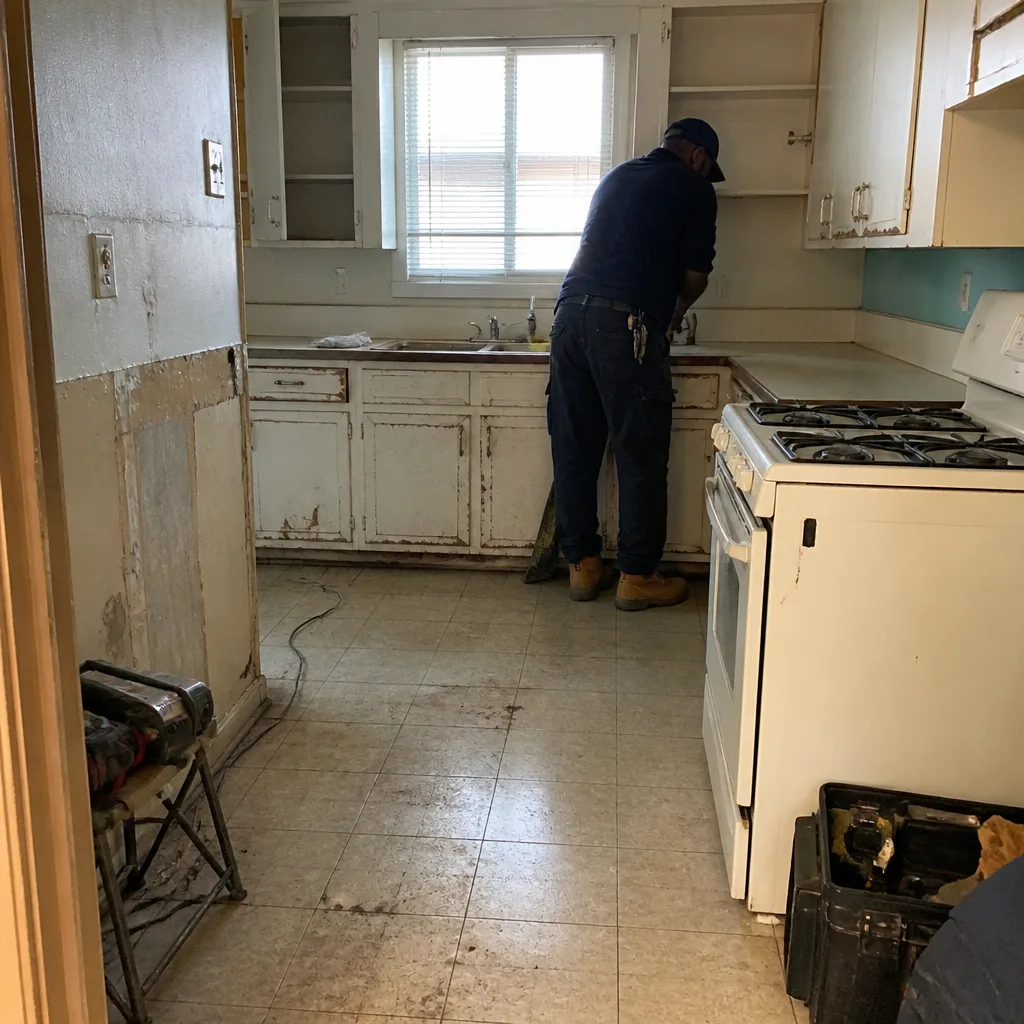
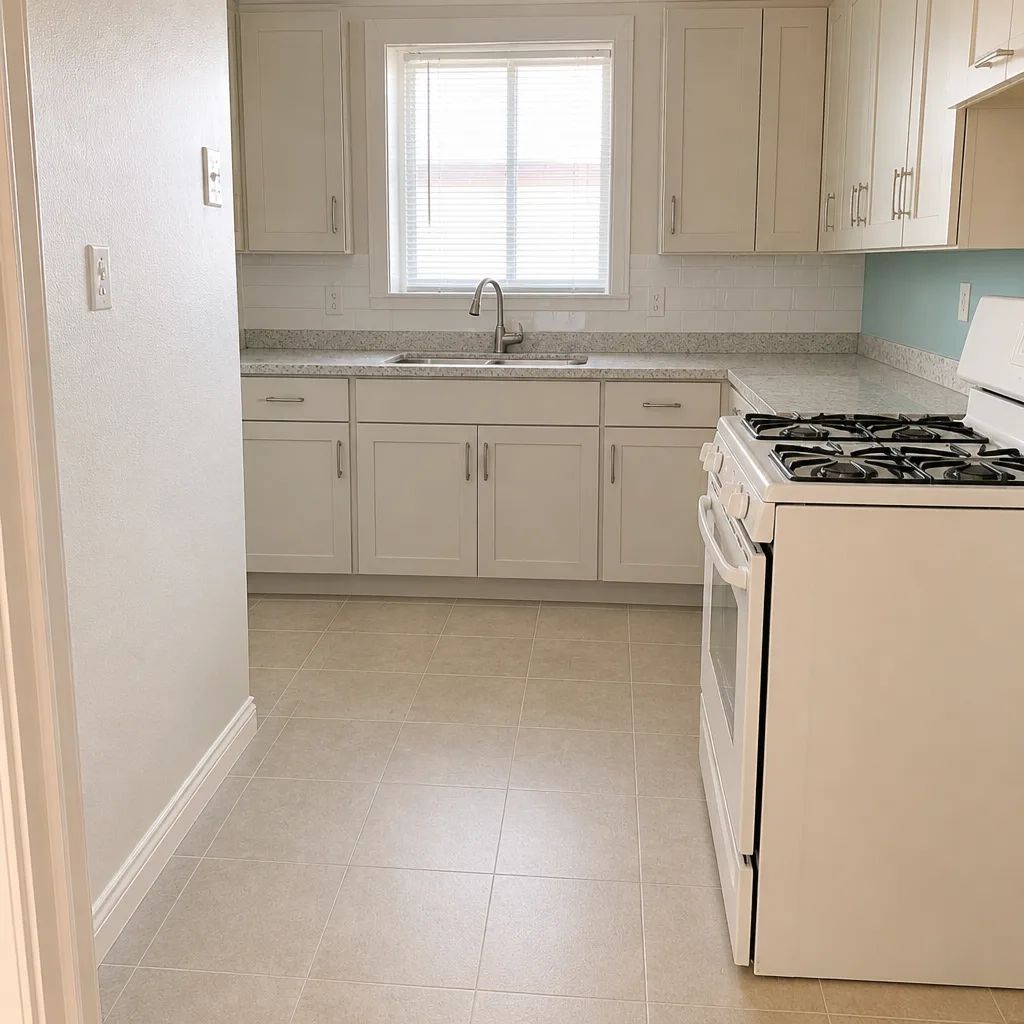
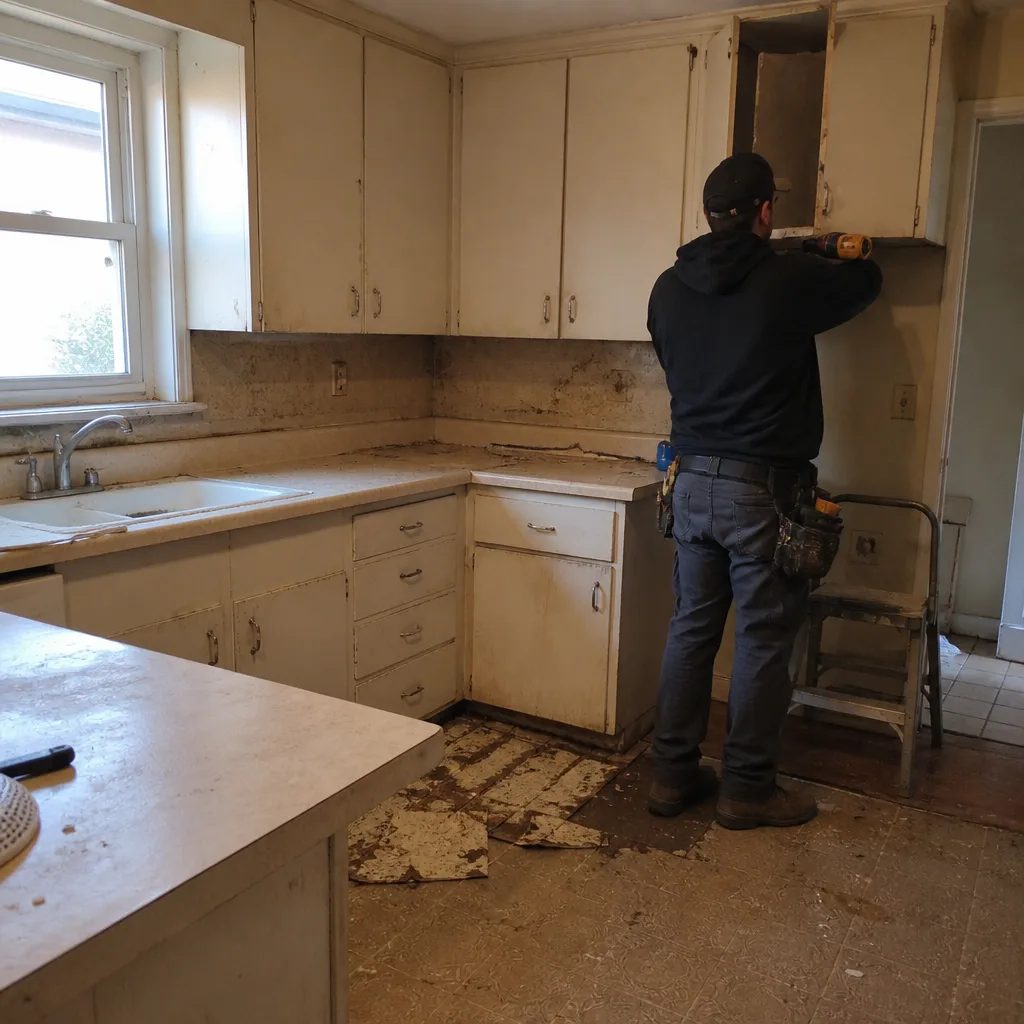
See the difference
 Before
 After
 Before
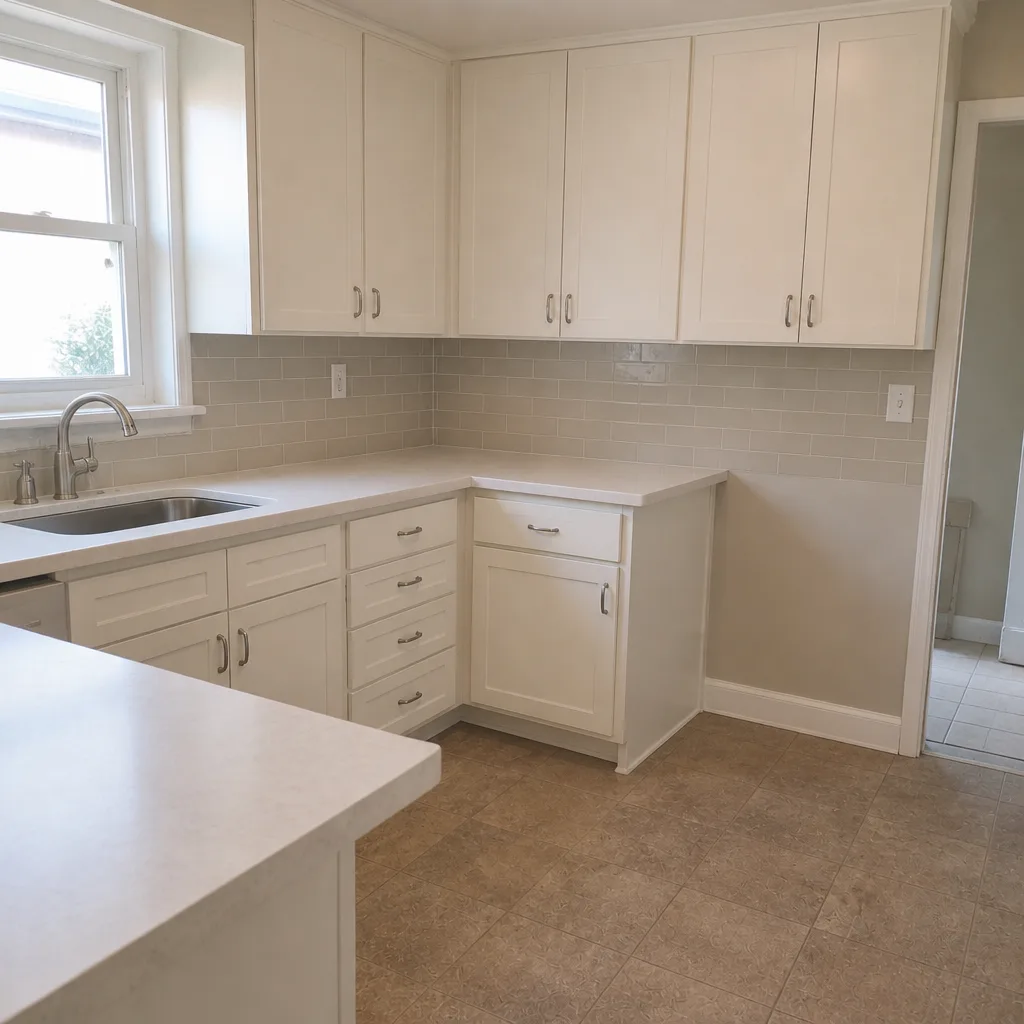 After
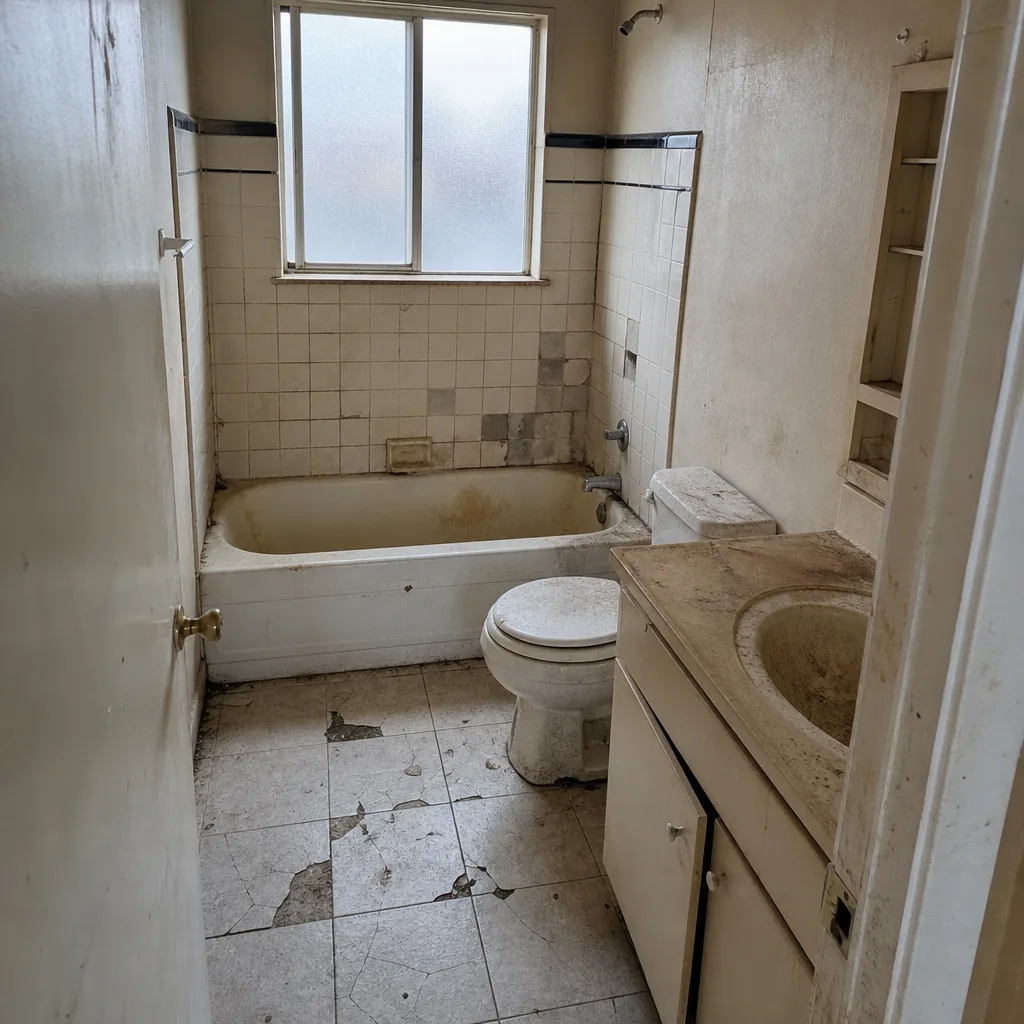 Before
 After
When to Call a Professional
Any of the following should send you to a licensed professional before another dollar changes hands: a bid with no site measurement, a contractor who won’t show a CSLB license or insurance certificate, allowances that don’t name a product, or no lien waiver in sight. Those aren’t small concerns – they’re structural, and they tend to surface mid-project when you’re least able to walk away. If you’ve already started and the change orders are climbing, a second, written opinion is worth getting before you sign anything else. Our technicians have up to 22 years of experience reading exactly these situations. Call (833) 998-3242 for a free estimate in Fairfield, and we’ll put a written price in front of you before any work starts.
Frequently Asked Questions
A quote given without ever measuring your actual kitchen. If the price isn’t grounded in your room’s dimensions, electrical, and plumbing, it’s a guess dressed up as a bid. Ask for a written, itemized price after a site measurement, then call (833) 998-3242 for a free estimate if you’d like a second one to compare.
Get the license number and verify it yourself on the Contractors State License Board website. Check that it’s active and that the classification covers general building work. A real contractor gives you the number without hesitation; call (833) 998-3242 for a free written estimate from a licensed crew.
A typical full kitchen runs somewhere in the range of several weeks to a couple of months, depending on cabinet lead times, countertop templating, and permit inspections. The single biggest cause of delay is a scope that wasn’t written down. Call (833) 998-3242 to schedule a free estimate and get your timeline in writing.
Yes, in most cases. Moving electrical outlets, relocating plumbing, or changing walls generally requires a permit from the City of Fairfield, and inspections follow. A contractor who says permits aren’t needed for that work is telling you something important. Call (833) 998-3242 for a free estimate and ask how permits are handled.
It should be an unconditional waiver stating the contractor and their subs have been paid in full and give up any right to claim a lien on your property. Get it before your final payment. Call (833) 998-3242 for a free estimate and we’ll walk you through the closeout paperwork.
It shouldn’t if the scope was written and itemized before work began. Changes only happen when something unforeseen turns up or you change the scope, and both should follow a stated change-order process. Our standard is a written price before any work starts, backed by the 365-Day Done Right Promise. Call (833) 998-3242 for a free estimate.
The Bottom Line

The reminders in this guide come down to one idea: read the first conversation the way you’d read the finished job. A verbal price, an unmeasured quote, unnamed allowances, missing insurance, and no lien waiver process aren’t small quirks. They’re the early chapters of the same story, and the change orders are the ending. When you work with a Fairfield contractor who measures first, itemizes the scope, names the products, and puts a written guarantee in your hand at close, the surprises disappear. That’s the standard we hold, and it’s why the price you hear is the price you sign.
If you’ve been burned by no-shows, repricing at the door, and unfinished work, we offer the opposite: a written price before any work starts, background-checked technicians, live-person phone coverage around the clock, and the 365-Day Done Right Promise on every completed project. Call Bradford Remodeling Co Fairfield at (833) 998-3242 for a free estimate, and we’ll put it in writing.
For a look at how we run the full scope, see our Fairfield home base, our bathroom remodeling in Fairfield service, and the details behind kitchen remodeling in Fairfield.
Written by the team at Bradford Remodeling Co Fairfield.